CEDRA: Central role for local authorities key in economic development of rural areas
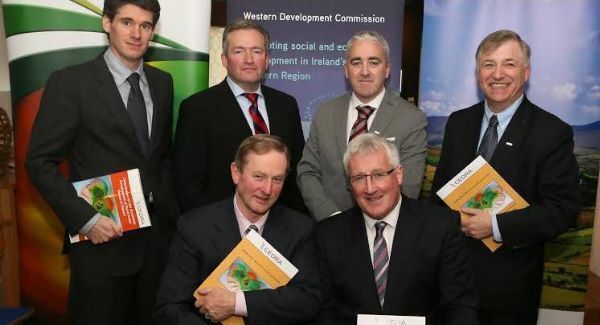
The first of 34 recommendations of the CEDRA group chaired by Spillane is that a junior minister should have specific responsibility in the Government for rural development.
The CEDRA team has produced new and in some cases surprising statistics about what has been happening in rural Ireland over the past 20 years of boom and bust.
The critical need to facilitate development of the rural economy is highlighted by the 2011 figure of 69% of all unemployed persons are living in the countryside, an increase of 12% on the figure recorded in 1991.
In the current economic downturn, unemployment has increased by 192% in rural areas, and 114% in urban areas, with the effects felt more acutely in small and medium sized towns.
The substantial off-farm employment gain of the previous 15 years has been wiped out, and employment in rural areas remains concentrated in sectors that continue to decline.
Traditionally, the rural problem was seen as one of declining population. However, since 1991, the number of people living in rural areas in Ireland grew, the rate of population growth is rising, and the share of the total national population living in rural areas remains, compared to 1991, largely unchanged.
From 1991 to 2011, the national population increased by 30%. The population living outside the cities and towns increased by 44% (1.8 million to 2.6 million), going from 51% of the population nationally to 57%.
Changes were not uniform, in fact, there was substantial variation. Some areas experienced very large increases in population, whilst others experienced decline.
So the accompanying map illustrates the varying fortunes, with large areas of Kildare, Wicklow, Wexford, Cork and Galway seeing large increases in population (shown in dark blue).
Areas where population continued to decline (even in the boom period) are shown in yellow on the map, and include parts of West Mayo, Roscommon and West Limerick.
In general, however, the CEDRA report shows that frequently expressed fears of the collapse of society, parishes and clubs in rural areas, have not been fulfilled (though there is evidence of a changing mix, with a greater proportion of older people and fewer young people).
CEDRA also found that in general, rural areas close to or accessible to the main cities and larger towns experienced substantial and sustained growth in population.
The areas that showed a decline in population between 1991 and 2011 tend to be more remote or less accessible to towns and cities. Population loss of 21,455 persons occurred in 546 rural electoral divisions between 1991 and 2011, representing a fall of 9% in their population.
Surprisingly, there were also urban areas which experienced population decline in this period. The population of these urban places dropped by 21%.
The scale of urban population loss is remarkable, and points to the hollowing out of many smaller towns and some parts of the cities.
The overall number of people living in towns fell marginally, but the pattern was not uniform.
Westport, Co Mayo, for example, grew rapidly, while other towns declined.
Between 1991 and 2011, Irelandâs labour force grew by 61%.
The labour force in the countryside grew by 78%, with towns experiencing an increase of 28% whilst the cities saw an increase of 31%.
These developments are directly associated with the growth of the overall population over 15 years of age and the increase in employment, with the numbers classified as âat workâ growing by 33% in the cities, 17% in towns, and by 72% in the countryside. Counterbalancing this positive development was an increase in the numbers of people classified as âunemployedâ.
This population increased by 32% to 75,000 in the cities, by 69% to 47,000 in towns, and by 134% to 268,000 in the countryside.
Will this report make a difference, in the economic development of rural areas? CEDRAâs task was to consider whatâs needed to stimulate the rural economy and ensure people can live, work and raise their families in these areas.
The recommendations have a number of new and welcome features. They recognise that in the past, rural aspects often tended to be forgotten by economic policy makers, and that there is a need for someone in Government to have a clear focus on the implications for rural society of various Government initiatives.
Responsibility for delivery was spread across many Government departments and agencies with no effective line of strategic planning and co-ordination, responsibility and oversight.
Thatâs why a rural economy junior minister is recommended.
Another relatively novel aspect of the recommendations is the emphasis on rural towns. Rural policy in the past seemed almost synonymous with agricultural policy, or at least with policy for the open countryside.
In the CEDRA report, there is strong emphasis on inter-linkages between countryside and town, and plans for distinct regions, based on towns. For example, it is recommended that in Co Cork, separate rural economic development zones (REDZs) be designated, based on Youghal, Fermoy, Mallow, Bandon, Skibbereen, Macroom etc.
A major problem with the report is that there is no budget.
There is no overall estimate of current expenditure on rural development (it is subsumed in IDA, local authority, and other budgets).
The report blandly states that no additional expenditure is envisaged, and that funding the report recommendations will be achieved through more efficient use of existing expenditure.
âThe Commission believes that no significant additional financial resources will be required in order to ensure effective implementation; this is largely based on the belief that there is scope for a more creative use of resources currently available that provide for both direct and indirect support to aspects of rural economic developmentâ.
However, this belief on the part of the Commission is not supported by any of the research carried out on its behalf.
* eamonnpitts@gmail.com