Increase in AI breeding shows proves profitable
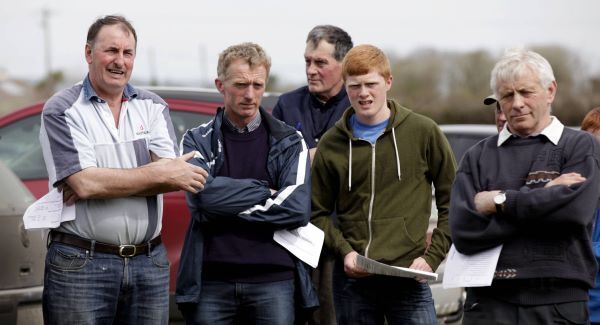
ICBF data shows a significant increase in AI dairy breeding over the past five or six years.
Increase in AI breeding shows proves profitable

Previously, only 16 AI-bred heifers per 100 cows were being bred each year.

For the past few years, many of the best farmers have been setting a target of 40 AI-bred heifers per 100 cows, to allow for expansion, culling and the sale of surplus stock. However, it takes five or six AI straws to produce a suitable dairy heifer calving down.


Sexed semen has shown great promise, and with further development, will be of great benefit in the future.

Farmers have a great choice of AI bulls now. Some of the genomic bulls have been proven, and there is a vastly improved range of proven and genomic bulls available. Farmers can now select bulls from the latest EBI list which will breed cows with the potential to give them massive extra profit per lactation over cows bred from average stock bulls.

Moreover, they can select bulls that will improve traits that may be deficient in their herds, such as fertility, milk solids etc. Fertility has been a major problem on dairy farms for decades, and as a result, 40% weighting is given to fertility traits in the calculation of the EBI.

Another proven option that might suit some farmers is cross-breeding. The main advantages of crossbreeding are improved fertility traits.

However, with the availability of EBI fertility data, and good management, farmers can improve fertility without crossing to other breeds.

Understandably, many farmers are slow to change from high-EBI Holstein-Friesians, especially to Jersey crosses, because of reduced male calf and cull cow values. Total crossing to other dairy breeds remains at about 5%. The Holstein crossed to pure Friesian is becoming a growing trend, especially among farmers whose system suits high-yielding fertile herds with medium beef qualities.

Changes to EBI

The Economic Breeding Index (EBI) is being regularly updated, with extra criteria added. The weighting factors in the EBI are based on the Moorepark dairy farm system model. This model is updated annually to reflect the latest projections on milk price and costs, based on five-year projections. More lactations are now included in the EBI.

Genomic Selection

One of the biggest breakthroughs in breeding is the development of genomic selection of bulls, which is led by Teagasc researchers. This is a relatively new technology which involves studying the DNA of bulls in order to predict what traits they have to pass on to their offspring. Genomic selection has the potential to revolutionise dairy breeding, by reducing costs and increasing the rate of genetic gain. Compared to the traditional method of proving bulls, the genomic system will identify top bulls at a very early age, rather than wait for six or seven years.

Active Bull List

The ICBF publishes its top active dairy AI sires regularly. and it is being continually updated. Over the past few years, there has been a massive increase in EBI values, ranging to dover €330, with more than 100 over 250. These EBIs would have seemed unrealistic a few years ago.

There is a large increase in the fertility index of the EBI, while milk volume has decreased significantly.

The present list contains a high proportion of Irish bred bulls — compared to only two in 2001. The Gene Ireland progeny test programme and the genomic selection technology are the main reason for this change.

Farmers should study the active bull list carefully (it’s on the www.icbf.com website, under the heading of genetic evaluations).

They should get the best possible advice on their breeding policy, to ensure that they will be building up improvements to their herd that will deliver the best profit under conditions of proper nutrition, disease control and management. Care should also be taken to avoid inbreeding.

Before the development of the EBI, cross-breeding was one of the main means of solving fertility problem. However, with the high fertility indices of some of the Holstein-Friesians, farmers can develop fertile, high-producing Holstein-Friesian herds without crossing.

Despite favourable reports on Jersey crosses, I think most farmers will wisely stay with the black and whites. This will give them the opportunity to have pedigree herds, as well as having valuable male progeny and cull cows. There is little doubt that the Holstein-Friesian will remain the main dairy breed in Ireland.

Because of relatively low reliability, genomically selected bulls should be used in teams of five, and proven bulls should be used on some of the herd. If using some sexed semen, a number of bulls should also be used.

As fertility remains one of the main problems in dairy herds, farmers should be choosing bulls with a high sub-index for fertility.

Different farmers have different priorities for their herds. While accepting the value of EBI and genomic selection, some farmers fear that enough attention is not being paid to type and production, and that some of the characteristics such as excellent udders, production efficiency and feet, which have been built up over generations, might be diluted.

There are many situations on Irish farms where land is limited, and relatively high-yielding, fertile herds are best suited, if management is good. Even without land restrictions, some farmers prefer herd yields of 1,400 to 1,500 gallons per cow (or higher), rather than average yields of 1,000 to 1,100 gallons. So, when choosing bulls, “there are horses for courses”.

More in this section

Farming

Newsletter

Keep up-to-date with all the latest developments in Farming with our weekly newsletter.

Cookie Policy Privacy Policy Brand Safety FAQ Help Contact Us Terms and Conditions

© Examiner Echo Group Limited