Weather defines your options for spreading slurry
In the past, the Nitrate Directive was far too restrictive with P but the new changes are far more liberal
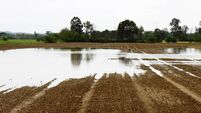
Don’t apply slurry in conditions which will cause soil damage or risk potential losses of slurry to waters.
Where tanks are full and storage capacity is limited, only apply slurry on drier and flatter fields, where the potential risk of waterlogging and/or run off is minimised.
The required set back distances from water courses must also be observed when applying slurry.
Where only a limited amount of land will permit application, aim to apply only enough slurry to allow capacity for the next two to three weeks.
Applying more dilute slurry (for example, by taking water from unagitated tanks) may also reduce the risk of nutrient losses.
Moving slurry to another farm should be considered where tanks are full and no fields permit spreading. Records of slurry movements must be kept and submitted to the Department of Agriculture before the end of year, under the requirements of the Nitrates Regulations. Note that slurry movements can also affect compliance with the 170kg/ha stocking rate limit on receiving farms.
Slurry has become a very valuable product and if used correctly it can make a great saving in purchased fertiliser.
Teagasc researchers put a value of up to €30 per 1,000 gallons on undiluted slurry or the equivalent to one 50kg bag of 6-5-38.
Approximately 85% of the value comes from the P and K but if spread in spring, much of the N (worth €5 per 1,000 gallons) can be utilised.
Therefore the ideal time to spread slurry is as early as possible in spring.
Most of the slurry should normally be spread on silage areas from where the slurry nutrients came from and ideally applied after early grazing and before closing up for first cut silage.
However it is estimated that only one third is spread in spring, half in summer, mostly after first cut silage and the remainder in autumn.
Pig slurry and cattle slurry have similar total value, but have very different levels of nutrients.
Average cattle slurry DM contains 15% N, 17% P and 68% K but this will vary with the level of nutrients being fed to cattle.
Pig slurry contains 43% N, 22% P and 35% K.
Remember that 75% of the N, 71% of the P and more than 90% of the K consumed by animals is excreted in the slurry.
Based upon its research, Teagasc estimates the total nutrients excreted by the national cattle herd is 146,000 tonnes N, 22,450 tonnes P and 126,000 tonnes K.
The results from 25,000 soil samples taken from dairy farms over the past few years show that 55% of soils are too low in lime, P and K for optimum grass growth and utilisation of N.
These results indicate why most of our grasslands are producing far short of potential. In order to make the best use of slurry and save in fertiliser costs it is absolutely essential to know the P, K and lime status of each separate area of your farm.
This involves having a proper slurry and fertiliser plan for your entire farm which necessitates proper soil testing.
How many farmers have a map of their farm showing the nutrient levels of different areas?
There are very few.
In former times, the Nitrate Directive was far too restrictive with P but the new changes are far more liberal.
The P and K in slurry is almost 100% available to grass in normal soils.
Once the P and K levels are brought up to standard (based on a soil test), P and K levels can be maintained by applying all the slurry in the silage areas.
This minimises the amount of fertiliser P and K that is required on the entire farm.
N availability
The availability of slurry N varies widely with factors such as timing and methods of application.
Approximately half the slurry N is in organic form and is not available to crops in the year of application but can be released gradually over time.
The other half of the N is in the form of ammonium which is readily available to crops under certain circumstances.
By spreading slurry in early spring by traditional methods, it is estimated that 25% of the N can be utilised but if spread during summer only 5% is available because it generally goes away in the air in dry summer conditions.
New developments in spreading techniques such as the trailing shoe or band spreading or the dribble bar increase availability further.
The target should be to apply at least 75% to 80% of slurry in spring before closing up for silage and the remainder before mid June, in cool and moist conditions if at all possible.
This will significantly cut the cost of fertiliser N for silage.
New research has shown that diluting slurry with water makes its nutrients more available to grass.
It is advised not to graze for six weeks after slurry and don’t apply N within seven to ten days of slurry.
Slurry should not be applied to ground until lime is well washed into soil.
Urea should not be applied to ground that has been limed since last autumn.