Senate saved, but now 678 local councillors face chop
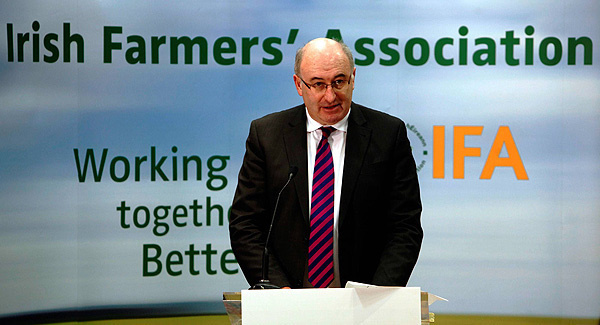
The people saved the 60 senators — but Environment Minister Phil Hogan has now set his sights on 678 local councillors.
Last week, Minister Hogan launched the most radical reform of local government in 100 years, his Local Government Bill 2013.
Before the local elections in 2014, he wants to reduce the number of local authorities from 114 to 31, and the number of elected members from 1,627 to 949.
Quangos will be no more; no separate structures will be established outside of local government for the delivery of public services, unless clearly necessitated.
But whether cutting the numbers will make local public service more efficient remains to be seen.
The aim is to construct local government as the vehicle for public-service delivery at local level, while leading economic, social and community development, and representing citizens and communities effectively and accountably.
The co-ordination of publicly funded economic and enterprise supports, and the streamlining of structures for such supports, are also stated aims.
Co-operation, co-ordination and collaboration will be needed.
In other words, the human touch, and the calibre of representatives we elect in 2014, will be vital ingredients in this huge reshuffle, in which rural economic activity is at stake.
Strategic Policy Committees (SPCs) will prepare local action plans for economic activity and job creation, and will control the Local Enterprise Offices (LEOs), which replace the County Enterprise Boards.
At first glance, the reform seems to be about rearranging a forest of acronyms.
A new National Oversight and Audit Commission for Local Government (NOAC) will independently scrutinise local-government performance. So citizens will be better able to judge how well their council is doing.
Minister Hogan promises comprehensive measurements to demonstrate if real reforms, which citizens can see and benefit from, are achieved.
He says that local government must first regain public trust.
The promised scrutiny of local-government performance will help citizens choose the councillors, whose leadership and skills will largely determine the outcome of local-government reform.
The reform is designed to strengthen their decision-making powers.
And from 2015 onwards, they will have the power to increase or decrease the local property tax.
Woe betide any council that will increase the tax and do poorly in the promised scrutiny of performance.
Nor will councillors be forgiven by voters if local-government reform is seen to have an adverse effect on local enterprise and economic development.
Local councils are being given a greater say in these areas, too, on Local Community Development Committees, which will co-ordinate the millions of euro spent each year on local and community development initiatives.
Already, existing, local development companies are worried by the eleventh hour renaming of LCDCs, previously supposed to be SECs (Socio-Economic Committees).
People are wondering if economic and socio-economic functions are being downgraded, or transferred to LEOs.
LCDCs will have representatives of local authorities and other state agencies, local and community interests, civil society and economic and social partners.
They will have the heavy responsibility of providing employment, training, personal development/capacity building, and other supports, to the harder-to-reach in the most disadvantaged areas in society, including rural areas, with €48m to invest in 2014, plus the LEADER Rural Development funding to improve the quality of life and promote growth and diversification of the rural economy.