Cuts will cause minimum impact on farm families
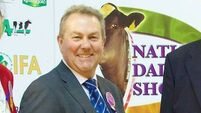
With reports of reductions of €54m in his budget, we asked him where he felt he would be focusing on to make these changes and what the red line areas are for him:
* Minister, last week you said that the Department of Agriculture had to make reductions of €54m to its budget. Where do you think these reductions will be made?
* “The crux of the issue is that we are being asked by the Department of Finance to spend €168m on the capital side, which includes TAMs scheme and forestry, and €1.02bn on the current side next year, which includes farm schemes and the cost of running my department and its agencies. That essentially means a reduction of €28m in current expenditure and of €25m in capital expenditure. Up until budget day we will be trying to change those figures where possible. We will be making the case again this year — having been successful in the last two years — for increasing our capital budget. That is not to say, however, that we will be able to do it again, but we are certainly going to try very hard to do so. At present the figure to be saved between current and capital expenditure is approximately €54m, which means that all areas must be scrutinised carefully to see where savings can be made with the least impact on farmers and farm families.
“The cost of running my department and its agencies have overall been reduced since 2008 by €76m, or approximately 25%, with a reduction of 31% in staffing levels 4,800 in 2005 to less than 3,300 currently.”
* What about sectors that need more support?
* “I have spoken publicly about the need for us to look at vulnerable sectors, such as the suckler beef sector, and examine ways we can provide support while at the same time making the savings we are required to make. This is not a straightforward budget; we do have savings that must be made, but I am acutely aware of the pressure some sectors are under and the need to support them.
“I hope we will not have to reduce the disadvantaged areas payments this year if we can avoid it, because savings have been made in the past two years.
“I made one choice in advance of the budget. It does not make sense to introduce a temporary AEOS next year. Last year and the year before, we introduced new schemes valued at €20m each and we prioritised farmers who were coming out of REPS. We will look at what environmental schemes can be introduced as part of the new rural development programme under the new CAP and seek to introduce a comprehensive new scheme in 2015.”
* What role will the new CAP play in budget decisions?
* “CAP implementation is a bigger concern to farmers than the budget. They are both of concern, but farmers really want to know how the single farm payment will be redistributed, what the rural development programme will look like, the extent of a new environmental scheme, how disadvantaged area schemes will be viewed in the future, given that we are redistributing single farm payments, and whether that should change how we look at disadvantaged area payments. These are the types of issue we need to finalise before the end of the year.
“My job is to ensure I represent the farming view and that we try to spend as much money as we can throughout rural Ireland and support the agri-food sector. There are issues also with regard to young farmers, new entrants, active farmers, whether a cap should be imposed and whether we are allowed to introduce one which are also under discussion.”
* Are you looking to introduce any additional tax measures to support the industry?
* “As regards this budget, I do not want to give the details on all the measures, but we are trying to keep the same priorities intact around trying to make more land available at affordable prices, which essentially means leasing because buying land is almost impossible in Ireland because it is so expensive, particularly for young farmers. We are also trying to do some other strategic things with the tax system around environmental management and climate change.”
* Is the agri/food sector still in your mind the good news story in Ireland today?
* “Without a shadow of doubt. In the two budgets this Government has introduced, agriculture has been singled out as an area paramount to Ireland’s economic recovery.
“I spent last Sunday and Monday in Germany with Bord Bia and 17 Irish companies at the world’s largest food fair. Our food and drink exports to Germany were worth €519m last year, an increase of almost 6% on the previous year. At the end of the month I will lead a trade mission of over 40 companies to the United Arab Emirates where Irish exports have grown from €20m in 2009 to €34m in 2012.
“And, when you look at the rest of the figures, they speak for themselves:
* Exports growth has reached a record €9bn in 2012, cementing the two-digit percentage increases seen in both 2010 and 2011.
* The dairy and beef sectors were the strongest performing categories in 2012, representing €2.7bn (29%) and €1.9bn (21%) of total food and drinks exports respectively.
* The biggest growth in 2012 was seen in the Seafood and Pigmeat categories which grew by 18% (to €493m) and 15% (to €457m) respectively.
* The value of exports to the British market increased by 5% in 2012 and this accounted for 42%, or €3.8bn, of total Irish food and drink exports, while Irish exports to other European markets totalled €2.8bn or 31%.
* Further afield, the food and beverages trade to outside Europe grew by 8% or €200m, reaching a total of almost €2.4bn.
“Our agricultural colleagues have huge demand for places as do agricultural related courses in all our colleges and universities, with young people recognising the jobs potential in the sector. Indeed some of the most significant jobs announcements in recent times have been from food companies such as Kerry Group and Glanbia.”