The kind of name calling that keeps it all in the family
It still happens more than rarely, and you know that as well as I do, especially if you are a rural dweller
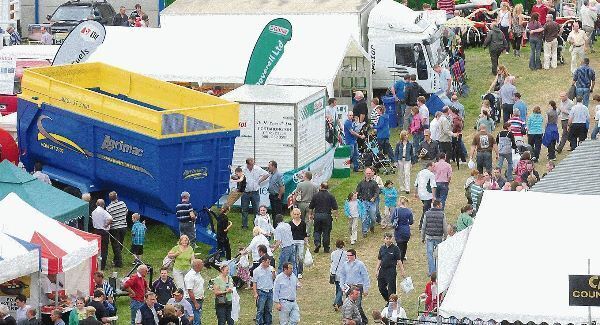
At Tullamore Show next weekend, or wherever you go in rural Ireland, you are likely to be introduced to Asonas.
Despite continuing recession, there are still many thousands of Asonas in rural Ireland? Are you one of the breed?
If you are still living in the parish in which you were born, you probably are.
Have you ever recognised the reality of being an Asona?
I was a registered Asona for the first 18 years of my life, until I left home for what we always called the Free State, many years ago.
My Asona status expired the minute I crossed the Border, and only returned briefly in later years when I came home for family funerals.
Then, for the duration of the funeral, I became a fully-fledged Asona again.
It’s a strange feeling too.
We are in a complex genetic zone here, which requires real academic study, and is largely beyond my ken.
However, for what it is worth, I would argue strongly that it is largely positive to be a registered Asona for about the first 20 years of your life.
No longer than that.
I think it is largely negative to retain the status into your 30s or even 40s.
It significantly limits the range of your individuality and development.
It is somewhat depressing, even nowadays, to be introduced to an Asona in his 40s. It still happens more than rarely, and you know that as well as I do, especially if you are a rural dweller.
There are very few obvious benefits to the enforced wave of emigration which we are now enduring. One of the real positives, however, is the fact that all Asonas expire immediately once they leave Ireland and land in another country.
The death can be painful enough for many, and can cause both social and economic problems but, very quickly, the former Asona blossoms and develops his own self and actually welcomes the change of status.
We are masters on this island in polishing and improving the archaic and awkward enough brand of the Queen’s English which we have inherited through our history.
We polish it, drop the unnecessary embellishments, and vocally speed it up in all our daily conversations.
A readily available example of that is the way in which we often drop the “O” which the Queen’s English attaches to clans like the O’Sullivans and the O’Donovans.
We simply call them Sullivans and Donovans and save breath.
That’s just one of the many example, which exist and which are threaded through the best of our literature.
The Asona species, God bless them, has painlessly emerged from this linguistic process of improvement.
The species has always been especially numerous all along the west coast, from Donegal to Kerry, but there are also many Asonas in the heart of the midlands.
The real beauty of what has happened is that just one word captures all the qualities which would take three sentences to convey in the original language.
When one is introduced to an Asona on his home ground, you immediately become aware of his vices and virtues, his strengths and weaknesses, his special clan qualities, without another word being said. And that is the pure truth.
In England, or indeed in the major Irish cities today, when meeting someone for the first time, they are routinely introduced by third parties by their proper Christian names and surnames.
Due to our more polished and subtle language, that does not happen at all with Asonas.
You are introduced to “Asona Dan Donovan of Lough” or “Asona Mickie Barry”, and the Asona’s first name is never used at all.
It is a gorgeous linguistic shorthand, because Asona, of course, in the archaic English should read ” A son of....”
We turn that “of” into an “a” that conveys so much more information than the man’s Christian name, which really does not matter at all on home ground.
He is a member of a clan or sept with well-defined characteristics.
We need know no more until much later. As I said above, I believe it is a good thing that Asonas expire once the bearer leaves the island or even migrates to another county.
Then he stands on his own two feet, makes his own gains and losses in life, and becomes a real man in his own right.
Last time I went back to my home parish, I became for two days, not Cormac MacConnell at all, but Asona Sandy MacConnell.
It was a good feeling for those three days, but also a salutary experience.
And that, once again, is the pure truth.