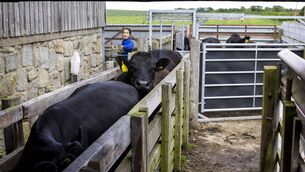
For bulls to reach slaughter targets, they must gain weight every day
Both dairy bred and continental bulls are on heavy finishing diets, with an aim of slaughter under 20 months.
If you want these cattle to finish at target weight, target age and target grade, then they must gain substantial weight every day of their lives.
Setbacks should be avoided at all costs. You must take maximum advantage of the hormonal effect of young bulls to optimise profit through feed efficiency.
Feeding outdoors or indoors?
With many farms finding grassland hard to manage these days, it is likely that for most the option of feeding bulls meal at grass is a difficult one to implement.
For many, the easiest option may in fact be to bring them inside and start finishing them.
Once you have bulls in the shed, are they grown well enough to start finishing?
What is your target market — by weight, age, or grade?
Are your facilities suitable for the feeding programme you have in mind?
What feeds are available to you, and what will they cost?
What is the quality of the available forage?
It is critical that bulls don’t commence a finishing regime until they have been grown correctly. If they are not grown properly, they may begin a growth spurt during the finishing period, resulting in poor conformation and kill out percentage.
Carcase Quality
It has consistently been seen that increasing the daily weight gain in the final months of finish will improve the conformation of the animal and the lean meat yield of the carcase. While it’s not possible to perform miracles, it is possible to move a proportion of O plus graders to R, and Rs to U minus.
What diet?
When setting up a diet to achieve target weights in bulls, ensure the total diet has a high energy density, and don’t overfeed protein per kg of dry matter. Exact specifications are weight and breed-dependent.
Ensure that the ration contains sufficient fibre to maintain rumen function, and that there is clean fresh feed in front of the bulls for 22 to 23 hours per day.
Ideally, fresh feed should be provided every day, to encourage intakes.
Forage Quality?
The source of forage used to finish bulls needs to be top quality. Low quality forages have absolutely no role in getting the final cover on bulls. Good quality forage can play a major role in reducing overall finishing costs, and can also provide an essential source of structural fibre.
Good quality maize silage, wholecrop cereals, brewers, wet distillers and beet provide excellent forage energy sources for bulls, in conjunction with balanced concentrate.
Ad-lib
Ad-lib feeding of concentrates may be a more economical option for bull finishers, if only poor quality silages are available.
Many get confused by the term “ad-lib”. It is simple, it means the cattle must have access to meals 24-7.
They must also have access to good quality, clean, straw at all times. Hay is a poor substitute for straw; it does not promote optimum rumen function, and depresses intakes and ultimate weight gains in bulls.
Ration quality
The best concentrates for finishing bulls must include high levels of cereals in the form of barley, wheat, and maize meal. Digestible fibre sources, such as soya hulls, citrus and beet pulp, are also important to maintain rumen function in these intensively fed animals. Protein, while not required in large amounts for finishing bulls, is required to encourage intakes and balance the energy provided, for optimum weight gain.
Where possible, avoid having filler ingredients high up the label. Ask your feed supplier for the UFL or ME value of the concentrate you are considering for your bulls. A good quality mineral spec is also important. Most meal providers have a bull beef ration in their portfolio. Many finishers may introduce straight maize meal to their current concentrate as a means of achieving the final cover on bulls over the last 30-40 days.
Water
Water is also a critical element to get right when you step up feeding for bulls. It should be clean and in plentiful supply. If cattle don’t drink, they don’t eat, and if they don’t eat, they don’t thrive.
Environment
It may be obvious, but do your cattle have enough space in the shed to achieve optimum performance? Can they all lie down and can they get to their feed without having to walk all over their comrades? Make sure ventilation is adequate also.
An electric fence over bulls should not be required in sheds, if they are fed and managed correctly. Unhappy bulls will fight and mount each other, resulting in poor thrive, stress and injury.