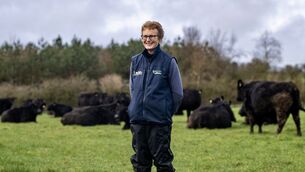
Livestock success in searing sunshine

Humans have had long, varied and sometimes ambiguous interactions with animals.
Livestock success in searing sunshine

Essential for our survival they have also been revered as awe-inspiring, loyal companions and as messengers to and from the gods — and sometimes worshipped as gods themselves.

Images of animals have been scratched on rocks, drawn on cave walls and used as religious symbols.

The history of animal medicine can be traced back to those early and enterprising Greeks and Romans and medication, which would preserve animal health, became increasingly more significant.

As humans tried to better understand illness in their own bodies, they began to realise that these same illnesses seemed to attack their animals as well. The Chinese were early users of herbal cures, which they used for both humans and animals. Records that date back to 4000BC document this early use of various herbal cures.

But it wasn’t until 500BC that Greek scientist Alcmaeon was the first person to actually dissect an animal for scientific purposes. From the findings of such Greek scholars and scientists such as Virgil, Cato and Alcamaeon, the Roman Columella compiled an extraordinary twelve volumes of animal related publications on topics such as breeding, husbandry and health in livestock.

His works included early medications, some of which were still in use in the Middle Ages There was much concern over animal plagues and the devastating effect they had on humans and in particular, on farmer’s productivity. The disease of sheep pox, for instance, on communities whose economies depended on them, was first identified by Fracois Rabelaias in 1494 making it possible for work to begin on finding methods of prevention.

By the 1700s, Rinderpest was first diagnosed as a plague, which decimated European cattle, leading to one of the first vaccinations being developed that same year.

Gradually, the accumulation of knowledge about animal diseases and the various medicines being developed to treat them grew. But for George Dadd, a British surgeon turned veterinarian this progress wasn’t fast enough. He wrote that the barely-organised veterinary profession was “a matter for reproach … The farmers must begin to see the absurdity of bleeding an animal to death with a view to saving its life, or pouring down their throats destructive agents with a view to making one disease cure another”.

Today, advances in animal husbandry and the treatment for diseases continue to grow apace. But simple, basic treatments that farmers in this country might take for granted, are prohibitively expensive or simply not available in many parts of the developing world.

Bimeda, an Irish company who manufacture animal medicines, recently sent their resident vet Padraig (Paudie) Hyland, on a fact-finding tour of East Africa. I talked to him about his experiences.

*What was your brief on this trip Paudie?

>>“Bimeda sees its role in Africa to be about educating livestock owners about diseases as well as providing solutions aimed at preventing an enormous range of devastating conditions. My trip was a humbling and awe-inspiring adventure I experienced everything from talks with vets and farmers in Zambia to huge cattle camps of South Sudan and several extraordinary meetings with Maasai herdsmen I learned so much from the locals I met.”

*What is your own background?

>>“I’m as farmer’s son and I’ve always had a particular interest in cattle. I spent 10 years in veterinary practise in Ireland before I joined Bimeda in 2011. Last year I had the opportunity to travel to Eastern Europe. And recently I’ve had the chance to spend two weeks promoting good veterinary practise in Africa, where Bimeda have a base. It was fantastic. Many people would be of the opinion that companies go to Africa to exploit but I’m proud to be able to say that I’ve had first-hand experience of just how much companies like Bimeda can do in terms of education, building facilities and working with the authorities to ensure the availability of key medicines.”

*What were the most common diseases that you came across?

>>“Without a doubt, East Coast Fever, (ECF) a tick-borne disease which kills about a million cattle every year and liver fluke too. The fluke is so bad that 90% of livers are rejected in the abattoirs. After we’d visited Zambia, we made our way to South Sudan, the world’s newest country where there are some enormous cattle camps, 3,000 animals or more And we found that although it wasn’t associated with the region, ECF was high on the list of disease problems these people were having as a result of war-driven migration of people and livestock.”

*I believe that one of the highlights of your trip was a visit to the Maasai Mara Game Reserve?

>>“It was incredible. We travelled to Maasailand to take part in Bimeda herd health work and to meet the famous herdsmen. I’d been warned in advance by a local priest that the Maasai were a proud people who believed themselves to be the best herdsmen on earth and that they may not take kindly to a few Irish lads telling them how to become better stockmen. But luckily, these tribesmen, who carry machetes and clubs on their belts, took our advice on board readily and were only too keen to exchange information with us.”

*What were the biggest advances you came across?

>>“Probably the Bimeda-sponsored dips that we visited. In Kenya the better farmers dip their cattle once a week in massive dips to control the spread of ticks and tetse flies. And apart from the control of diseases, I’d say that finding a sustainable market where people can turn their stock into cash for medication and other necessities is clearly a major problem. Markets are just too far away and there are little or no roads. Now I’m very keen to return to see the results of the work that our team in Africa is doing.”

x

More in this section

Farming

Newsletter

Keep up-to-date with all the latest developments in Farming with our weekly newsletter.

Cookie Policy Privacy Policy Brand Safety FAQ Help Contact Us Terms and Conditions

© Examiner Echo Group Limited