Amendments are good news for food and farms
The parliament, which is the only directly elected European institution, has moved to weaken the CAP reform environmental proposals, while agreeing to reduce subsidies to very big farms.
Exemptions from environmental proposals for 82% of the EU’s farmers are on the wish list proposed by the European Parliament’s Agriculture Committee.
The committee also wants at least 25% of EU co-financing for rural development to be spent on conservation.
But the list of proposals must get the approval of the full parliament in March, before going into the mix of member state/parliament/European Commission negotiations which will decide the future shape of European agriculture and food.
The parliament’s Agriculture Committee also backed an amendment to give national governments flexibility to transfer savings from the first pillar (mostly made up of the single farm payment) to rural development projects.
They voted for even stronger redistribution of farm income aid among member states than the Commission had proposed, but supported the Commission’s plan to devote 2% of the CAP to encourage young people into farming; they also supported a scheme for small farmers receiving up to €1,500, which is €500 more than the Commission recommended.
The parliament’s Agriculture Committee wants wider powers for producer organisations, along with crisis prevention and management tools, including market withdrawal, as a last resort.
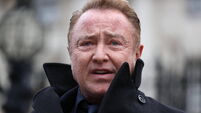
Committee member Mairead McGuinness, Fine Gael Ireland East MEP, says their amended proposals are complex but highly significant, and augur well for Irish agriculture and food, but are subject to a satisfactory outcome of the delayed overall EU budget talks.
*Which of the proposals your committee voted for are most welcome from the Irish agri- food point of view?
>>One of the key points in our vote last week is the determination to ensure that CAP support payments go to active farmers. This is an issue not just in Ireland, but in many member states where we see direct payments going to those who do not actively farm. So much of our debate has been about how to strengthen the provisions to focus payments on active farmers. We have given flexibility to member states to define active farmers and we need more debate and discussion about this before we reach a final agreement.
Also, the parliament supports the compulsory nature of the young farmers initiative, which is an important political signal.
We have attempted to make the greening measures more practical and to give flexibility to member states to manage internal convergence. What is important to understand is that the process is in the early stages, and we keep several options and possibilities on the table as we enter into discussions with our colleagues outside the Agriculture Committee and with the Council of Farm Ministers. This is not the end of the process, it is the opening position of parliament, and it is inevitable that we will have to compromise on aspects of our vote before a final position is taken.
*Which parliament proposals do you have reservations about?
>>I don’t have specific reservations at this point in the process. In fact, I think the Agriculture Committee achieved the impossible, by managing to distill thousands of amendments into a coherent set of proposals. Reaching agreement between political groups was not easy, but it did work. My concerns are about the timeframe around agreeing the budget for the CAP, and whether that budget will be adequate.
*How much do you think the full parliament will change your committee’s proposals?
>>It is inevitable that when the parliament votes in March, we will see further amendments put forward. The issue of external convergence, that is, distribution of payments between member states, is particularly politically difficult, and I expect colleagues from the new member states to fight for more. This issue is also likely to be addressed in the EU budget talks (MFF). Similarly, there may be efforts to change the “greening” proposals. Some colleagues believe that there should be 10% ecological focus area on farms, while I have tried to convince my colleagues that we should focus on outcomes, not headlines. As we try to integrate environmental measures in Pillar I payments, we show farmers the benefits of these measures to their farming enterprises.
*CAP talks are held up until the overall EU budget can be agreed. Will these proposals help secure CAP funding in the overall budget?
>>I regret to say that our proposals will probably have little impact on the discussions on the EU budget for the period 2014-2020. Last year, when EU heads of state and government met to decide on the level of the budget, it was clear severe cuts were being demanded by some member states, especially those who are net contributors to the overall EU budget, including the UK, Netherlands and Sweden.
Council president Herman Van Rumpoy tabled proposals for a €75bn cut over the term of the budget. A further meeting is scheduled for Feb 7-8. We cannot be certain of an outcome on this occasion, but we hope that agreement on an adequate budget would emerge so that we can continue our detailed work on reforming the CAP. The parliament will have a say on the budget in our March plenary and while there is a desire to reach agreement, the parliament is not likely to accept a budget not fit for purpose.