MEP acknowledges ‘essential service’
She also placed the current discussions on CAP reform in the context of the original objectives set for it in the Treaty of Rome in 1957.
Reading a speech is never quite the same as hearing it delivered. You can only guess at the emphasis placed on certain words and phrases, and at the subtle nuances of tone in other areas.
However, upon reading it for the first time, I was left with a feeling that a good number of the simpler ideals and practicalities of farming were conveyed with absolute clarity and persuasion.
“In its long history, it is significant that agriculture is the only really common policy that the EU has established and developed. And while there are critics of its cost, those pale into insignificance in terms of the sector’s delivery to society.”
This point, made by McGuinness is, to my mind, often conveniently ignored when critics attack the percentage of the EU budget given over to agriculture. The social welfare and health budgets account for tens of billions of euros in the Irish domestic budget annually, yet agriculture gets only €2.6bn annually, and not only maintains tens of thousands of jobs directly and indirectly at home, it also contributed to food exports in 2012 of over €9bn.
And it has the major input into the uniqueness of the Irish countryside, as maintained by farmers, which underpins a great deal of our tourist industry revenues.
“Remote management of our landscape just does not work, ” said McGuinness. (A point also touched on by Michael Healy Rae recently, in relation to satellite supervision and its cost to farmers with rush infested fields after the rains of 2012).
“We saw, to the detriment of our hills, how policy decisions of the past, which worked on paper, translated into problems when put into practice”. A reference, presumably, to the EU-imposed destocking of certain areas deemed environmentally sensitive a number of years ago, but which had to be reversed when it was discovered that traditional farming practices played a vital role in maintaining these areas’ unique biodiversity. As McGuinness pointed out, “It takes people, and people with knowledge and understanding, to maintain our countryside”.
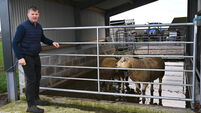
“We have just come through the Christmas and New Year period when people come and go, yet on farms in the UK, and Ireland, and across the EU, farming life continued its daily schedule. Cows were milked, cattle fed and sheep tended to. This essential service was maintained for all our benefits.”
While we farmers do all these things as an almost automatic reflex, we are the one group who possibly don’t truly recognise how fundamental and important we are to society as a whole.
What I have quoted are only extracts of Mairead McGuinness’s speech, but they speak of a woman who has, in my opinion, still got the essence of Irish farming under her finger nails.
That said, I don’t agree with her when she says that the entry of the European parliament into the process of CAP reform has made the process “more transparent”.
There are 7,000 Parliament amendments proposed to the CAP system.
Changing the system away from the sole remit of farm ministers, and adding in the European Parliament, smacks to me of an attempt by those in Brussels to make the discussions and decision-making so complex as to be beyond the understanding of ordinary people, including farmers (or even ordinary politicians).
Is it possible that what’s really being micro-managed here in the long term is not farming but democracy?