CAP budget fears add to litany of farming woes

Summer 2012 will be remembered for the incessant rain, worst in the south, which made farming extremely challenging.

CAP budget fears add to litany of farming woes

Sodden grass and crops yielded up poor quality silage and grain, and lower yields.

Farmers face a winter of ever increasing costs, not least higher diesel costs and more expensive winter feed, as global grain prices rocket on the back of poor harvests.


These trends emerge as the EU debate about reform of the Common Agriculture Policy intensifies. Proposals include radical changes to direct payment support to farmers.

In parallel with detailed reform discussions, the EU is working towards agreement on its 2014-2020 budget.

EU budget discussions are never straightforward, requiring agreement between 27 member states. In that context, there are deepening concerns about the CAP budget.

Several member states want EU budget cuts — leading to a recent EU Council conclusion that cuts in the CAP budget are “inevitable”.

This poses a serious threat to Irish farmers, with nearly 75% of their income in EU direct payments.

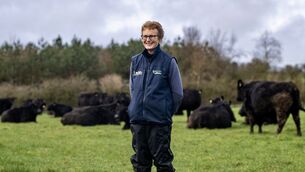
Ireland East MEP Mairéad McGuinness, who closely monitors the budget negotiations, has expressed grave concern about the conclusions of the Cypriot Presidency — that agreement cannot be found around the budget proposed by the EU Commission, and that all its proposed expenditure levels will have to be reduced. She sums up the state of play in the budget negotiations, and those surrounding CAP reform.

* How real is the threat to the budget. Its member states haggling over figures not a normal part of budget fixing?

>> There is no doubt that agreeing the budget for the EU is never easy, given that there are so many different perspectives among the 27 member states. The negotiations this time around are equally difficult. What is different is the hard line of some member states based on the view that if member states are implementing austerity at home they should also practice austerity in contributions to the EU budget.

This is a key issue for member states that are net contributors to the EU budget.

The view that the majority in the European Parliament hold is that an adequate budget is needed to kick start and drive the growth and jobs agenda. On the other hand, key member states support the principles of the CAP, and understand the importance of it to farmers and rural communities.

The reform proposals are asking farmers to do more for the environment under the greening measures. Cutting the budget makes little sense, but based on the conclusions of the Cypriot presidency, following in-depth discussions with member states, there is little willingness among some member states to soften their approach to the budget.

* Can any hard and fast conclusions be drawn about the 2014-2020 CAP, or is everything still in the melting pot?

>>The only thing certain is the proposals of the EU Commission. What is equally certain is that these proposals will not remain unaltered, and that between the ongoing work in Parliament and in the Farm Council, changes will be agreed on many aspects of the original proposal. So, at this point, it is impossible to draw accurate conclusions on what is a complex process involving the Council and the Parliament, working with the Commission.

That said, we can predict areas where some change is likely, including the three controversial greening measures — crop diversification, ecological focus areas and permanent grassland.

There is also pressure for greater flexibility on moving towards a flat rate direct payment per hectare.

* One of the few proposals EU leaders agree on is more equitable distribution of direct support; so could Irish farmers with high single farm payments suffer a double cut?

>>“Fairness” in the distribution of direct payments is tackled head-on in the Commission’s proposal, with this idea for a flat rate payment per hectare by 2019. If this was adopted, farmers with very high payments per hectare would see their payments fall. Of course, if the overall budget for agriculture is cut, there would be less money for both direct payments and rural development. If the money is not there, it cannot be paid out, and in those circumstances — as envisaged by the Cypriot presidency — there would be reductions in direct payments and in rural development spending.

* Will new CAP proposals to save money be put to EU Agriculture Ministers at their Sept 24-25 meeting?

>>It is not the case of new CAP proposals being proposed at this stage. The Agriculture Council and MEPs in the European Parliament are working to amend existing proposals. The big budget issues will be dealt with separately by Heads of State and Governments in a special EU summit on Nov 22-23.

It would be wrong for the Council or indeed the Parliament to start proposing cuts. Given the difficulties in farming this year, it would also be inappropriate. Direct payments are a significant part of farm incomes in Ireland, and it is a priority to maintain the CAP budget as proposed by the Commission.

* Will the deteriorating world grain situation due to the US drought lead EU leaders to go easy on agriculture?

>>I think that the global situation in grain and agriculture commodities is providing world leaders with food for thought. Volatility and uncertainty in markets have increased significantly. The impact of food insecurity in the developing world has and will continue to give rise to political instability. So there is a major issue for global leaders to recognise and address this.

In terms of attitudes to agriculture, I believe that there is strong political support to continue with a well-funded CAP, but there are also political realities in member states where support for the EU and its spending is waning. It is against this background that cuts are being talked about.

It is not just agriculture that could face cuts, but all policy areas including research, cohesion, etc. Agriculture accounts for almost 40%of the EU budget, so in the worst case scenario less money in the overall EU budget means less for the CAP.

x

More in this section

Farming

Newsletter

Stay ahead of the season. Sign up for insights, expert advice and stories shaping Irish agriculture.

Cookie Policy Privacy Policy Brand Safety FAQ Help Contact Us Terms and Conditions

© Examiner Echo Group Limited