Single agency best for a rapid response to floods
Up to 43 authorities are involved in the Shannon river area, said Willie Penrose, TD, 12 years ago, when he launched the Labour Party’s Shannon River Authority Bill — one of very many calls for such a body over the decades, usually prompted by severe flooding.
Now, farmers are more than ever at the receiving end of flooding damage, especially in the Shannon callow regions beside the river, which can normally be farmed in the summer, but are under water this year.
IFA flood project team chairman Michael Silke says: “The persistent failure to maintain our waterways over the last 30 years has created unnecessary hardship for thousands of farm families and rural dwellers.
Successive governments have not dealt with this issue, and landowners have suffered the consequences of their inertia. It is now time for action.”
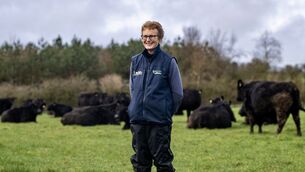
Farming in the Callows himself, he has seen at first hand how persistent summer flooding over the past decade have damaged farms — and swept away the nests of the area’s rare birds — corncrakes, curlews, red shanks and lapwings.
>>Farmers have lost grazing land and land earmarked for saving winter fodder. We estimate that 2,000 farmers have been badly hit by the recent floods. Others have had to move animals to higher ground, and also some farmers have had to supplement lost grass with expensive meal feed. The problems for farmers are getting worse, and due to the lack of maintenance on the River Shannon, losses are happening more frequently. These losses, in terms of reduced output and increased costs of production, will impact severely on farm income in 2012. Most farmers in the Shannon Callows are engaged in cattle and sheep production, which has low margins in any case. The flooding is exacerbating the income situation. Even with an improvement in the weather, the land that has been flooded is a write-off for this year.
>>In relation to birdlife, the severe flooding has destroyed the nesting ground of the corncrake, for example. The main issues for farmers are the lack of maintenance and the actions of Waterways Ireland and ESB, which control the levels of the Shannon without any due regard for landowners. These points were made strongly to the Minister in charge of the OPW, Brian Hayes, when we met him last week. It is amazing that there is a protocol agreed between Waterways Ireland, ESB and OPW which was established in the early 1970s. Farmers are not consulted, and this protocol should now be revisited and farmers’ and landowners’ views must be taken into account.
>>The frustration of farmers is understandable. The recent floods were inevitable given the levels of rainfall forecast in early June and the inaction of the various bodies was unacceptable. Farmers along the Shannon feel isolated and ignored. Prior to the recent flooding, Lough Ree was three feet above the level required for navigation, and there was no justification for that. OPW must become the lead agency, through statute, and must ensure this situation is avoided in the future.
>>It is one of many actions required. The current policy of ‘hoping for the best’ is not good enough. It should be replaced by ‘planning for the worst’, as it is only with significant safeguards that the impact of flooding on farmland can be reduced.
>>The problems with levels on the Suck and the Brosna are similar to the Shannon. The lack of maintenance over many years has meant the water doesn’t move fast enough. Dredging on parts of the Shannon must be a priority as the build-up of silt from Bord na Mona’s activities over the past 50 years has reduced the capacity of the River Shannon to hold water and allow a freeflow along the main channel.
>>There is a lot of expectation that the Catchment Flood Risk and Assessment Management Study (CFRAMS), which is being undertaken at the moment, will address the issue of flooding once and for all. It is up to Minister Hayes to fast forward the findings of the study. In the meantime, interim projects such as removing siltation barriers and lowering the levels in the lakes must be prioritised. While the CFRAMS will deal with the long-term problems of winter flooding, the solution to summer flooding, which is becoming more frequent, must be addressed.