5% of land for organic is unrealistic
These alternatives include farmhouse cheese, organic production, horses, deer, goats, rabbits and in recent years, energy generation.
However, few alternatives were much use for improving family farm income and there were some costly failures.
Farmhouse cheeses has been one of the more successful enterprises developed to enhance farm income. This is a growing business, but nevertheless, will always remain in the hands of a relative few specialised producers. Farmhouse cheese production requires a high level of expertise and marketing skill. Advice and guidance is available from Teagasc and other sources.
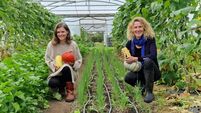
There is a boost for “alternatives” in the farmers’ markets around the country, because they are a good idea for bridging the vast gap between farm gate prices and consumer prices. They enjoy a favourable public image and provide a valuable outlet for some specialist small producers of home-made produce such as cheese, cakes and most other types of food.
They also provide an opportunity for consumers to buy fresh local vegetables and organic produce. However, markets are unlikely to have significant effect in our multibillion euro food industry, which is driven by exports.
Nor do I see great potential for income on Irish farms in organic farming, forestry and energy cropping, which I consider in greater detail below. THERE has been a huge push toward organic production in the past few decades.Teagasc has been very involved, and many millions of euro have been spent developing and promoting organic produce.
Despite claims to the contrary, organic food has little benefit to offer over freshly produced non-organic food produced under similar conditions and within normal health and safety regulations.
There will always be a limited market for organic food, and it is desirable that it should be supplied by home producers. However, organic produce will always be only on the fringes of Irish agriculture. The last Government set a target of having 5% of agricultural land under organic production in 2012. This target is unrealistic, and will not be achieved.
We now have only about 1% of our agricultural area under organic production, engaging about 1,200 producers. Some of these producers are very small-scale.
According to an EU Commission report, the area of Europe farmed organically increased by 7.4% per year, to 7.6 million hectares, or 4.3% of agricultural land, compared with 3.9% in 2007. In 2008, 1.4% of all holdings in the EU-27 were involved in organic production, with a sizeable number entering and leaving the sector each year.
The earliest adopters of organic production were in Sweden, Denmark and Finland, but the number of organic farms in these countries has begun to decline. 80% of the total organic food spending in the EU-12 (€14.4bn) is in Germany, France, Britain and Italy, and demand growth was strong in these countries up to 2009.
The recession in 2009 reduced demand in Britain by 14%, while the market is stable in Germany, and still growing in France and Italy.
Despite a significant growth in some countries, the spending on organic produce is only about 2% in the EU-27. and less in the EU-12.
Teagasc has been supportive of organic production and has appointed organic advisers, and a series of research trials and up-skilling of staff has been carried out.
A lot of the restrictions placed on the organic producers, such as rules for control of mastitis and other diseases, and some ridiculous housing and management rules, make it difficult for organic dairy farmers to perform efficiently.
The first criterion for successful organic dairy farming is that farmers are very efficient and can grow and manage clover swards successfully. Unfortunately, some of the people who went into organic dairying did so because they were not so successful at non-organic dairying.
Organic dairy production is more expensive than ordinary dairying, and a decent price premium is required to be profitable. Farmers get paid a very good premium for five winter months, but not for the remainder of the year. Therefore, predominantly autumn calving is required for optimum profitability.
Fortunately, Irish farmers have a good outlet for organic milk through Glenisk, which is a very progressive company with an excellent range of products.
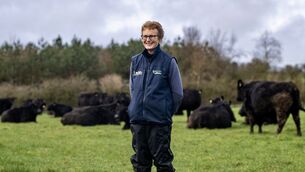
As regards other organic enterprises such as sheep and cattle, they are easier than organic dairying, and as a lot of Irish sheep and cattle are finished off grass, they are the nearest thing to organic.
* As far as I am concerned, the biggest problem with promotion of organic produce is that it very often gives the impression that there is something wrong with non- organic food. The vast majority of Irish milk, beef and lamb are produced off grass, in relatively extensive farming conditions which are strictly governed by EU regulations, and the end products are guaranteed free from all harmful substances. Despite this guarantee, promoters of organic produce very often draw attention to sprays, insecticides and medicines that may be used in the production of non-organic food. However, if these products are used correctly, they pose no danger to health or safety.