The real impact of disability

A study being undertaken to examine the impact of disability among farmers in Ireland has already come up with some disturbing findings.

The real impact of disability

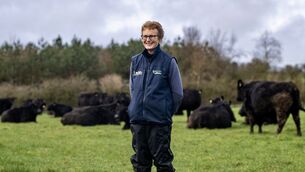
Shane Whelan, a Walsh Fellow, who is based at the Teagasc Rural Economy Research Centre in Kinsealy and the UCD School of Agriculture, Food Science and Veterinary Medicine, is carrying out the study.

The initiative was undertaken after Central Statistics Office data revealed that the agriculture, forestry and fishing sectors report the highest level of disability relative to any other.


For many people, disability is associated with farming-related accidents, which can have a huge impact on the lives of families as they come to terms with the loss of a limb or back injuries which have greatly reduced their mobility.

This motivated Mr Whelan to study what supports and services are required by farm families so that they can continue farming and generally make life that little bit easier.

Disability, however, is not the exclusive result of a farm accident but is any condition that restricts a person’s ability to perform certain tasks.

These health-related conditions include arthritis, heart problems, back pain, strokes, multiple sclerosis, amputations, diabetes and spinal cord injuries.

They also include the condition known as “farmer’s lung”, an allergy caused by dust from mouldy hay, straw and grain.

Many of these conditions are common among farmers but their impact on the farm and farm business had remained unknown.

Mr Whelan has found in his study to date that the provision of services/supports to farm operators reporting disability is largely insufficient across the entire spectrum and right through to retirement.

Current service-support provision often leads to frustration, as family members have to make considerable personal sacrifices to keep the farm functional.

Disability has traditionally been perceived as a problem associated with old age. Yet, this study found that the average age of farm operators experiencing disability was only 52 years.

Last year, a Teagasc survey revealed that almost 8,500 (7.6%) of farm operators reported disability with illness-disease being identified as the primary cause.

Arthritis (31.4%), back problems (17%) and heart circulatory problems (12.5%) were the most frequently reported disabilities.

Those who reported disability typically operated smaller farm enterprises relative to non-disability farms, with almost 48% running holdings of less than 20 hectares.

The lowest incidence of disability was found among specialist dairy (3.8%) and tillage (4%) farmers with the highest among cattle specialists (9.1%).

Mr Whelan, writing in TResearch, the Teagasc science magazine, illustrates the frustration of farmers with disability.

He does so with the help of the following case history quotations from a man who has had to make considerable personal sacrifices in trying to make his farm functional.

“I spent 10 months in hospital in Dublin. My son gave up his job to look after the farm as my wife spent a lot of time with me.

“He had to return to work, as I could no longer afford to pay him the minimum wage to meet his own commitments.

“I feel that farmers in my position get no assistance from any organisation. We are left to muddle away as best we can.”

Mr Whelan has warned that in the light of service-support inadequacies, farm operators experiencing disability may be forced to exit farming.

With an increasing age profile in Irish agriculture, he said this is particularly unfortunate.

He makes the valid point that farm operators with disability experience the same external pressures as all farmers.

But they may also require additional assistance following disability acquisition so that they can identify strategies that will allow them to continue farming and obtain an adequate standard of living.

He concludes that with a personal determination to continue farming, coupled with an adequate support system, many farm operators adjust following disability and are among the most progressive in operation.

“Others, however, while having the same personal desire to continue farming, may not have the required resources or support networks and, as a result, may experience considerable difficulties.

“Appropriate quality service-supports need to be available in such circumstances, so that these farm operators can reach their full potential and continue successfully in production agriculture,” Mr Whelan said.

More in this section

Farming

Newsletter

Keep up-to-date with all the latest developments in Farming with our weekly newsletter.

Cookie Policy Privacy Policy Brand Safety FAQ Help Contact Us Terms and Conditions

© Examiner Echo Group Limited