. . . but producers in Leitrim wouldn’t agree
One of a dwindling number of full-time farmers left in the county made this grim prediction during the Teagasc Rural Development conference held recently in Mullingar, Co Westmeath.
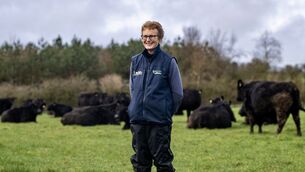
Pat Monahan and his wife Mary live in Cloone. They have three teenage girls. He has been a full-time farmer all his life and is in enterprises such as suckler cows and sheep. He said he had seen many changes in farming in Leitrim, which he described as a relatively poor county that was always over-dependent on agriculture.
“With a low return from agriculture, based mostly on small holdings, farmers had to seek alternative income to supplement the family or household income. This trend has grown more and more over the years, and now practically all farmers in Leitrim are part-time. There is nothing wrong with this system, but the only worry I would have with it is that I do not see a second generation part-time farming, for the simple reason that it is not physically possible for anyone to hold down two jobs.
“This will have serious consequences for rural Leitrim. It is highly likely that the farming element will go and the off farm job survive. This will result in the decline and eventually the demise of the whole infrastructure that is built around farming.”
Pat noted that the population of Leitrim is increasing, but a lot of the rural areas are declining.
“All this leads to infrastructure collapsing, with the closure of schools, post offices, local garda stations and the local parish no longer fit to field a football team,” he said. Some towns and villages had grown enormously, some rural areas had suffered.
Pat Monahan believes this is mainly due to planning restrictions on once-off housing and objections on so called “environmental” grounds, often by people who do not reside in the area. Transport is a major issue in all rural areas. The Rural Transport Initiative (RTI) has shown that local transport services will be used if made available. But many cannot readily access the existing public transport.
“State funding is required for a more flexible transport system in rural areas, such as the use of the minibus, the taxi-hackney and the social car service,” he said.
“From an early age, I have been involved in community development activities. Initially, I was deeply involved in setting up a Macra na Feirme branch in Cloone Parish. I also was treasurer of the local GAA Club for over a decade, during which we built a football pitch and facilities costing over £70,000, which was a lot of money for the local community in the mid-70’s with little grant aid available.
“During those years I became involved with the IFA, was elected county chairman in 1984 and served as Connaught vice president for a four-year term in the late 80s and early 90s. In 1996, I was nominated as IFA representative on the board of Leitrim Partnership and in 2005 was elected chairman. Over my lifetime, I have recognised the value of working with other people for the benefit of the local community,” he said.
He recommends the Partnership, involving local communities, state agencies, social partners and elected representatives, for highlighting and solving rural issues, with back up by a professional staff.
The Mullingar conference was focused on diversification of on-farm activity and issues relating to the world beyond the farm gate.
Delegates were told by Gerry Scully, head of Teagasc Rural Development, that mainstream farming is not finished, but commercial farmers will be fewer and bigger.
“We have to examine new uses for land, and there is an appetite among farmers to diversify. Farmers want an excellent mainstream enterprise, plus another money making venture,” he said.
Dr Cathal O’Donoghue, Head of Teagasc Rural Economy Research Centre, highlighting the brain drain out of rural Ireland. “We must think of ways to keep our graduates in rural areas,” he said.