Souring of sugar industry
Even giant companies like Danisco, Europe's fourth-largest processor, have warned that a new sugar policy being devised in Brussels could cut EU sugar prices by 30% and sugar beet volumes by 10%. Here, an Irish Sugar spokesperson called for the EU industry, beet growers, and governments to unite to resist the expected attack on EU policies in World Trade Organisation talks, from sugar exporters such as Brazil, Australia and Thailand.
"The EU sugar regime benefits tens of thousands of beet growers across Europe and any major reduction in import tariffs would see their livelihoods seriously eroded," said the spokesperson. "We are working closely with the European sugar industry to ensure the interests of all parties are best represented.
The threat is being taken very seriously by investors, with the Goldman Sachs investment bank downgrading shares in Danisco and in ABF, another big EU sugar company. "We forecast a decline in sugar profits of close to 60% for ABF and 40% for Danisco if the scenario of a 10% volume decline and a 30% price cut is realised," said Goldman Sachs analysts.
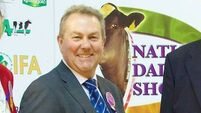
Last week, the Irish Farmers Association warned TDs of the threat to Ireland's sugar industry. IFA President John Dillon said, "Irish sugar beet growers are facing total wipe out, if proposals to drastically reduce import tariffs and remove export subsidies are agreed at the WTO negotiations in Mexico."
IFA warned that livelihoods are at stake for Ireland's 3,700 beet growers and 650 sugar industry employees and many more in downstream industries.
Total liberalisation of the EU market would see the abandonment of beet growing, TDs were told, wiping out 72m per year of beet output from our farms. The EU has come under heavy external and internal pressure to overhaul the regime which has helped to keep EU prices for white sugar more than three times higher than world market prices (which costs European consumers an estimated 2bn a year).
EU Agriculture Commissioner Franz Fischler, who proved his negotiating skills in June when he pushed through the Mid Term Review to overhaul the CAP for the next 10 years, is due to present his proposals for sugar reform within weeks.
Critics say the complex EU system of production quotas makes the system unwieldy at best, but the most condemned feature is subsidisation of surplus sugar which is then exported, weakening world prices. However, the handful of companies which dominate the EU sugar sector are certain to fight reform moves to the death, literally. Recent EU studies called for hefty cuts in support prices and the complete abolition of production quotas. IFA leader John Dillon said Commissioner Fischler has proposed an average EU import tariff cut of 36% for all products, and at least 15% for 'sensitive' products.
"I am putting down a marker for the Government in the WTO negotiations, that the EU must designate sugar as a 'sensitive' product. The minimum 15% reduction already offered by the EU would cut beet prices to Irish growers by 6%. The Government must ensure the EU holds to this line and does not concede any greater cuts."
He said an attack on the EU sugar regime would also hit farmers in African, Caribbean and Pacific countries which have preferential access to EU markets for 1.6m tonnes of sugar at a guaranteed price.
EU farmers are likely to get sympathetic treatment from Commissioner Fischler, who has indicated that beet growers should not shoulder the main financial burdens of reform; instead it should come out of processors' healthy sugar profits.
His proposals are expected to include compensation for the 400,000 beet growers, but processors face cuts in support prices and their sugar production quotas will be simplified, if not abolished.
As a result, reform poses a very uncertain future for about 400,000 sugar industry employees across Europe. According to IFA, the only winners will be large transnational companies which use sugar as a raw material; there would be no significant price change for consumers.