Walsh comes under pressure over beef markets

THE farm lobby yesterday increased pressure on Agriculture and Food Minister Joe Walsh to have international markets for Irish beef re-opened.

Walsh comes under pressure over beef markets

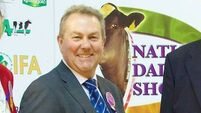
IFA president John Dillon accused the minister of failing to face up to his responsibilities on cattle prices and of a lack of success in re-opening markets and in relation to export refunds.

He said minister Walsh had taken no real action over the last eight weeks at a time when the factories cut cattle prices by over 75 per animal, severely eroding farmers’ incomes.


A spokesman for minister Walsh rejected the claim and said everything possible was being done to have markets re-opened. A high level delegation had just returned from “a very constructive” mission to Egypt.

Minister Walsh said earlier this month that the visit to Egypt by senior Department of Agriculture officials Tom Moran, Assistant Secretary-General, and Paddy Rogan, Deputy Chief Veterinary Officer, was to discuss the beef export trade with Cairo authorities. Ongoing contact between the authorities was an essential element in securing and building the export trade.

“In the case of beef, experience over the years has demonstrated the need for ongoing political, diplomatic and technical contact in order to ensure that the extent of our controls and the resultant safety and quality of product is well known to our trading partners.”

As regards Egypt, Minister Walsh said a huge effort had been put into opening the Egyptian market and he was pleased the Cairo authorities last year had agreed to do so, following detailed assessment of Ireland’s food safety controls. Trade had now commenced and a first shipment of beef was sent in early summer. The discussions in Egypt were part of the ongoing contact between Ireland and Egypt aimed at ensuring that the practical arrangements for trade are best suited to the needs of both sides.

Minister Walsh is also on record as saying his department and An Bord Bia have targeted certain markets which had been traditionally important for the Irish beef sector but which have been closed to European beef since the BSE crisis in Europe in late 2000.

Primary among these countriesthese markets are the Gulf States and South Africa.

He said it is acknowledged that the handling of BSE by Ireland and the application of controls to guarantee the safety of beef produced in Ireland is of the highest standard possible.

However, it remains the case that import bans imposed on Europe generally continue to affect us. He said the best way to deal with this was to demonstrate the measures in place in Ireland to the appropriate experts in those countries.

Minister Walsh said he had done everything possible to bring the relevant officials to Ireland and let them see for themselves the BSE measures in place and the guarantees of product safety. on which they can rely.

He said Ireland had expended huge resources over the years on dealing with BSE and the results of that effort were clear to seeand the results of this were there to be seen. Not only does the age profile of cases now occurring today demonstrate the effectiveness of measures put in place in the mid ’90s, but the range of controls in place from the farm onwards underpin the safety of Irish beef to the final final consumer.

These results had enabled him to convince importing countries to re-open their markets with full confidence in Irish products, as was the case with Egypt. He said he was hopeful of similar results in other markets and would not relax his efforts, or those of the Government as a whole, until Irish beef was on sale in all of our traditional export markets.

However, the IFA leader said that with the exception of Russia all our major international markets remain effectively closed.

Despite several announcements from minister Walsh on the re-opening of Egypt, the reality was that no commercial exports have taken place to this important market. In addition, Saudi Arabia, the Gulf States, South Africa, the Philippines and Indonesia all remain closed to Irish beef exports.

Mr Dillon said the EU Commission was quick to cut beef export refunds when the dollar strengthened. It was minister Walsh’s’ responsibility to secure an increase in refunds now that the dollar has weakened considerably.

More in this section

Farming

Newsletter

Keep up-to-date with all the latest developments in Farming with our weekly newsletter.

Cookie Policy Privacy Policy Brand Safety FAQ Help Contact Us Terms and Conditions

© Examiner Echo Group Limited