ICSA learn Welsh ways to bridge the gap to consumer
LEADERS of the Irish Cattle and Sheep Farmers Association saw diversification at work down on the farm, and learned of efforts to bring urban and rural people closer, during a recent visit to Wales.
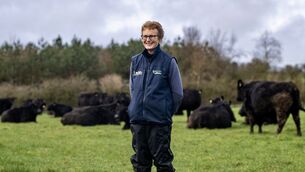
Headed by Malcolm Thompson, president, and Eddie Punch, general secretary, they were in Cardiff for the announcement of a joint internet project with the Farmers Union of Wales.
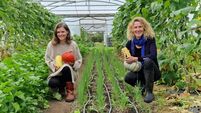
And a visit to Charles and Gill Morgan's farm, which overlooks the busy M4 motorway between Cardiff and Bridgend, proved particularly enlightening.
For the couple are reaping the benefits of bringing town and country closer together in a bid to achieve better understanding of farming, and hopefully a better future for all. It all started eight years ago when, in his capacity as chairman of the Farmers' Union of Wales Glamorgan County branch, Charles was asked to represent the Union at discussions with Bridgend County Borough Council about the setting up of a Farmers' Market.
"Under Local Agenda 21 they wished to support local produce, cut down on food miles and regenerate town centres," said Mr Morgan, who runs Gellifeddgaer Farm, Blackmill, with his wife Gill and 33-year-old son Richard.
The 360-acre farm has been in the family for nine generations. It adjoins 1,000 acres of common land, where they run Welsh ewes crossed with blue-faced Leicesters, while speckled-faced ewes are also kept on the holding.
Also on the farm there are 35 cross Limousin-Welsh Black sucklers, and four large White Saddleback sows.
"With the advent of out-of-town shopping facilities, Bridgend town centre had declined substantially and it was hoped that siting a farmers' market in the town centre would increase footfall," said Mrs Morgan.
Two years later, after many meetings and discussions with various organisations, the first market was organised.
"It was our first step into diversification, and I can honestly say, the most frightening for me.
"Neither Charles nor I had any experience of selling direct. Previously, our stock was taken to the auction mart, and the auctioneer then sold them for us. We enlisted the professional cutting skills of our butcher at the local abattoir four miles from the farm.
"We had no chilling facilities on the farm, which meant we had to pick the meat up from the abattoir and go directly to the market. The day of the first market arrived and in only 20 minutes we had sold all our produce, people's reaction was incredible, and this gave us a great deal of confidence.
"To begin with, we were receiving orders for our lambs, as this was the only produce we were taking to market. We took the orders, passed them on to the abattoir, and then arranged collection and delivery."
But when the family decided to introduce beef sales as well, it began to dawn on them they needed facilities on the farm. "We set about altering our old cow shed and all the building work was done by ourselves.
"We installed a walk-in chiller, mobile chiller cabinet for use at market, a freezer, a wrapper and scales. We contacted the trading standards and environmental health people for advice and, in due course, they inspected the premises and placed us on their register," said Mr Morgan.
This work enabled customers to call at the farm. Mrs Morgan said: "I felt it was important to let the consumer see what we were about."
According to Mrs Morgan, for so long, a divide had come between town and country, and it was so important to her to bridge that divide.
"A few years ago we had a visit from children at a local school, and the only farm they had ever been to was Folly Farm, a popular Pembrokeshire tourist attraction with adventure playgrounds and rides.
"That shocked me, and I felt that we should be trying to have more contact.
"It's not always easy with all the farm work. However, I do feel that contact is so important for the future of farming." The family discovered many of their customers, particularly the younger ones, didn't know about the cheaper forequarter cuts of beef.
"So I started cooking some slow-roast joints, and gave tasters at the market," said Mrs Morgan. This encouraged many to try for themselves. "I also compiled some recipe sheets which I gave them and that, too, was most successful. A similar thing happened with the pork. When we first started selling it at the market, there seemed very little interest. However, once tasted, we were away. Now pork is one of the best sellers", she said.
Last year, the Morgan family won a bronze award for their meat at the True Taste Wales Food and Drink Awards. "People are now travelling long distances to buy our meats, either at the farm or at the farmers' markets," said Mrs Morgan.
The most important thing for the Morgans, however, is to remain farming, and for others to do as well.
"Although selling our produce direct, I feel we are contributing to the support of all local produce, which hopefully will benefit all in farming.
"The other benefit is, of course, that we are bringing town and country to a better understanding, and hopefully a better future," she said.