Farming groups angry over deal
But the smaller, Irish Cattle and Sheep Farmers Association, which supports the full decoupling of subsidies from production, claimed it is the best possible result for Ireland.
The outcome was described as a bitter disappointment by the IFA, which is holding an emergency national council meeting on Monday.
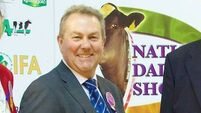
President John Dillon said agreement would sacrifice EU farmers to make way for a WTO agreement to increase food imports into Europe.
He said the agreement will irreparably damage the Irish dairy industry. Supports will be almost gone by 2008 and farm incomes in dairying will be down by another 25%. “There is nothing good in this package. What is happening is each country can pick and choose its own system. It will lead to renationalisation and winding down of the CAP,” he said.
ICMSA president Pat O’Rourke said the deal was very bad for Ireland.
“This is a sellout deal for dairy farmers as it will mean a cut of at least one third of dairy farmers’ incomes. Intervention, which has been vital to protect milk prices, has been substantially withdrawn,” he said.
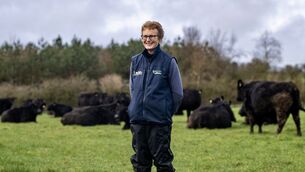
But ICSA president John Deegan said Mr Walsh succeeded in negotiating for Ireland the opportunity to save the vital 1bn annual support payments to the livestock sector, by ensuring full decoupling remained a live option.
“Any of the partial decoupling options will see the total level of payments to farmers reduced because of the risk of certain coupled supports not being fully drawn down,” he said.
He said the outcome will also save Irish livestock farmers €420m more than the commission’s proposals on degressivity and modulation would have cost, had they been implemented in full. Mr Deegan said Mr Walsh should now go for full decoupling.
Macra na Feirme national president Thomas Honner said the deal gives member states so much autonomy on decoupling there could be a serious distortion of EU markets.