Ireland has one in seven chance of Franz Fischler job

WITH their memories of the Galway racing festival fading, Irish politicians are now studying the form for the European Commission festival.
Ireland has one in seven chance of Franz Fischler job

Farmers too are keenly interested in one of the races on the programme the Agriculture Commissioner Steeplechase.

Right now, one of the most keenly awaited political decisions by the Government is who will represent Ireland on the Commission, if David Bryne steps down next year, as expected. Ireland has a good chance one in seven, according to the talk in Brussels of filling the Agriculture, Rural Development and Fisheries vacancy, when Franz Fischler will step down in October 2004.

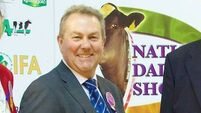
No politician has altered the course of Europe's agri-food sector more than Fischler did in his eight years as Commissioner.

The search is on for a successor who can match his huge knowledge of the Common Agricultural Policy, and the Machiavellian skill he showed in radically altering this €40 billion per year programme, which has aided family farming in Europe, but at the cost of enraging powerful opponents.

Fischler steered a deal which uniquely enables politicians such as France's Jacques Chirac to present it domestically as a victory, while CAP opponents like the UK have also achieved their aims. He can also balance the EU's books, with additional cuts of up to 10% achieved in the expensive support programme for EU dairy products.

Mixed coupled and decoupled payments to farmers were in the agreement Fischler knocked out with 15 Agriculture Ministers, but he can be confident that after a few years, farmers in all member states will end up begging their Ministers to opt for simpler, fully decoupled systems which was Fischler's proposal in the first place.

The good news for Irish farmers is that we are one of just seven member states likely to supply Fischler's successor, according to Agra Europe, the venerable press agency which has reported on agricultural policies since 1963. "The next Commissioner would normally need to have had some experience as Minister of Agriculture", according to Agra Europe.

But they believe the incumbent can only come from a small member state; France, Germany, Italy, Spain and the UK are ruled out.

Nor can the next Agriculture Commissioner come from any of the new member states of Central and Eastern Europe. So, the Agriculture Ministers who hammered out last June's CAP Review agreement included 10 potential candidates to succeed the man at the head of the table, Frans Fischler.

But with the Finn and Austrian Ministers having only been appointed this year, and the Swedes seen as too radical they want to scrap the CAP the options boils down to Belgium, Denmark, Greece, Ireland, Luxembourg, the Netherlands and Portugal.

In Brussels betting terms, this analysis makes Ireland's Joe Walsh one of the 6/1 joint favourites for one of the world's most powerful agri-political appointments.

However, top political appointments are ultimately determined by the three As of Ability, Ambition and Availability.

Well qualified though they may be, the obvious candidates have a hard act to follow, after Fischler. For many of them, joining the Commission could be too great a change of career course, and ultimately, the decision of who to short list will have to go through complex national and EU levels of political decision making.

On his side, Ireland's Joe Walsh has unmatched experience of the goings-on in the Council of Agriculture Ministers, where he first took up Ireland's seat 13 years ago. The Mediterranean agriculture which makes up a large part of the Common Agriculture Policy might be a Walsh weak point but the same can be said for Dutchman Cees Veerman, and Denmark's Mariann Fischer Boel. Along with Portugal's Armando Sevinate Pinto, they are the Ministers who have most impressed Agra Europe with their understanding of the complexities of the CAP.

Agra Europe's Focus monthly report for European agri-business executives has also tipped former Ministers such as Finland's Kalevi Hemila, Denmark's Henrik Dam Kristensen, and Arlindo Cunha, the Portuguese Minister whose compromise report formed the basis of this month's European Parliament opinion on CAP Reform, and who chaired the 1992 CAP Reform steered by Ireland's last EU Agriculture Commissioner, Ray MacSharry.

Joe Walsh's EU seniority has come with age; at 60, he is three years older than Fischler, and six years older than Veerman, for example.

And whatever Irish Minister aspires to the EU Commission, the salary will play little part in their ambitions; they will have to take a €10,000 per year wage cut to swap the Dáil for the Berlaymont, and swap domestic issues for wider and more difficult topics such as freeing up world agri-trade and strengthening rural development in Europe.

But it is availability, more than any other factor, that will determine who steers the fortunes of European farmers into the 2010s. Few politicians can guarantee with certainty that they will be ready to step into Fischler's boots in October 2004; that depends on a smooth passage for their domestic careers.

Here, with the Government under pressure, Joe Walsh and others in line for the Irish Commissioner nomination, are probably more worried about an expected Cabinet re-shuffle after the December budget. There is even talk in political circles of Taoiseach Bertie Ahern seeking a European post, perhaps as Commission president.

European Parliament president Pat Cox, arguably Ireland's most successful politician at EU level, also figures in the Commission picture.

More in this section

Farming

Newsletter

Keep up-to-date with all the latest developments in Farming with our weekly newsletter.

Cookie Policy Privacy Policy Brand Safety FAQ Help Contact Us Terms and Conditions

© Examiner Echo Group Limited