Greencore future in spotlight over changes
That was inevitable decision once it became obvious Mallow was the better option for further investment.
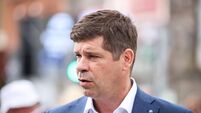
However, the sugar business will sort itself out in time. The imminent departure of Patrick Kennedy to Paddy Power, the quoted betting shop operator, raises further questions about the outlook for the group.
Mr Kennedy and Greencore boss David Dilger were close and the level of trust between the two was deep.
As qualified accountants they share a strong commitment to cost cutting which they demonstrated after the takeover of Hazlewood in November 2000 for £350m.
Since then Hazlewood has been honed into a slicker operation delivering own-label sandwiches, quiches and pizza for the British retail market.
At one stage, Hazlewood made nappies and by the time Greencore got its hands on it, the British business had all the characteristics of a good idea that had gone badly wrong.
As a result of his cost-cutting efforts Mr Dilger was seen as a solid candidate to pilot Aer Lingus into the future, but it wasn’t to be.
Neither was the AIB job with which he was linked.
Mr Kennedy obviously got an offer too good to resist, and despite a strong connection with Mr Dilger has decided to jump ship.
Mr Dilger has said publicly he believes he has one more challenge left in him before retirement. He’s a feisty character and withstood the awful battering he got at the AGM.
But shareholders have cause to be uneasy. The share price has not delivered because Hazlewood has not yet delivered on behalf of the group despite the best efforts of the top management.
Selling to the multiple trade in Britain in a cut- throat market was never going to be easy and that’s proving to be the case.
As a result, an even bigger question still hangs over the business which is what happens next strategically if Hazlewood does not deliver as management had hoped.
It has been suggested Mr Kennedy jumped ship as he was ambitious and saw the opportunity as too good to pass up, while Mr Dilger was standing in his way of the top job in Greencore.
It could also have been the case that Mr Kennedy saw Hazlewood as the last throw of the dice for Greencore and he may well have decided to go before the markets put a more critical focus on the state of play at the former sugar company.
Is the question of Mr Dilger’s commitment to Greencore reasonable in the light of his being linked to Aer Lingus and AIB? If the answer is yes then what does he propose now to drive the business forward.
As the former Irish Sugar, which changed its name to Greencore after its stock market flotation, laying down a new strategy for the group, whose core business was sugar refining, was never going to be easy.
Mr Dilger would be the first to concede he bet a lot on the British venture four years’ ago and may well feel it needs a new chief executive to take the operations to their next phase.
Despite his best efforts the share price could not be accused of performing very well to say the least.
And the implications of the poor stockmarket performance is that Hazlewood was a gamble that has not paid off.
The business of sugar in an Irish context will come under severe pressure in the years ahead as the ending of subsidies has left Irish Sugar wide open to international competition.
Some speculate that in the next 10 to 15 years there may well be no sugar growing in Ireland.
If that is the case then there is a huge imperative on Greencore to start delivering value from elsewhere to shareholders before it starts getting seriously restive about the outlook for the group which is not exactly emitting the best signals in the world to the markets.