Honor Magic V6: A foldable that packs power, camera flexibility and a class-leading battery
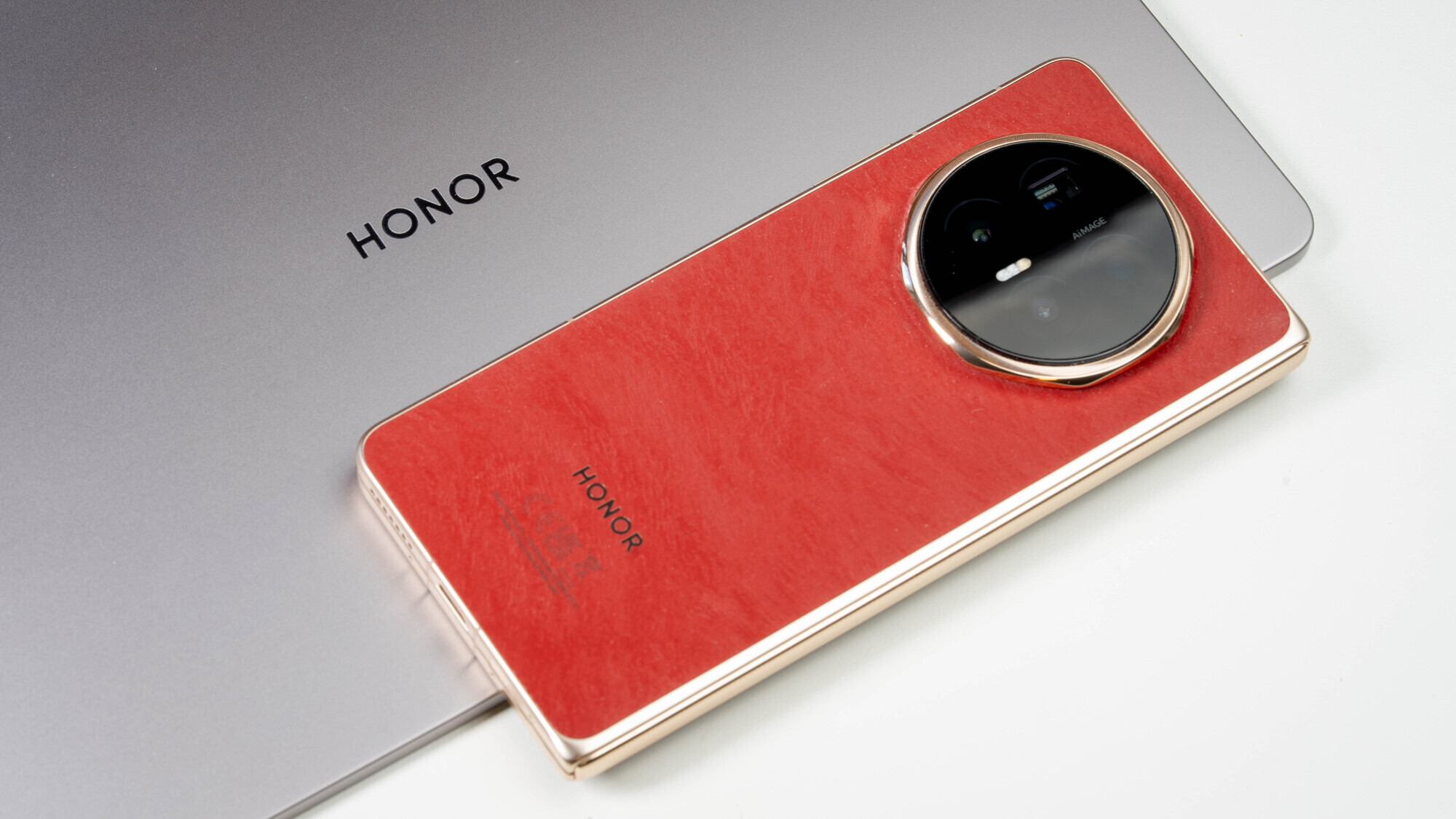
The Honor Magic V6 is a premium foldable a top-tier chipset and class-leading battery performance in a slim profile. Picture: Noel Campion
Foldable phones have come a long way from the clunky handsets that first appeared on store shelves. Today’s foldables are more refined, with larger screens without the bulk of a tablet, but not all are made equal. Honor’s newest entrant, the Magic V6, claims to have found the right balance. With a Snapdragon 8 Elite Gen 5, a three‑sensor camera array that rivals any flagship, and a 6,660mAh cell that outlasts most foldables.
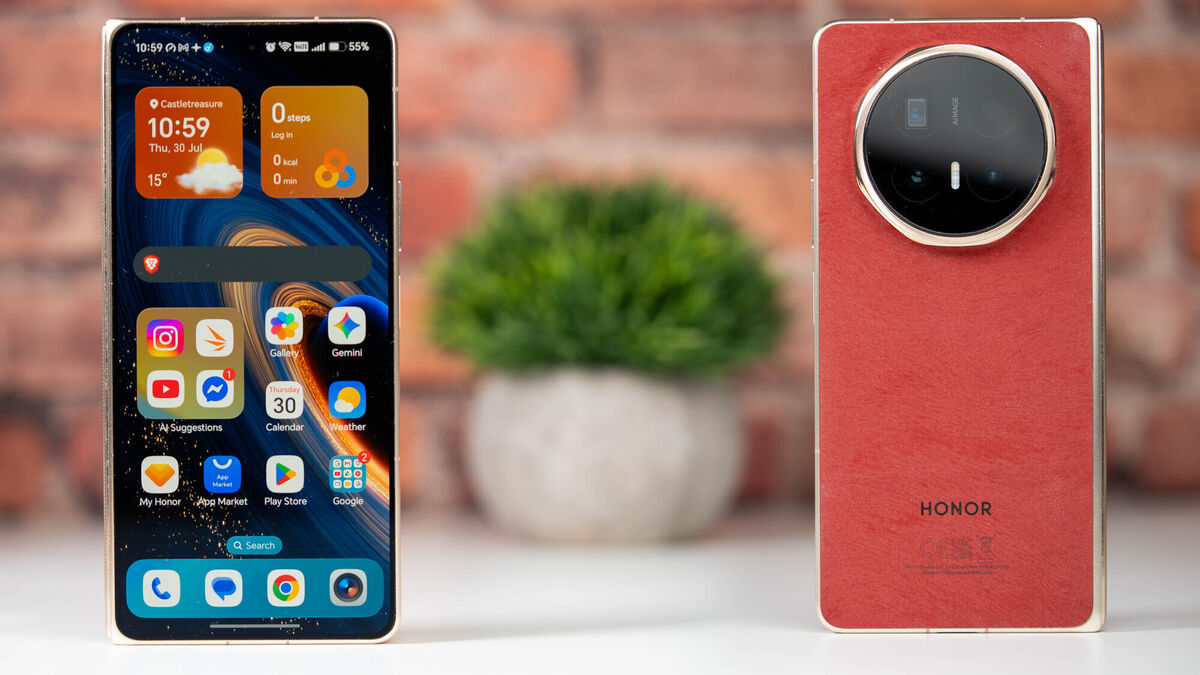
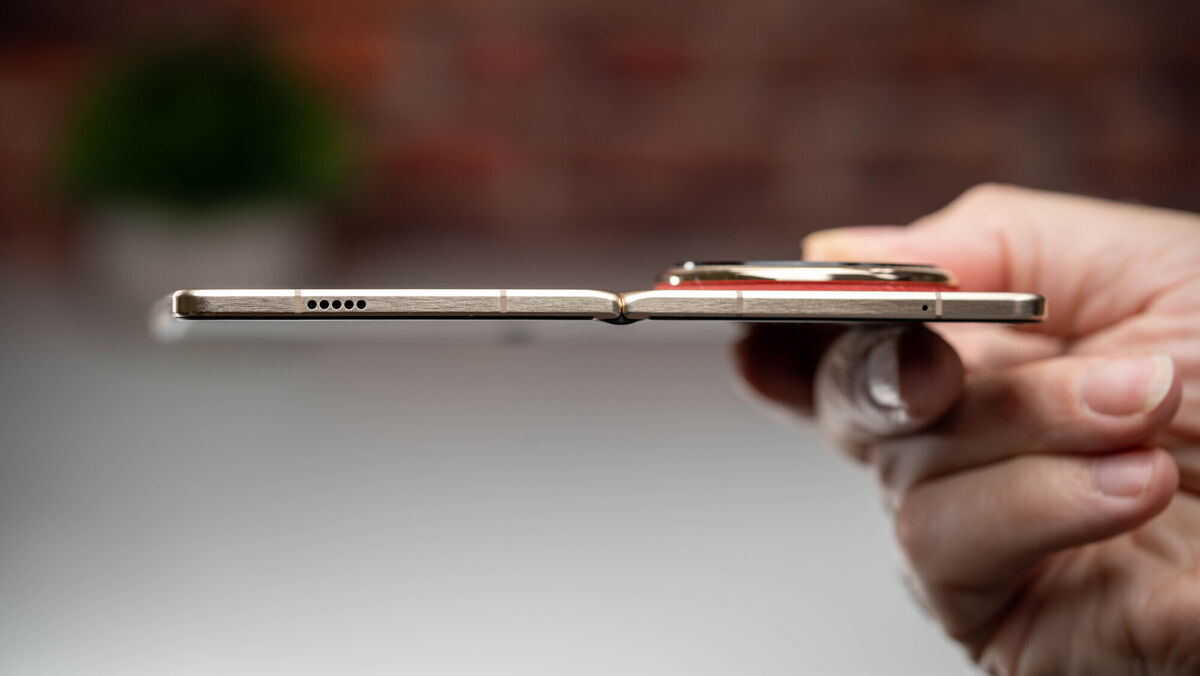
The Magic V6 is available in four colours: gold, red, white and black. The weight varies slightly between colours, with the white edition tipping the scales at 219 g, while the other three weigh 224g. The V6 is ultra‑slim when folded, at only 8.75 mm thick for the white variant and 9mm for the rest. While durability may have been a concern for earlier foldables, the V6 carries an IP68+IP694 rating that provides a class-leading water and dust-proof seal.
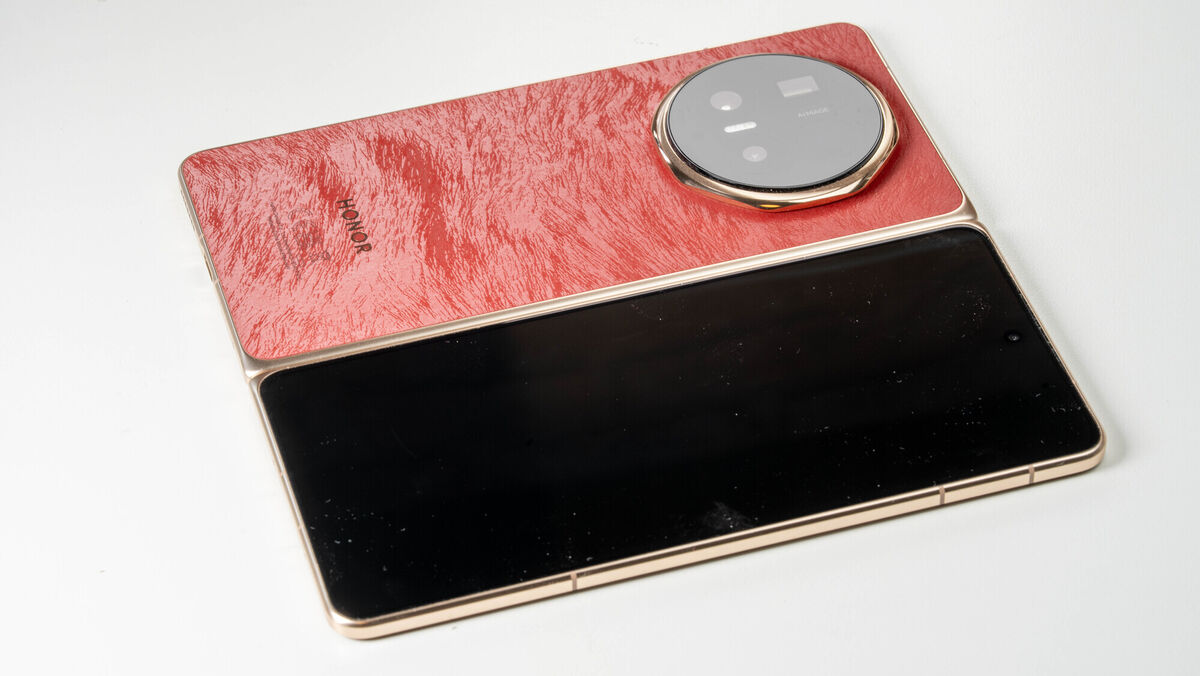
The build quality feels premium, sporting an aluminium‑glass frame that snaps into place with a satisfying click. The hinge flexes without any wobble and feels incredibly robust.
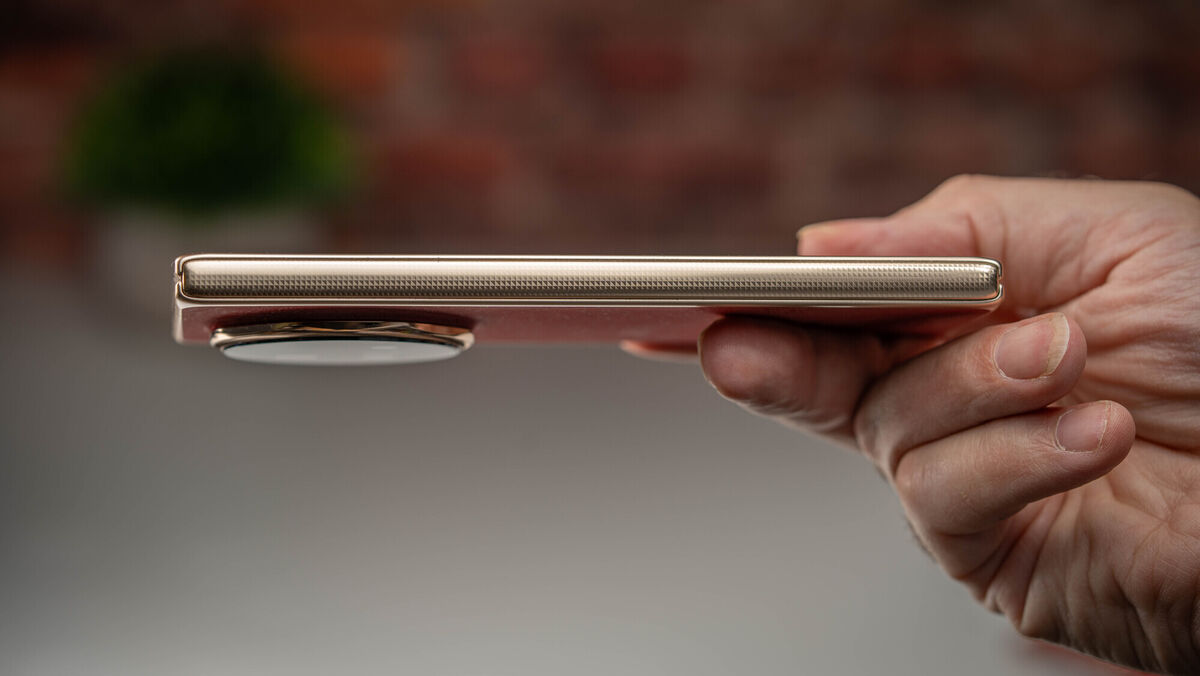
The camera bump has been trimmed compared with the previous generation, making it less conspicuous and resulting in a cleaner silhouette when you hold the phone flat.
Visually, it’s hard to tell the difference between the V5 and V6, but the changes are there. The cover display is flatter, having lost the curved edges of the V5. Also, the bezels are more symmetrical and much thinner.
The placement is clever, with one speaker at the top left and another at the bottom right. This ensures true stereo sound regardless of how you rotate the device in landscape mode.
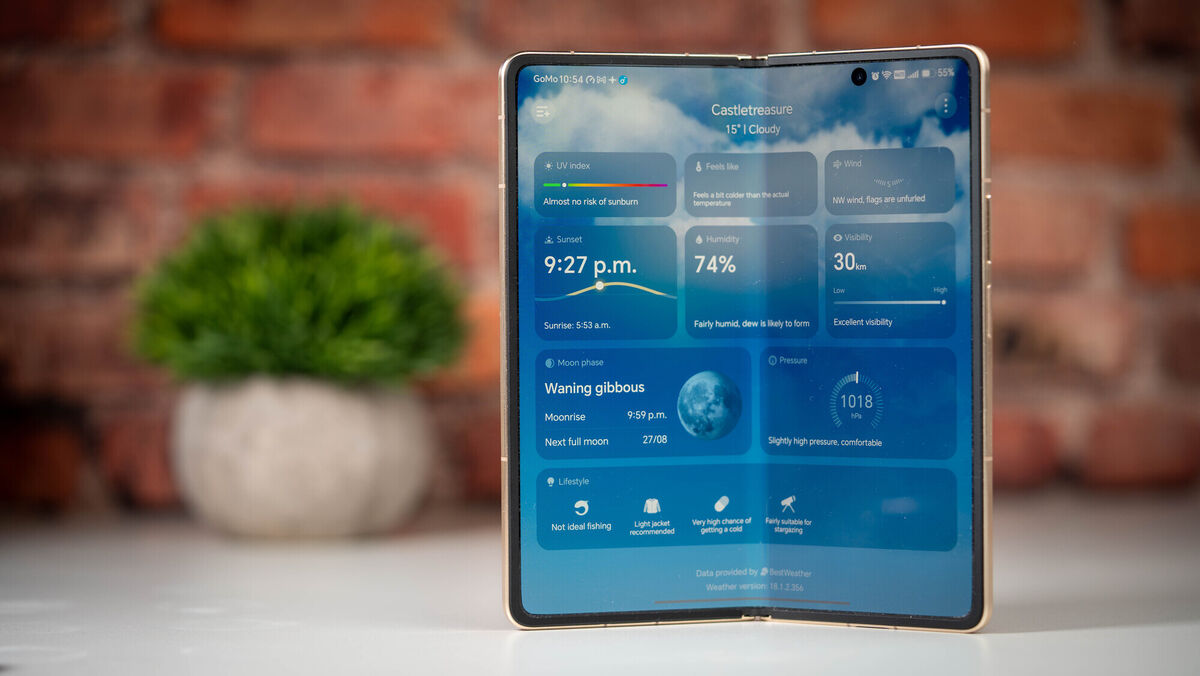
The interior screen is a 7.95-inch LTPO glass panel that runs at 1-120 Hz, depending on what you’re doing. Its peak brightness reaches 5,000 nits, and its resolution – 2352 × 2172 pixels – gives a pixel density of 403 ppi. The colour gamut is the full 100% DCI‑P3, with 1.07 billion colours, so images look vivid yet natural. In direct sunlight, the Magic V6 is very readable largely due to a very effective anti-reflective coating. While it isn't quite as good as the magic happening on Samsung’s latest flagship, it significantly reduces the distracting reflections that plague other foldables.
You can still see a clear crease on the V6. I can't say it’s any less prominent than on the V5, but it’s still one of the shallowest displays I have tested. Only Oppo and the Samsung Galaxy Fold 8 have managed to produce something even smoother.
The exterior display measures 6.52 inches, shares the same LTPO technology and refresh-rate flexibility, but can reach a higher brightness of up to 6,000 nits. Its resolution is 2420 × 1080 pixels at 406 ppi. Both panels support a stylus, which I would love to have tested for sketching or taking notes, but it’s an optional extra.
You get the latest standards in eye comfort features including a 4320‑Hz PWM dimming system, motion-sickness relief mode, AI defocus to keep the focus on subjects while blurring backgrounds automatically, and dynamic dimming that reduces brightness when you move around. The screen also has dual anti-glare coatings and hardware-level low-blue-light technology.
The phone houses a 6,660 mAh battery that sits in the chassis without noticeably increasing weight. When I plugged it into a 100W Honor charger, it hit 80% in just under 30 minutes and topped out after roughly an hour. Wireless charging is supported up to 66W with a compatible charger. Reverse wireless charging is another handy perk that lets you charge a small accessory using the phone’s battery without an extra cable.
The on-board power-management system keeps temperatures in check even during intense gaming, so the device rarely feels hot after extended gaming.
In practice, after a full day of navigation, streaming music, taking photos and watching videos, I usually finish with about 30-40% capacity left. That translates to nearly two complete charge cycles before needing to plug back in and more than enough for most users who are on the move.
Under the hood is a Snapdragon 8 Elite Gen 5 chip, coupled with 16GB of LPDDR5 RAM and 512GB of internal storage. The system delivers excellent benchmark scores and, in real-world use, everything from launching apps to scrolling through social feeds to reading long emails feels silky-smooth and snappy.
Software-wise, Honor runs MagicOS 10 powered by Android 16. It feels relatively lightweight, and it keeps improving with each update.
Onetap share lets you swipe a photo or link into a friend’s phone with a single touch. The V6 also supports Mac screen sharing and extension. I was able to use the V6 as an extended display for my MacBook Pro M5 using the HonorWorkStation app, and the performance was surprisingly smooth. The notification sharing with Apple Watch is another useful feature. Provided you have an iOS device nearby, phone banners appear directly on your wrist without any fuss.
You also get the full suite of AI features, including Google Gemini. Quick Share pushes files instantly, Call Translation converts speech in real time for two‑person conversations, and the AI Writing tool generates drafts or short replies.
The multitasking capabilities are some of the best I have ever used. The animations are incredibly smooth. I can grab an app by its handle and toss it aside to open a second one with almost zero friction. You can even drag apps into the centre to create floating windows. It feels very natural and highly productive.
Honor has introduced something they call transparency mode. To me, it feels like unnecessary window dressing, and looks more like a copy of Apple's liquid glass.
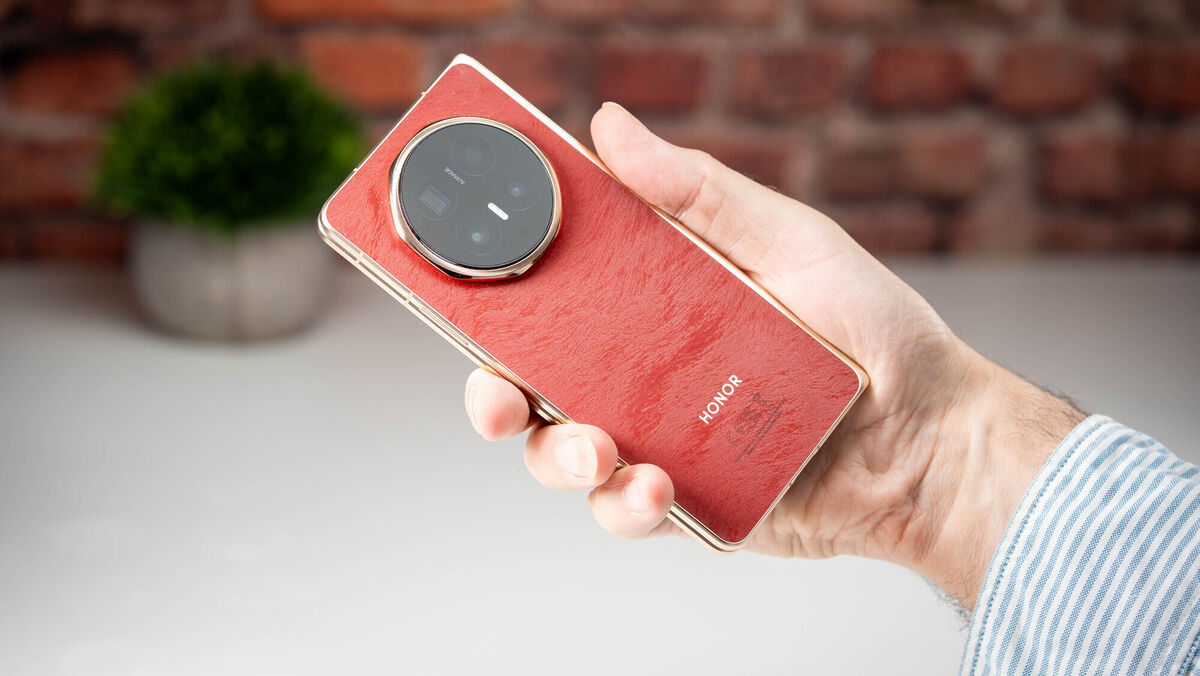
The rear camera system has a three‑sensor array. The main unit is 50MP with an f/1.6 aperture and OIS; the telephoto sensor tops out at 64MP, f/2.5, providing 3x optical zoom; the ultra-wide comes in at 50 MP, f/2.2. Images can be captured at up to a staggering 9216 × 6912 pixels, and the system uses a 6.5‑stop CIPA image stabilisation to keep handheld shots clear.
AI features run behind every shot: colour optimisation, dynamic video colour, super‑zoom sharpening, enhanced portrait mode with depth mapping, motion‑sensing capture, and even a moving‑photo option that captures subtle motion around the subject. When I tested night scenes, overexposure on bright days required a minor EV adjustment, but once set, colours stayed accurate.
The front cameras are dual 20MP units – one embedded in each screen – with f/2.2 apertures. The selfie quality is solid, with excellent details, and the background blur feels natural thanks to the dual‑lens depth data.
AI tools such as eraser, upscale, cutout, instant movie and outpainting let you edit selfies on the fly.
Overall, the camera system holds its own in a market where foldables often sacrifice image quality for design. The 3x optical zoom, in particular, delivers sharp detail, and although I generally don’t go beyond 10x, it can reach 100x, which has been handy on very rare occasions.
Bluetooth 6.0 keeps pairings fast and reliable; USB‑C is on the Gen 1 standard but supports 3.2 speeds. Wi‑Fi 7 gives an extra boost in bandwidth, while NFC stays for contactless payments and Honor’s RF Enhanced Chip C1+ improves signal stability in crowded environments.
The Honor Magic V6 delivers on its core promises with a long‑lasting battery that lasts a day of heavy use, a camera system that offers respectable zoom and image quality, and a fast processor that keeps everything snappy. For anyone who wants a foldable that doesn’t compromise on battery life or photography, the Magic V6 is an easy recommendation.
€2,300 Harvey Norman

CONNECT WITH US TODAY



Be the first to know the latest news and updates