OnePlus 15 review: A powerful flagship with a battery beast
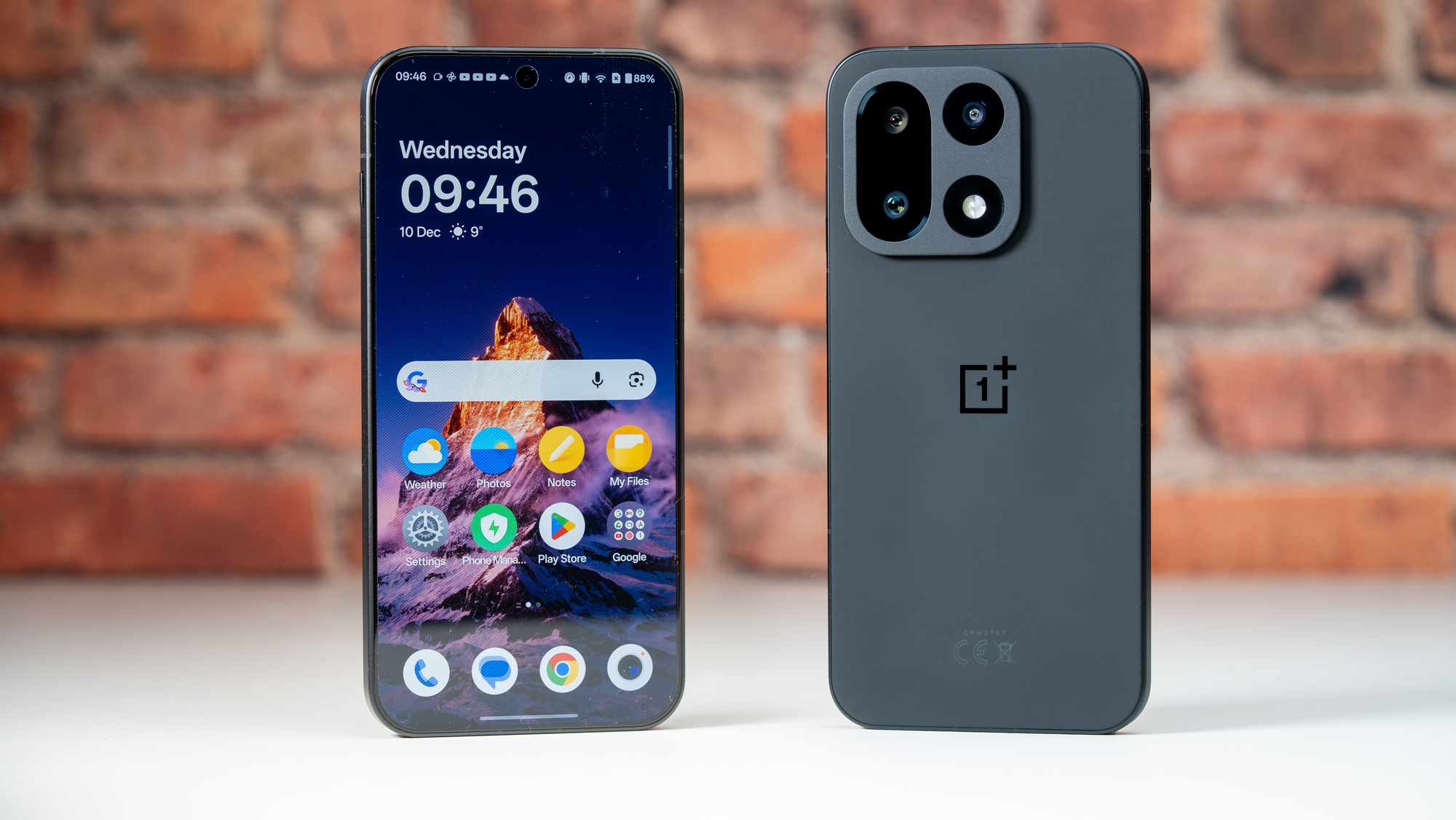
OnePlus 15 proves big power doesn't need a brick-like body. Picture: Noel Campion.
The OnePlus 15 is a flagship with stellar battery life, stunningly fast hardware, and a familiar, polished design. Itâs not the most advanced camera phone you can buy, but it offers top-tier performance and outstanding endurance at a slightly lower price.


The OnePlus 15 feels solid and durable, and its design feels familiar in a good way. I love the clean lines, the flat display and back, and the flat aluminium frame, which helps the phone sit securely in your hand. Despite the sizeable 7,300 mAh battery, the phone isnât too heavy, and the balance is good enough that it doesnât feel unwieldy.
The raised camera module is a square block with black cutouts that make it stand out. Some people will like the bold look; others may find it breaks the clean lines of the rear panel. The finish varies by colour, but I love the matte black version I received. It uses Gorilla Glass 7i with a soft, almost velvety texture that feels very different from typical glossy glass. Itâs smooth without being slippery, and the ultra-fine texture has a subtle, sandpaper-like quality. If you brush your fingers across the back, youâll notice a faint white trace left behind, which is skin catching on the surface. Run a key across it, and it looks like youâve scratched the back, but the mark brushes away without a trace.
The handset carries IP68 and IP69K ratings so that it can handle dust, water immersion and even high-pressure hot water jets.
OnePlus has also included a hardware shortcut key on the upper left side, which you can customise for actions like quick notes or voice recordings.
You also get a fast and super reliable ultrasonic fingerprint reader under the screen, placed at what I find to be the ideal height from the bottom.

The display is a 6.78-inch LTPO OLED panel protected by Gorilla Glass Victus 2. It has a maximum refresh rate of 165Hz. In everyday use, it caps at 120Hz, which keeps scrolling smooth and responsive while saving power. The LTPO tech can drop refresh rates to 1Hz when showing static content.
Only certain games can actually hit the full 165Hz, so it is hard to know whether this is a real benefit or more of a marketing move. You can customise the refresh rate per app, but the highest option right now is 120Hz, which strikes the perfect balance between performance and battery life. I would like to see 165Hz added as a selectable option in a future update.
Brightness is excellent, and HDR is supported, including HDR10+ and Dolby Vision, which make streamed films look vibrant with deep contrast.
The stereo speakers are loud with clear mids and highs, and even the bass is decent for a smartphone.
The camera setup includes a 50MP main sensor, a 50MP ultrawide sensor with autofocus, and a 50MP 3.5x optical-zoom telephoto lens with OIS. OnePlus has stepped back from Hasselblad branding this year, and some of the hardware has also taken a modest downgrade, especially the main and telephoto sensors, which are smaller than last yearâs OnePlus 13.
The camera system switches between 12MP and 26MP modes based on lighting conditions. Outdoors in bright conditions, the 26MP shots look great with good dynamic range and relatively pure colours, but the fine detail isnât what youâd expect from a flagship. The 12MP shots are often cleaner, with stronger contrast and better HDR, perhaps thanks to more computational processing.

Daytime portraits look pleasing, with good colour and a natural look, despite a lack of fine detail when pixel-peeping. The 2x digital zoom results are similar to the 26MP files; theyâre usable but not super impressive.
At night, the main camera performs well. Images are clean and detailed, with a wide dynamic range. The telephoto performs well in bright conditions and delivers solid results at its 3.5x optical zoom. Digital zoom up to 10x is surprisingly usable in daylight, too. At night, the telephoto keeps noise in check, though fine detail does take a hit. Digital zoom extends all the way to 120x, and from around 60x to 120x, the phone leans on AI to fill in detail.
The ultrawide doesnât fully match the other two cameras in colour, but daylight shots remain sharp and reasonably detailed. Night shots are softer and lose dynamic range, but still come out usable.
The 32MP selfie camera captures wide, well-balanced shots with natural skin tones.
The main camera can shoot up to 8K, while the others top out at 4K. The main sensor produces crisp, noise-free video with a wide dynamic range in both bright and low-light scenes. Stabilisation is effective but struggles in low lighting. The telephoto holds up in daylight but is less stable, and the ultrawide struggles the most, especially at night, where the footage turns soft and noisy.

The OnePlus 15 is one of the first phones using Qualcommâs Snapdragon 8 Elite Gen 5 chipset. Performance is excellent, surpassing many of the best Android phones available right now. Benchmarks show high scores across CPU and GPU, and in real-world use, it feels super-smooth and snappy.
Memory options include 12GB of RAM with 256GB of storage, or 16GB of RAM with 512GB of storage. The phone also includes an IR blaster, which is useful for controlling TVs and other appliances. It also comes with the latest WiFi 7, Bluetooth 6, and USB 3.2 Gen 1.
The Snapdragon 8 Elite Gen 5 handles games easily, even at high settings. Titles that support 165Hz benefit from ultra-smooth motion, and temperatures remain controlled during long sessions.
If youâre a dedicated mobile gamer, the mix of raw power, stable thermals and a responsive 165Hz display makes the OnePlus 15 an excellent choice.
The 7,300mAh pack delivers exceptional battery endurance and is easily one of the best of 2025. Charging is also excellent, though, as per the EU Common Charger Directive, no charger is included in the box. It supports OnePlusâs SuperVooc 120W charger that fills the battery to around 80% in half an hour and takes a little over 40 minutes for a full charge. It also supports 55W PPS (USB Power Delivery) with third-party chargers. With a OnePlus AirVooc wireless charger, you can reach 50W, and thereâs reverse wireless charging for accessories.
OxygenOS 16, based on Android 16, is still one of the cleaner Android skins. It mixes OnePlusâs familiar layout with new touches, such as a black âislandâ around the selfie cutout that houses shortcuts for timers and media controls. Thereâs no denying how similar OxygenOS 16 feels to iOS 26, but honestly, I like it. Android purists may scoff, but the familiarity works for me.
Like all high-end phones in 2025, this one features AI throughout the system. You get smarter search, writing tools, live translation, voice transcription, and a range of gallery-editing functions. A new Mind Space area collects your saved content and uses AI to organise it.
OnePlus promises four major Android updates and six years of security patches.
The OnePlus 15 delivers superb battery life, fast charging and elite performance. With less money than youâd spend on your typical flagship, you can buy the OnePlus 15 and still get top-notch hardware and performance while settling for excellent, although not class-leading, cameras.
âŹ945 (12+256GB) âŹ999 (16+512GB) OnePlus