Harnessing generative AI's power as a workplace copilot
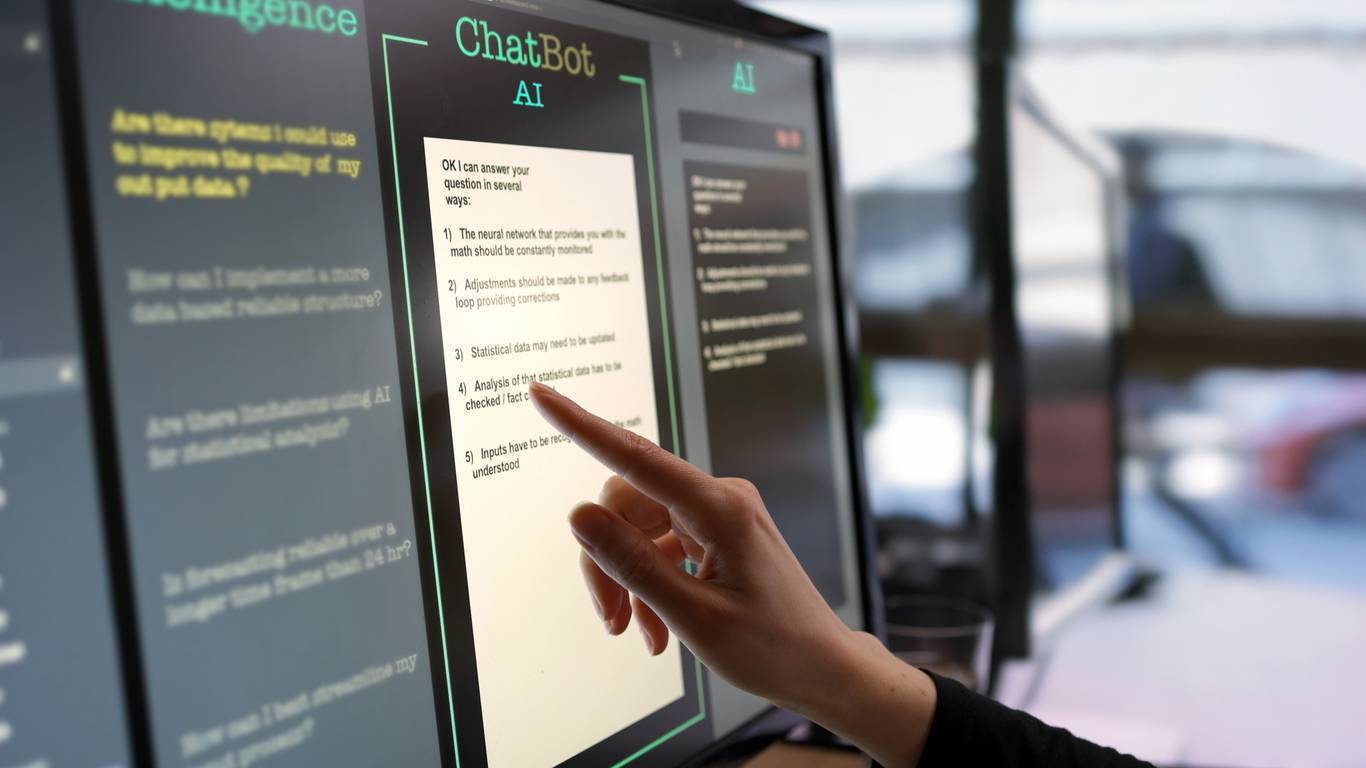
Generative AI tools like ChatGPT, Google’s Bard or EY’s own EYQ, are conversational tools which can both understand and generate natural language.
What can generative Artificial Intelligence (Gen AI) do for business? , head of data analytics and AI at EY Ireland, offers insights on the potential applications, benefits and security considerations with Artificial Intelligence. He talks to .


Since the launch of ChatGPT 12 months ago, there has been much discussion about the power, potential and what some consider the pitfalls of Gen AI. Many of us in Ireland will have used these Gen AI tools, testing out its capabilities by asking simple questions, or perhaps engaging with it at home, in work or to support study.
Generative AI tools like ChatGPT, Google’s Bard or EY’s own EYQ, are conversational tools which can both understand and generate natural language. Because they’ve been trained using vast amounts of data, they’re called Large Language Models (LLMs) and they have extensive reserves of knowledge. When we ask it a question we get back a specific response. Hence, we can ask detailed questions such as “how would you describe aerodynamics to a five-year-old” and often get extremely useful answers in reply.
For businesses, Gen AI offers the potential to be embedded across many aspects of operations, from data analysis to improving productivity and better serving customers. In spite of the potential, many businesses have expressed concerns around the use of AI in the workplace, with some, either tacitly or outrightly banning access to tools like ChatGPT. Security concerns, the potential use of company-sensitive data to “train” the model and the potential for these Gen AI models to provide incorrect information (“to hallucinate”) are some of the issues that have been raised.
At EY, we are focused on the transformative power of AI to assist both individuals and organisations and we’re enabling and encouraging our people to harness the power of generative AI.
EY has invested over €1.3 billion globally in our Artificial Intelligence offering, thereby encompassing services and capabilities for our clients and our people. Key to this, is training and upskilling our people in the use of Gen AI.
Launched in September, EYQ is EY’s own private large language model for its staff globally, including more than 5,000 here in Ireland. EYQ operates in a similar manner to other conversational AI models such as ChatGPT or Google’s Bard, allowing our people to safely ideate, research and create with Generative AI. We see EYQ as a copilot for our people, augmenting human potential by supporting ideation and research, boosting productivity, automating repetitive tasks and more. Importantly, we’ve built out bespoke AI learning and development for EY people, on the use of EYQ, the responsible use of AI and on ensuring our quality assurance standards are maintained at all times.
We’ve seen rapid take-up of EYQ since its launch in Ireland in September. While everyone’s at a different stage on their Generative AI journey, the majority of staff and teams are already using it in their work on a daily or weekly basis. The teams in our AI Labs practice using it while completing projects for clients. Our consultants use it to create more efficient solutions for presentations. Staff use it to speed up regular tasks, like drafting emails, summarising text, or brainstorming, while ensuring it keeps aligned to our security and quality assurance standards.
One of the significant challenges in deploying AI technology such as Gen AI in business environments, is ensuring that sensitive data remains secure. All companies have a responsibility to manage data in a way that meets regulatory requirements and so must understand how to utilise the power of AI while protecting sensitive information. This has been a significant stumbling block, standing in the way of adoption in many organisations. That’s why EYQ is hosted in a secure and private EY environment, meaning that all prompts (commands and responses) are private and not shared outside the organisation or used to train a future model.
Another concern that organisations may have is trusting the quality and accuracy of the output, given the potential for some versions of Gen AI to ‘hallucinate’ responses (where the AI perceives patterns or objects that are nonexistent, creating outputs that are nonsensical or altogether inaccurate). This is a key reason why at EY we see Gen AI acting as a copilot to augment human potential rather than instead of it. Our teams will always carefully review and evaluate the accuracy and validity of any information provided by EYQ before relying on any outputs.
While disruption always comes with every new major technological evolution, each of these evolutions has always created many more jobs in the long run. We see Gen AI acting in the same way, with tools like EYQ working alongside our teams and assisting in the completion of routine or complex jobs. Also, freeing up time for our people to focus on more productive and higher value tasks and most crucially, enabling more human interactions. With EYQ taking care of the smaller tasks and questions, our people can focus on the bigger and better questions to build a better working world.