iPhone 13 Pro review: The best-performing small smartphone of the year
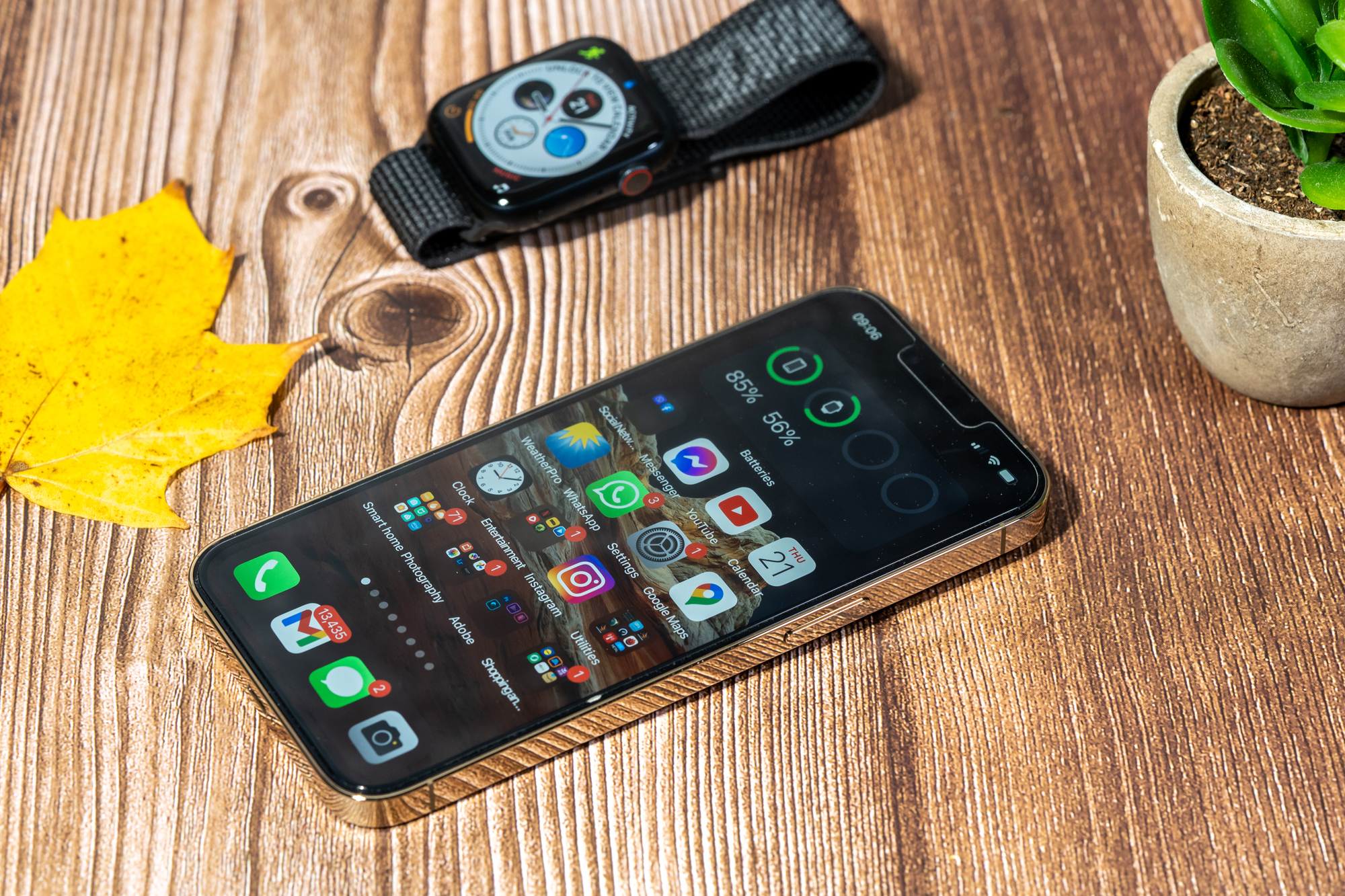
iPhone 13 Pro. Pic: Noel Campion.
If you bought the iPhone 12 Pro you may have felt you were missing out on some of the ‘exclusive’ Pro Max features including the more advanced camera system. Not so this year and while I’ve always been a massive fan of the Max, after using the iPhone 13 Pro for the last four weeks, I’m not convinced that going for the bigger Pro Max is the better option anymore.
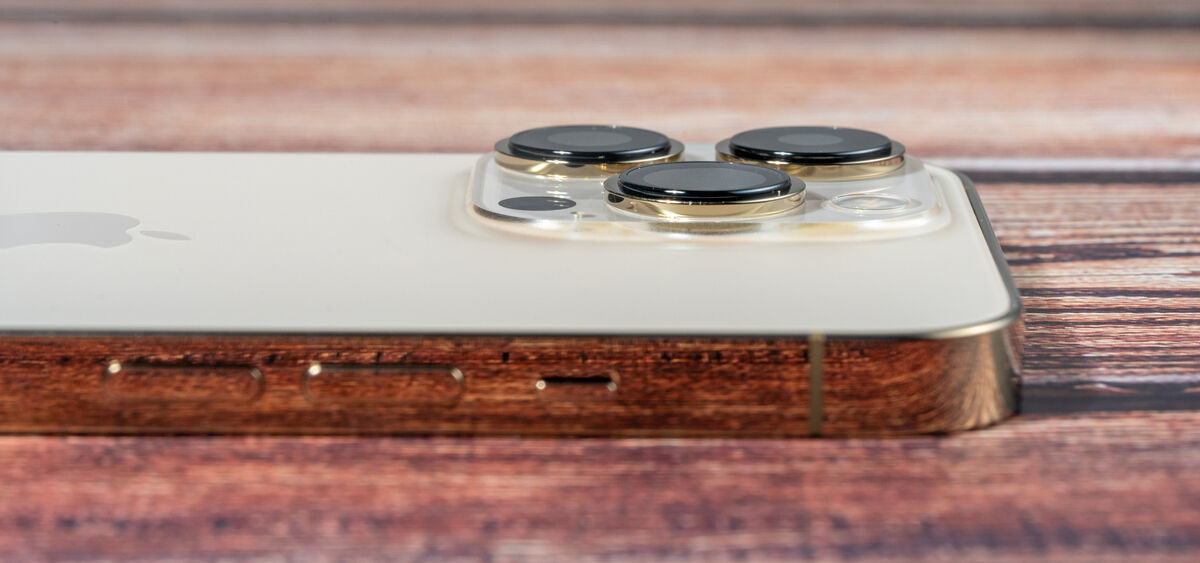
The iPhone 13 Pro is a stunning device and while it looks very similar to iPhone 12 Pro, there are some subtle and not so subtle differences. The iPhone 13 Pro features three lenses on the rear that are larger than the 12 Pro. The bump is substantially taller than last year’s model but the aesthetics are striking and distinctive.
I’ve always been a fan of the highly polished stainless steel edge rails on the Pro models. They look great but are also more scratch-resistant than in previous generations like the iPhone 11 Pro which I found picked up micro-scratches easily, even when used in a case. My iPhone 12 Pro Max still looks new a year later so I expect the iPhone 13 Pro to be the same.
The build quality and materials make the iPhone 13 Pro look and feel very premium. The metal body and Ceramic Shield front cover glass makes it more resistant to breaking in a fall, but I found the screen can scratch so a screen protector is essential.
The iPhone 13 Pro is available in gold, silver, graphite, and a new sierra blue colour. My review unit came in gold which has gold stainless steel bands with a pale gold frosted back and a clear glossy surface around the cameras.
More subtle design differences are the mute switch and volume up and down buttons are slightly lower on the 13 Pro versus the 12 Pro while the power button is also lower down. I found this made reaching them much easier when using the phone one-handed. Also, the SIM tray is much lower on the left-hand side now.
Finally, we get an iPhone with ProMotion and a 120Hz refresh rate. Android phones have had this for a few years now but Apple was one of the first to introduce it on the iPad Pro. Knowing how brilliantly it has been implemented on the iPad Pro, we’ve all been waiting for the iPhone to get the same treatment and now it’s here but only on the iPhone 13 Pro and 13 Pro Max.
So, does it make a difference and is it worth it. Honestly, yes and no. On a blind test, many don’t seem to notice the difference until you tell them. I’ve read some reviewers say that once you use a fast refresh rate you can’t go back but I don’t agree. I still use lots of devices with a 60Hz display including some of my favourite Apple devices like the iPad mini and it doesn’t bother me that it’s only 60Hz.
That being said, the user experience is nicer and Apple’s implementation is easily the best of any other device I’ve used including some with even faster refresh rates. Not only do you get a seamlessly smooth scrolling experience, but the way iOS 15 implements the automatic changes in refresh rates from as low as 10 Hz all the way up to 120 Hz also means it can eek the most out of every mAh of the battery for maximum efficiency. This means that when you scroll through a site or social feed it will feel fast and smooth but as soon as you pause and start reading, the refresh will drop to 10 Hz, to use less power. The result is improved battery life while making the phone feel snappier and smoother overall.
Unlike the standard 60Hz of the iPhone 12 Pro which is always locked at 60 Hz, the 13 Pro will change dynamically depending on what’s happening on the screen — watch a video with a 30Hz and the screen will adapt to that rate or pause on a website and it will change to 10Hz. This all adds up to save battery power over an entire day and this is partly why the iPhone 13 Pro performs much better than the iPhone 12 Pro in battery usage. That and of course, the fact it has a slightly bigger battery capacity.
Overall, I’ve been impressed at just how much juice I’ve left in the tank before bedtime. Often I don’t need to charge it until the following evening. I’ve carried out extensive battery tests with heavy usage and still managed to get through a day on a single charge.
Just like the iPhone 12, there’s still no charger in the box but you do get a USB-C to lightning cable. This means you’ll have to get a USB-C charging brick if you don’t have one or use your old lightning cable and charger.
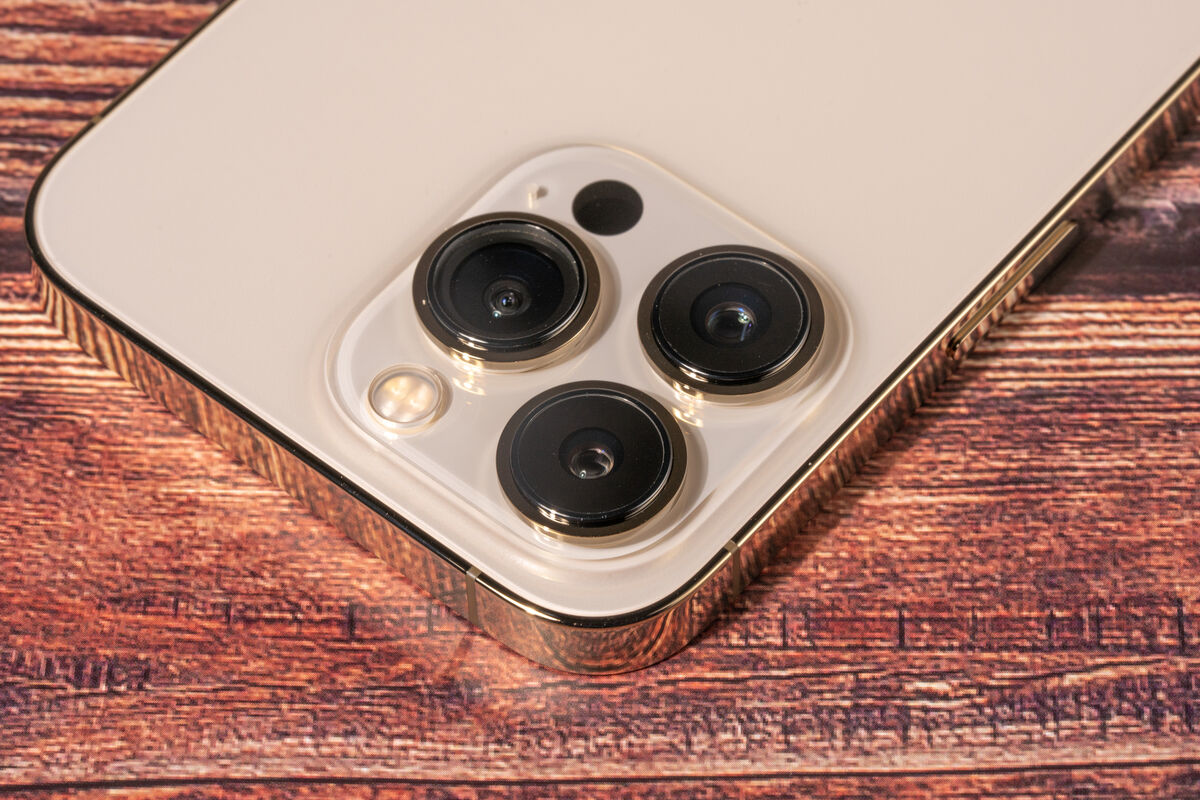
The new camera setup on the iPhone 13 Pro makes for a pretty complete camera system for stills and video. The latter is the one area that iPhone has been class-leading but the 13 Pro takes this to the next level and that’s not even factoring in the upcoming ProRes video which is coming in iOS 15.1. This will bring much better image quality and editing flexibility but will only be available on the iPhone 13 Pro and 13 Pro Max with 256GB of storage or more.
The cameras are probably the biggest reason to get the Pro models over the standard iPhone 13 this year. Like all iPhones, you know when you take a snap, it’s going to be consistently good. That’s one of the main reasons it’s the most popular camera system out there.
There’s just no getting away from the simple point and shoot nature of the iPhone camera app. You also have the hardware — sensors, lenses, neural AI engine — combined with the software which produces exceptional photos that make even amateur photographers look good.

For those looking for more than taking quick snaps, new features like the macro lens that can focus up to 2CM from its subject are excellent. The edges on macro shots are pretty soft but the centre is able to capture stunning close-up details. It will automatically switch into macro mode as soon as you get close enough to your subject which is great but also annoying when you don’t want it to switch. iOS 15.1 will provide an option to turn this off if you don’t like it.
Unlike my ‘real’ macro lens that I can get macro shots without getting too close, subjects like insects don’t like it when you try to get up 2 CM close to them. Also, since the iPhone 13 Pro is using the wide-angle lens for macro there isn’t a lot of subject separation which you typically want in macro photos.
Portrait mode continues to improve but it really works best on people with clean-cut hair and is not so great for those with frizzy or messy hair. To be fair, this is the same with all smartphone portrait modes and they still can’t compare to a ‘real’ camera with a wide aperture in this regard. That being said, I found the sensor is now so big on the iPhone 13 Pro and with the 3X optical zoom, there’s enough natural bokeh so now you don’t have to use the ‘fake’ bokeh if you don’t like the results it gives you.

The 3X zoom is so handy and I found myself using it often. However, at times 3X can be too much so you have to get in the habit of zooming in or out with your feet. You can pinch to zoom out but this will be digital rather than optical so bear that in mind.
Night mode is now improved thanks to the larger sensors. The standard lens also has a larger aperture of f/1.5 versus the 12 Pros f/1.6.
I found if you put the phone on a tripod I was able to extend the exposure time up to 30 seconds although most of the time you only need a few seconds to capture good night mode photos.
The iPhone 13 Pro video capabilities are incredible. Everything looks sharp, colour and contrast are spot on and footage always looks super stable. I tested this with practical things like panning, walking and even cycling with super-smooth results — you’d swear it was on rails. This is in part due to the extra hardware enhancements in this year’s iPhone 13 Pro which feature sensor-shift stabilisation. The latter also helps with night mode by reducing hand shakes.
One of the things that Apple does better than any other phone brand is rendering natural-looking bokeh.
The new Cinematic mode is also pretty cool and works well as long as you don’t get too ambitious and go for too shallow a depth of field. It uses AI and machine learning to isolate subjects from the background by replicating the effects of changing the aperture on a pro camera. When done right it can look really natural and professional.
The new video mode can also use ‘cinematic’ techniques like rack focus to automatically shift the plane of focus between subjects for dramatic effect and storytelling or you can do it manually. What’s really impressive is that you can change the point of focus in the editing process right from the standard editing app.

The iPhone 13 Pro produces an expansive sound when watching a video with good stereo content and the quality is exceptional. I can’t say it sounds any better than the 12 Pro but that was already class-leading.
Of course, there’s no headphone jack and there’s no adaptor in the box but for €10 you can pick up an adaptor that you can use with your audiophile headphones to stream lossless music from Apple Music and other music services.
The 6.1-inch OLED display can get stunning bright when watching HDR content or when in direct sunlight. It has a peak of 1000 nits max outdoor and 1200 nits max HDR brightness.
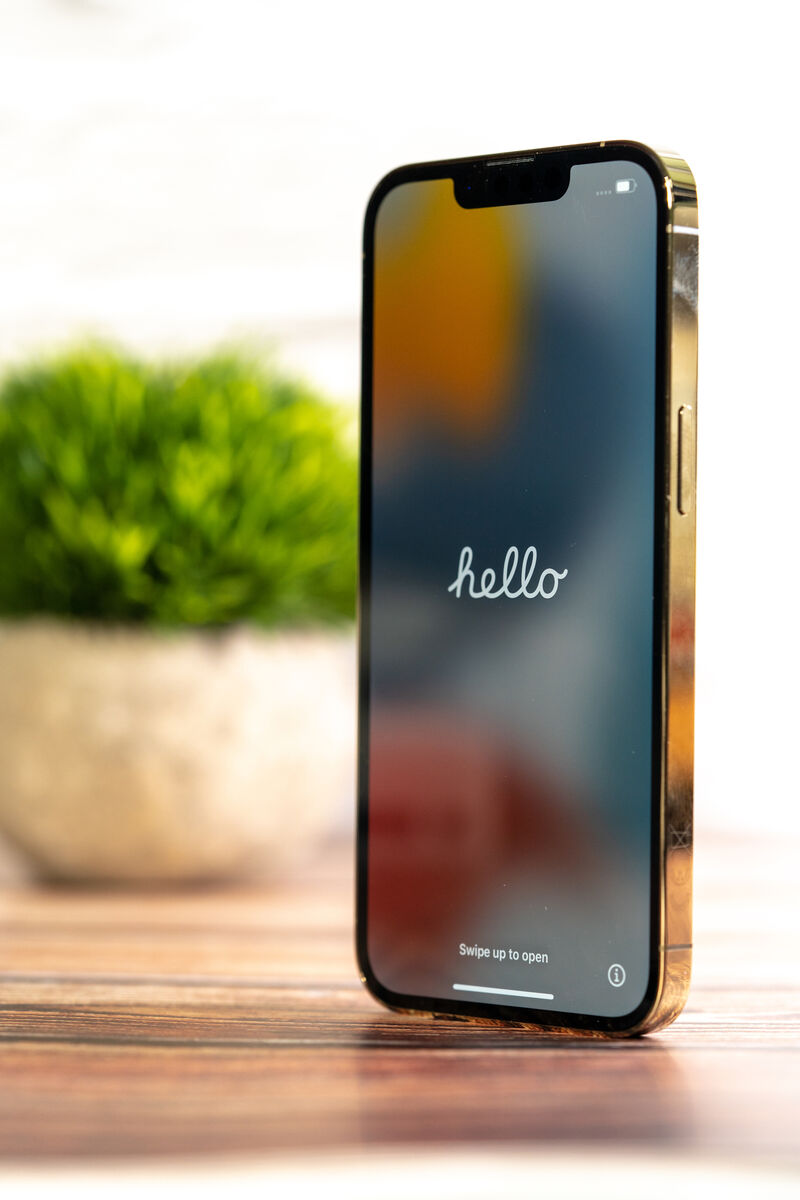
The display now features a smaller notch although it is slightly deeper. The difference is substantial when you compare it to the iPhone 12 Pro but in everyday use, I have become oblivious to the notch and it is mostly hidden in dark mode anyway.
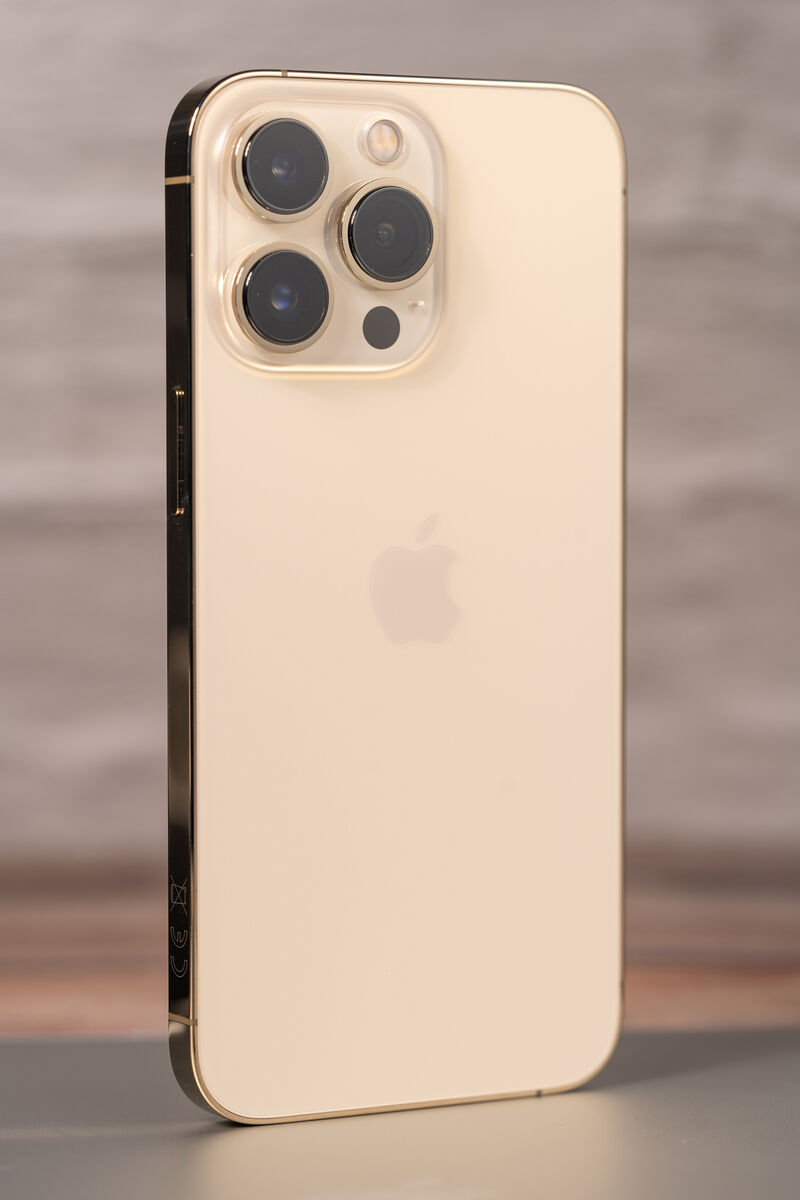
I’ve been a long time Pro Max user and love the larger 6.7-inch display and extra exclusive features the flagship brings. This time out I’ve been using the iPhone 13 Pro exclusively for the last few weeks and while I miss the larger display, I don’t miss the extra weight and size in the hand.
I don’t have small hands but I’ve never been able to comfortably use the Pro Max one-handed. On the 13 Pro, simple things like unlocking the screen are much easier when I have to input the code and I can now reach all four corners of the display, albeit at a bit of a stretch.
The great thing about this year’s Pro models is that they’re identical, so if you like the smaller form factor of the iPhone 13 Pro you won’t feel like your missing out.
The iPhone 13 Pro really is the phone to get this year. It has the most versatile camera system, comfortable form factor, stellar battery performance, ProMotion and is a beast in terms of performance. That being said, Apple makes such powerful devices with years of iOS support that it’s now becoming normal for people to hold onto an iPhone for several years. This is great for your pocket and the environment but if you’re looking to upgrade from an older device the iPhone 13 Pro is going to be hard to beat.


CONNECT WITH US TODAY



Be the first to know the latest news and updates