Cork researchers aiming to increase energy-efficient office upgrades
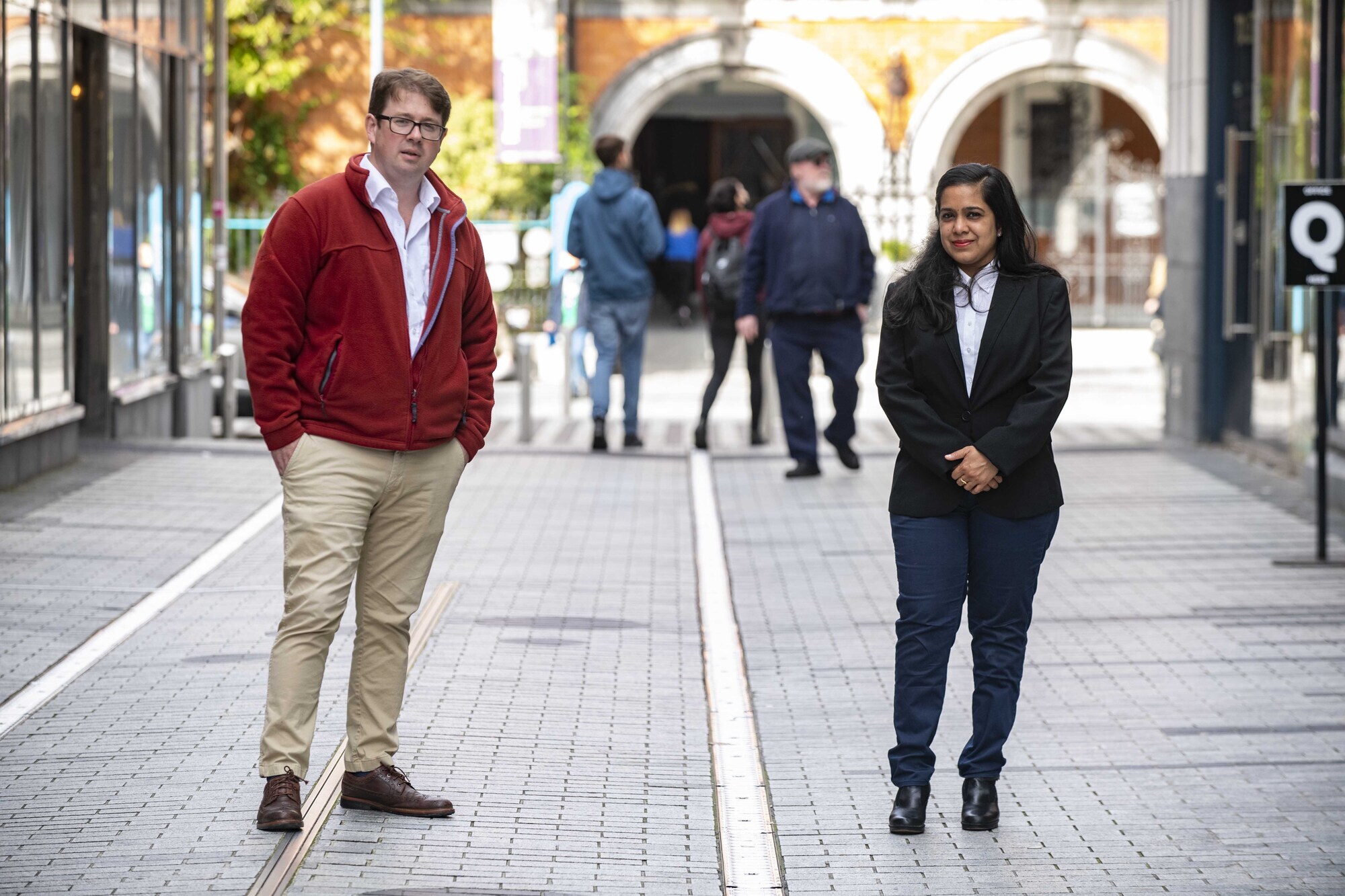
Dr Pádraig Lyons, Head of Group and Ruchi Agrawal, Integrated Energy System Researcher at the International Energy Research Centre (IERC), Tyndall National Institute, are calling on the owners of commercial rental properties to join their retrofitting trial which requires no up-front costs from the building owner and which could result in national energy savings of 1.8 TWh per year and a €219m investment in sustainable energy. Pic: Brian Lougheed
Researchers at the Tyndall Institute in Cork are leading new trials that could remove the split-incentive problem, which is resulting in a significant level of untapped energy saving in the commercial rental sector.
The problem arises because the building owner is typically responsible for the costs associated with retrofitting the building, while the tenant is the one who benefits from the majority of the improvements such as lower energy bills, reductions in CO2 emissions and increased comfort. This leads to the building owner, whose objective is to minimise capital costs and maximise rental revenues, having little incentive to invest up-front in measures that would improve energy efficiency over time as they won’t directly benefit themselves.

CONNECT WITH US TODAY



Be the first to know the latest news and updates