‘Shush mode’ and camera the highlights of Google phones
In London
Google’s new phones will make it easier to take group selfies, comes with an automatic ‘shush mode’, and will be available for the first time in Ireland since 2016.
The Pixel 3, with a 5.5-inch screen, will be €899 (64GB) and €959 (128GB). The Pixel 3 XL, with a 6.3in screen, will cost €999 (64GB) and €1,099 (128GB).
Both sizes come in Just Black, Clearly White, and in Not Pink from the Google Store exclusively.
The new phones are made from premium materials and both devices share the same hardware apart from the obvious size difference. The biggest features come in the camera software. Like the Pixel 2, there’s a single rear 12MP camera, but at the launch in London, Google said all of the magic happens as a result of machine-learning and AI.
Some of the biggest improvements over last year’s models comes in the HDR+ feature. This improves on last year’s model by combining multiple images with different exposures. The results in my hands-on time with the phone is impressive.

Among the improvements is portrait mode, which uses machine-learning and AI to isolate the subject by blurring the background. You can now also change the amount of blur after you take the photo. Traditionally, this is one of the main things that separates more expensive cameras such as DSLRs from smartphone cameras. Almost all smartphones use this feature now, but the Pixel 2 is claimed to be the best, and now Google says the Pixel 3 is even better thanks to new hardware and machine learning algorithms.
Night Sight mode is another new feature that works a lot like HDR — it takes several photos at once with different exposures and then in real time it will merge the images together and produce a properly exposed photo in dark scenes. This is very much like Night Mode on the Huawei P20 Pro and if it works as well, Pixel 3 owners will be really happy.
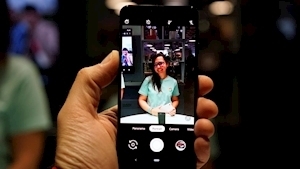
Group selfies are a thing nowadays and using the second wide-angle camera on the front of the Pixel 3, you can get more people and more of the scene into your selfies. This mode also applies in-camera distortion correction to fix fisheye distortion where people look like they’ve been squashed or where straight lines look bent.
It’s here. The brand new Pixel 3. #pixel3 #madebygoogle https://t.co/Ki9NPjtlEx pic.twitter.com/GfZn00RO6y
— Made by Google (@madebygoogle) October 9, 2018
Photo Booth mode works on the front-facing camera by automatically capturing photos of people goofing off or smiling. This feature is ideal for capturing selfies with kids.
The new Top Shot feature is where the camera is continually taking photos while the app is open. When you press the shutter, it saves 1.5 seconds before and 1.5 after you pressed the shutter. This is a little like Live Photo on the iPhone and allows you to pick the best photo.
Despite the fact that there’s no zoom lens, Google has developed a software technique for improving details in Super Res Zoom. This combines multiple images and takes all of the information from each to produce a higher resolution image. Sounds great in theory, but I’m looking forward to testing this more over the next few weeks.
What Google is calling Digital Wellbeing is similar to Apple’s Screen Time. This allows you to take control of your technology by It shows how much time you are spending on your phone and on each app will break down to how much time you spend on each app, how many notifications you get, and how many times you unlock your phone. You can restrict the amount of time you feel you should spend on apps.

Facing the phone down on a table puts it into Flip to Shush mode which is a ‘do not disturb’ feature of sorts. Picking the phone up again will automatically take the phone out of shush mode again.
Finally, the phone supports fast charging and fast wireless charging. You will also be able to buy the smart Google Pixel Stand for wireless charging for €79. Also, launched yesterday was the Google Pixel Slate and Google Home Hub, but won’t be available in Ireland.