Will.i.am feels Puls of wearable tech
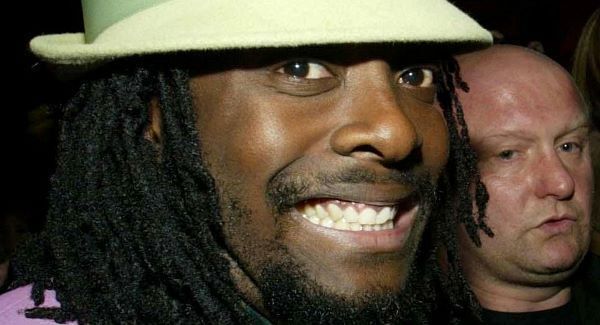
Wearable technology is the new black, according to hiphop artist-cum-technology entrepreneur Will.i.am.

Will.i.am feels Puls of wearable tech

Providing some rock ’n’ roll glitter at the Mobile World Congress in Barcelona, he explained why he changed from making music to making technology.

“Before, people used to go to concerts and dance and watch what was happening on stage,” he said.

“They would tell stories about the gig afterwards. Around 2005 or 2006, I started to notice that people were pointing their phones at the stage instead. There was a change in behaviour.

“People’s minds and memories weren’t enough. They wanted to record what was happening. It was profound for me. When people go to dinner now, no one talks. Everyone’s just staring at this glow, thumbing through life. I wanted to understand this new world and participate in it.

“Wearables are something I’m really passionate about. I’m interested in design aspects. The only thing you buy — no matter what — is fashion. The future is going to be aspirational devices like technology that you can wear. The fashion industry hasn’t entered this game yet — mobiles. We’ve been putting things on our bodies for years called clothes. Now we’re starting to put technology on ourselves.”

The Black Eyed Peas singer — who has made songs with U2, Michael Jackson, and Justin Bieber — recently launched his company’s Puls smartcuff, which is essentially a smartwatch.

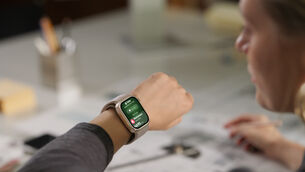
Users can wear it like a wristband. It has all the functionality of a smartphone. For example, users can listen to music on it, compose tweets by voice recognition, send and receive emails, and play video games.

“Why should you wear a wearable?” he asked. “Why should you have this device on your wrist? It’s obvious. The phone is not made for people riding bikes. I don’t want to go to gym and see a guy with a phone strapped to his biceps. There are areas in the world where you know the phone is not meant to be. When you’re driving, your car phone should be close to your wrist.”

Will.i.am, who was dressed in a black suit, black shirt and tie, and a trilby, stressed that the design of a device should be at least as important as its functionality. The cuff his company has created comes with a special jacket. Users can recharge their device by wearing it at the same time as the jacket.

The Puls smartcuff also has a social media element. If a cuff user meets other cuff users and wishes to share information with them — for example, a phone number — the two users clink their cuffs to wirelessly transfer the relevant data.

Will.i.am also spoke about his vision for the mobile entertainment industry.

“I go to YouTube to get my music,” he said. “If something comes out, I watch the video. I don’t know anybody who listens to music for two hours straight. We’re living in a visual world. The eye is more important than the ear. YouTube is the ultimate free experience. It’s on your device. It’s fast; it used to be slow, but not anymore. I see Shakira, the magic, I don’t just hear her. The camera is my speaker. All young people do is YouTube, YouTube. You have to take this into consideration.”

Zuckerberg’s plan to connect a billion people

Mark Zuckerberg, the chief executive and founder of Facebook, spoke yesterday at the Mobile World Congress in Barcelona about his company’s Internet.org initiative.

It is a plan to increase internet connectivity to an extra 1bn people in the developing  world by subsidising data and selling low-cost handsets. It is operational in four African countries, as well as India, and Colombia.

“This is our mission,” he said. “We began this project two years ago. Half the world’s population has connectivity. We want to bring connectivity to the other  half. To do this, we have to invest in infrastructure and we have to overcome digital illiteracy.

“There is a lot of press about how Google has its balloons and how Facebook has its planes and satellites, but really those projects are at the fringes — 90% of people live within range of a network.  We’re not the ones who are leading this — the real work is being done by operators who are laying fibre and building infrastructure. They are driving this digital connection.”

Delegates at the conference queued for three hours to hear Zuckerberg, who was dressed in a grey T-shirt and jeans. In rolling out Facebook’s Internet.org plan, he has visited several target countries in the last year, including Mexico, Colombia, and Indonesia, where he met with partners and governments.

“What strikes me is when I see the lengths people will go to get internet connectivity in these countries,” he said.

“I was in a village outside Jakarta [the capital of Indonesia] and people were lobbying their government to get connectivity. It was amazing to see that the primary objective of a bunch of these people was to get internet access. It helps people to stay connected with their loved ones,” he said.

“What I also found interesting was that adults were coming to their kids for advice on how to use the internet and how to find information.  It was novel and interesting to see that in a country like India.”

Zuckerberg said the only way to grow the internet was to accelerate business for operators — to make it profitable for them to work in developing world markets. A tool like Facebook is a Trojan horse for these companies, as social media is a big draw for people in buying phone or internet plans.

He was joined onstage by Facebook’s partner organisations in the initiative, including Christian De Faria, the chief executive of Airtel Africa.

“If you asked me a year or two ago, given Facebook’s market capitalisation, what I thought — I was sceptical, but I think the beast is becoming more human,” he said. “Facebook is an application. It’s an acquisition tool. Customers like it. Instead of avoiding Facebook, let’s work together. Facebook is not going away.

“The objective with the customer in the developing world is to give them access to Internet, and in Africa, there is huge appetite for data. We’ve found that users who use Internet.org are using 30% more data than the average users who use their phones just to make phones calls and send text messages.”

Uptake has been good on the project to date. According to Mario Zanotti of Millicom:

“In Colombia, it is too early to tell but we have seen that there is an increase by 50% in the number of people in three weeks who are new data users. In the case of Tanzania, we have seen a tenfold increase in smartphone sales.”

Microsoft announces its mid-range smartphones

by Martin Landi

Microsoft has announced  two new mid-range smartphones, both of which will work with Windows 10 when it launches later in the year, and come with Microsoft Office for free.

Unveiled at a press conference at the Mobile World Congress in Barcelona, the Lumia 640 and 640 XL will both go on sale in April for less than €200 — significantly less than the devices of many of Microsoft’s rivals. This includes the ability to upgrade to Windows 10 for free when it is released later in the year, as well as a  year’s free subscription to Office 365, the service that gives users access to software such as Word and Excel across mobile devices.

“Our newest Lumia devices build on our momentum in the affordable smartphones space,” said Jo Harlow, vice president for phones at Microsoft.

“With the Lumia  640 and Lumia 640 XL, we continue to make innovation accessible to more people. We have packaged competitive hardware with innovative Windows software and Microsoft services to help you achieve more, wherever and whenever you want.”

The announcement comes after fellow manufacturers HTC and Samsung both unveiled flagship devices on Sunday. HTC announced the new One M9, while Samsung showed off the Galaxy  6 and S6 edge, all of which will sit in the premium smartphone bracket.

The Lumia devices meanwhile are Microsoft’s play for the mid-range market, where the former Nokiabuilt devices still hold a strong footing. The new 640 XL is the larger of the two new phones with a 14.5cm display compared to the 640’s 12.7cm, but both come with 720p resolution.

The smaller 640 also comes with 8GB of storage, which can be expanded by 128GB via the microSD card slots.

There i s also an eight megapixel rear-facing camera and the ability to shoot video 1080p HD. What will most interest consumers though is the price, with a 3G version of the phone costing €130 euro, Microsoft said.

The larger 640 XL has a 13 megapixel camera combined with a premium Zeiss lens in front of the sensor, and it also appears to be geared to self i e fans with a five megapixel front-facing camera. The 640 XL is similar in size to the iPhone 6 Plus, but the 3G version will go on sale at €190, with the 4G costing €220 — both a lot less than Apple’s device.

More in this section

The Business Hub

Newsletter

News and analysis on business, money and jobs from Munster and beyond by our expert team of business writers.

Cookie Policy Privacy Policy Brand Safety FAQ Help Contact Us Terms and Conditions

© Examiner Echo Group Limited