Alan Healy: The State should buy Whitegate - again
A country that can keep trucks on the road and tractors in the field can afford to be ambitious.
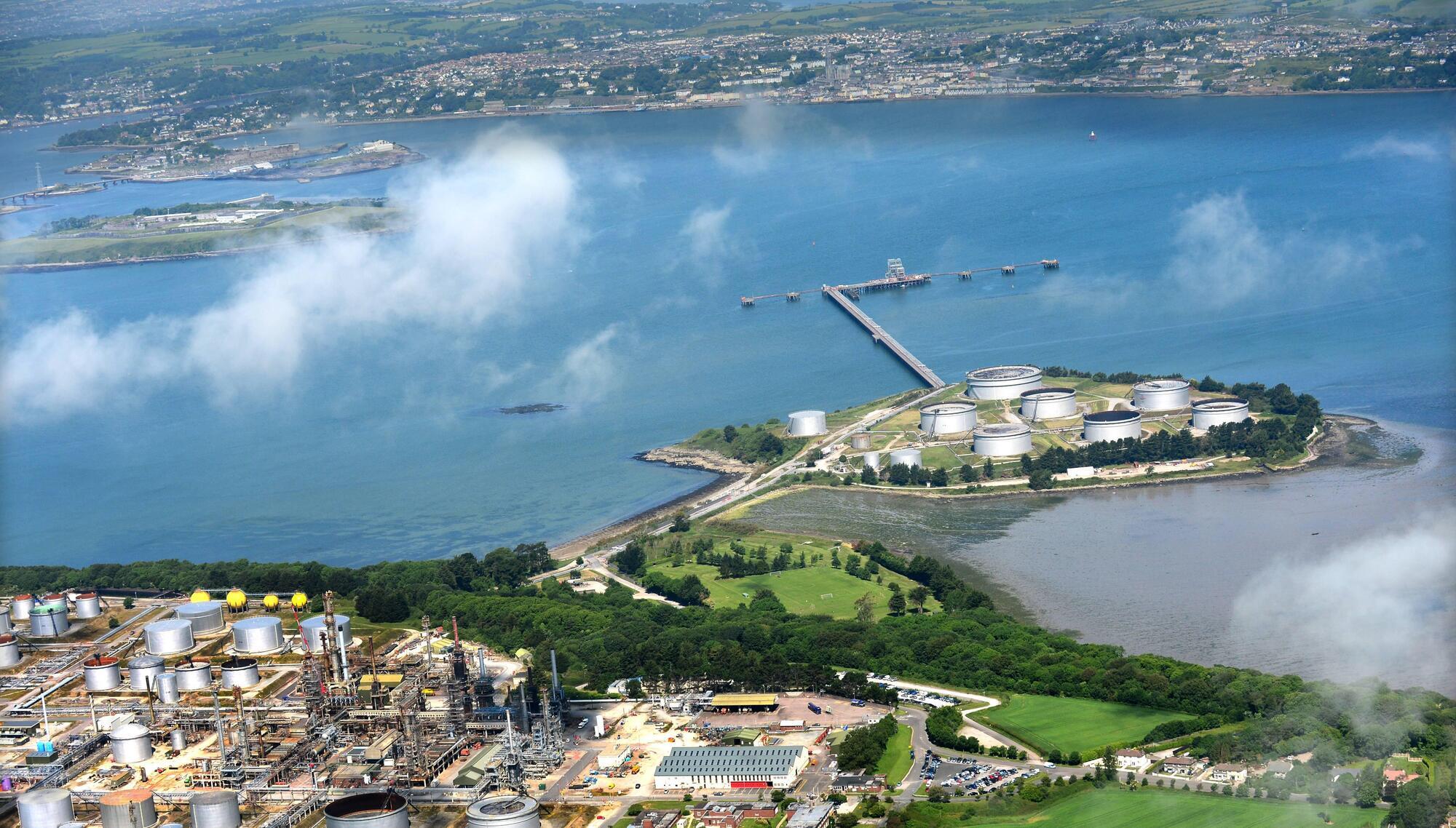
Senior executives from Canadian firm Irving Oil arrived in Ireland last week to give an update on their plans for the future of Whitegate in Cork Harbour, Ireland's only oil refinery.
In briefings in Dublin and Cork to staff, TDs and Government officials, the company outlined its plan to go to the international market to sound out potential buyers of the facility.
It is difficult to say who the potential buyers might be given the volatile nature of the global energy market over the past year, but one potential buyer is a lot closer to home.
The state purchased Whitegate in the past and ran it for 15 years, and with a firm focus on creating a net zero economy over the coming decades, there are strong reasons why the country should acquire Whitegate again.
The refinery first opened in 1959, built on Corkbeg Island, in a joint development by the oil giants at the time, Shell, Texaco, BP and Esso. Just two decades later, the companies no longer wanted to run it. Global oil demand had slumped, and despite pleas by the Government to keep the refining, the companies wanted out.
So the Irish Government stepped in, acquiring the plant in 1982 and running it through a state entity, the Irish National Petroleum Corporation (INPC). In 1986, the State also took over the Whiddy Island oil terminal in Bantry Bay, after the Betelgeuse tanker disaster. They didn't just acquire the refinery and sell products. Fuel companies here were obliged to buy a proportion of their petroleum products from INPC, giving Whitegate a guaranteed market.
In 2001, in a drive for privatisation, the State sold Whitegate to US refiner Tosco for $100m. It has since changed hands and was acquired by Iriving Oil in 2016.
Whitegate remains a vital part of Ireland's energy infrastructure. Its importance was highlighted during the fuel protests this year. A short blockade of the refinery by protesters resulted in fuel pumps rapidly running dry. It processes 75,000 barrels of oil every day, producing petrol, diesel and kerosene.
At full capacity, it can meet about 40% of the country's fuel needs. It is also one of the Port of Cork's biggest customers, with 5m tonnes of liquid cargo moving through the port last year.
The search by Iriving for new buyers will likely take a few months, but the State may very well be left in a position where it reads about the purchase after a deal has been done. At the very least, we should be ready to take a stake in the refinery. Not running it, but being a part owner.
That is not a radical stance, and is commonplace across Europe. Norway owns about two-thirds of Equinor, which runs the Mongstad refinery. Finland is still the largest shareholder in Neste, owner of the Porvoo refinery. Austria and Poland also hold stakes in companies which operate refineries. In 2022, Germany put the Schwedt refinery, which supplies 90% of Berlin's fuel, under state trusteeship purely on security of supply grounds.
The Irish state acquiring part of an oil refinery may seem strange given the country's drive toward a Net Zero economy by 2050. The country is witnessing a surge in the purchase of electric vehicles, with motorists baulking at the price at the pumps. The oil-fired boilers which keep hundreds of thousands of homes warm are being phased out.
However, the transition is gradual. 'Meeting targets' has rarely been Ireland's strong suit, and the reality is that we will rely on fossil fuels for some time to come. Road haulage, farming and construction will run on diesel for years yet.
A disruption to supply or a surge in prices may assist in the switch to renewables, but in a severe shock, it has the potential to disrupt transport, food distribution, farming, construction and parts of the energy system itself.
A stake in Whitegate does not lock the country into oil. An inevitable decline is coming. Analysts forecast the demand for refined oil products will peak in 2032, after which it will start to decline. An estimated one in five of the world's oil refineries faces increasing risk of closure. Petrol faces the sharpest pressure from electric vehicle adoption. Diesel, gasoil and jet fuel are more resilient, as heavy road transport and aviation have no clear decarbonisation pathway.
The State previously owned an oil refinery. In the 44 years since it acquired one, the reasoning has not changed. Security of supply remains a key requirement for any nation. And that security of supply would actually provide a safety net in the drive for Net Zero. A country that can keep trucks on the road and tractors in the field can afford to be ambitious and allows us to push on for climate targets with less fear of failure.

CONNECT WITH US TODAY



Be the first to know the latest news and updates