Irish rental market facing takeover by institutional investors, say small landlords
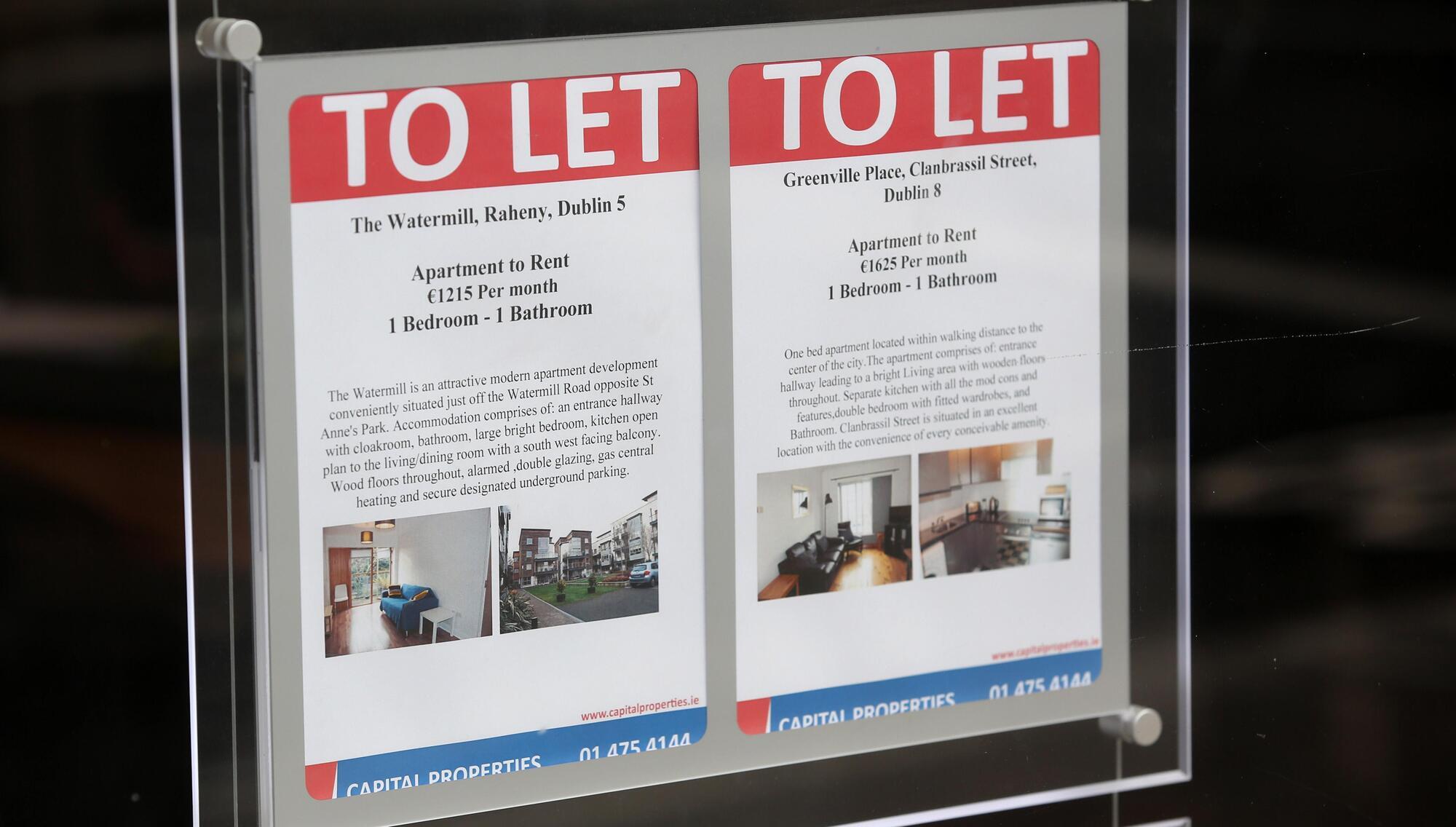
FILE PHOTO Rent around Ireland has spiked as the supply of homes available for rent has hit an all-time low END 04/09/2019. Dublin Rental market. Pictured a advert in an estate agent in Dublin city specializing in the Rental market showing a 1 bedroom apartment costing 1,215 euro per month in Raheny and another for 1,625 euro per month in Dublin 8. It has been reported that 28% of current landlords are TD’S in Dail Eireann (Irish Parliment). Photo: Sam Boal/rollingenws.ie
Ireland's private rental sector is hitting a "critical" breaking point with recent reforms from the government accelerating the exit of small and medium-sized landlords and paving the way for an institutional takeover of the market, the Irish Property Owners Association (IPOA) has warned.
Launching its pre-budget submission, the IPOA said the "continued loss" of independent landlords risks creating a rental sector increasingly dominated by large institutional investors, reducing choice, flexibility and stability for tenants.
According to the latest RTB Quarterly Update, more than 7,000 Notices of Termination were issued at the start of 2026 alone - the highest level on record - with 60% linked to landlords intending to sell their properties.
The new reforms allow landlords to reset rents to the market rate between tenancies. Under previous rules, rents for new tenancies were pegged to the previous rates.
They also include minimum tenancies of six years and a national cap on rent increases at the lower of inflation or 2%, with restrictions on “no-fault” evictions have also been expanded.
The IPOA said the proportion of tenancies held by landlords in Dublin with one to three properties fell from 40% in 2024 to 36.5% in 2026, while landlords with four or more tenancies increased their share from 60% to 63.5% over the same period.
It also warned that similar trends are emerging outside Dublin, where the loss of small independent landlords is reducing already limited rental availability in many rural towns and villages.
The IPOA said these trends are "direct consequences" of Government policy choices that have made remaining in the rental sector financially and operationally "unviable for many ordinary landlords."

“Small and medium-sized landlords, who have been the backbone of rental supply in communities across the country for decades, are being driven out of the market by unfair taxation, regulatory burdens and a policy environment that no longer recognises rental provision as a viable business," said IPOA chair Mary Conway.
"If current trends continue, Ireland will increasingly be left with a rental sector dominated by large institutional investors and corporate funds. That is not healthy for tenants nor for the long-term stability of the housing system”, she said.
The IPOA is calling for a targeted package of supply-side measures in Budget2027, including recognising landlords as businesses for tax purposes, reforming Capital Gains Tax to support the retention of rental properties, improving cash flow and reinvestment capacity for landlords, extending rental income tax reliefs and reducing the "punitive tax burden imposed on small and medium landlords."
“This is not a debate about landlords," said Ms Conway. "This is about whether Ireland will continue to have a functioning private rental sector at all."

CONNECT WITH US TODAY



Be the first to know the latest news and updates