Alan Healy: The true cost of the bank bailout is still being counted
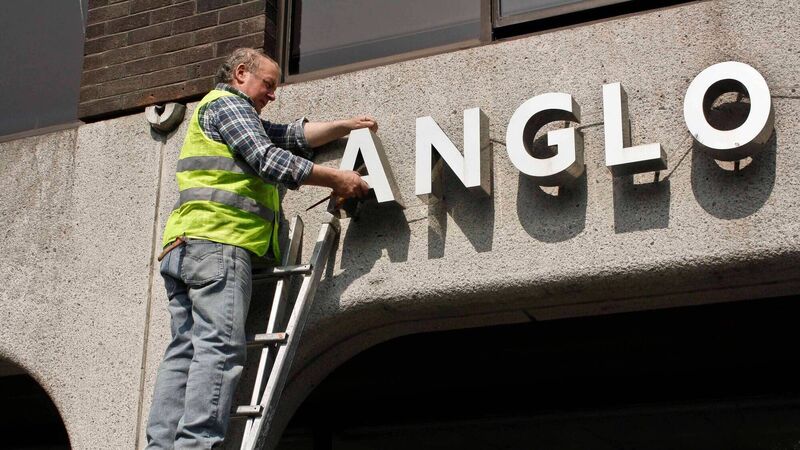
Ireland has not, and will never fully recover from the impact of that economic crash, the intervention of the Troika and the years of austerity. Picture: Brian O' Leary
The announcement of a sale of PTSB bank to Austrian lender BAWAG this week would, on the surface, draw a line under and close the book on the darkest chapter of the modern Irish State and its economic history. After nearly two decades, the Government has handed over ownership of the last of the institutions that brought the country to its knees. The bailout era, it seems, is finally over.
Except, of course, it isn't. In reality, Ireland has not, and will never fully recover from the impact of that economic crash, the intervention of the Troika and the years of austerity.
The acquisition is nonetheless a milestone. Pumping billions into AIB, Bank of Ireland and Permanent TSB to prevent total collapse of the banking sector was one of the most costly and consequential decisions in the history of the state. That the last of those institutions has now found a new owner feels significant. But significance is not the same as closure. The legacy of that crash continues to shape Irish financial life in ways that are rarely acknowledged.
House hunters walking into any lending institution today will still feel the long reach of 2008. Our Central Bank, scarred by the memories of reckless lending and soaring property prices, maintains some of the most cautious mortgage lending rules in Europe. Loan-to-income ratios, deposit requirements and other guardrails remain largely intact despite some moderate loosening in recent years.
The would-be homebuyers, particularly young people, are met with strict lending conditions, a challenge they face on top of an already difficult housing market dominated by a scarcity of suitable homes. There is a dark irony in that the lending rules put in place to prevent a repeat of the housing crash are playing a part in locking out a generation from home ownership entirely. The cure has its own uncomfortable side effects.
Beyond the lending rules, there is a more structural issue that rarely gets the attention it deserves. Ireland's banking sector is remarkably concentrated by European standards.
The departure of a string of banks during and after the crash, most notably Ulster Bank and KBC, left a market dominated by just the pillar institutions. For consumers, that means less competition, less choice and less pressure on the remaining banks to innovate or offer better value.
And no discussion of Ireland's hollowed-out banking system is complete without mentioning Anglo Irish Bank, the institution that, more than any other, symbolised the recklessness and hubris of the Celtic Tiger era.
In other European countries, consumers can choose from a far broader range of retail banking options. In Ireland, the legacy of the crash is a market that was emptied of choice and never fully replenished.
There is, to be fair, a more optimistic story to be told about where Irish banking is headed. The rise of fintechs like Revolut and Monzo has introduced a new generation of consumers to a different kind of financial services. Their slick apps and instant notifications have won over hundreds of thousands of Irish customers. They are not traditional banks, but they are filling a gap.
Credit unions, too, are quietly expanding their footprint. Having long been restricted to personal loans and savings, many are now moving into the mortgage market, offering an alternative to the main pillar banks and bringing a community ethos to an industry not always associated with one.
The government has, over the years, been at pains to point out that much of the bailout money to the pillar banks AIB, BOI and PTSB has been recovered. Dividend payments, share sales and levies have returned significant sums to the exchequer. The narrative of responsible stewardship has been carefully maintained.
Of the €64bn the taxpayer used to bail out the banks and maintain some semblance of a functioning financial system, less than half was recovered, with Anglo and Irish Nationwide swallowing up almost €33bn.
And even the sums that were recovered could have been put to far better use by the State. The swift and dramatic cut in public spending after the crash put Ireland behind in a way that is still felt today. We are still playing catch-up, trying to erode the deficit in our physical infrastructure development.
The PTSB acquisition is a moment worth marking. It represents the end of a particular kind of state involvement in the banking sector. But it would be a mistake to treat it as the closing of a book rather than the turning of a page.
The crash of 2008 changed Ireland irrevocably, our finances, housing market, banking landscape and, perhaps most profoundly, our relationship with the institutions entrusted to manage its money. Some of that change has been positive. Much of it has not.
The ghosts, it turns out, are not so easily laid to rest.
CONNECT WITH US TODAY



Be the first to know the latest news and updates