Farmer, haulier and agri-contractor loses out in €1.55m tax battle with Revenue over green diesel
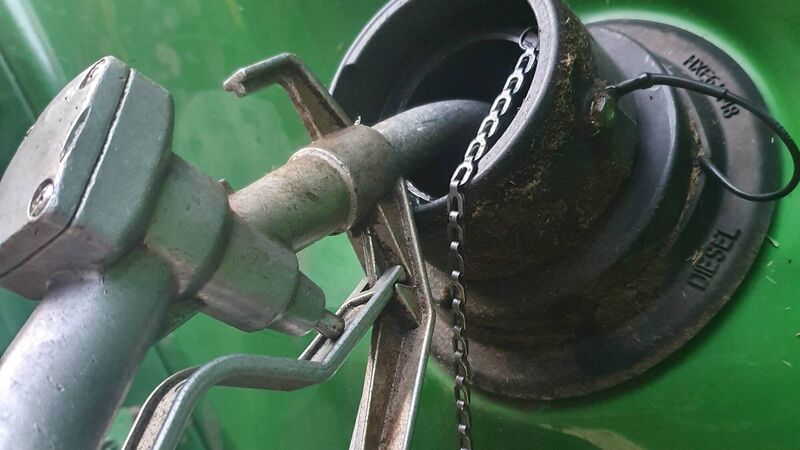
It was found the farmer, haulier and agricultural contractor had paid out €2.47m for the purchase of 3.44m litres of green diesel in 2014 and 2015. Picture: Rachel Martin
A farmer, haulier and agricultural contractor has lost a €1.55m tax battle with the Revenue Commissioners in a dispute over green diesel.
This follows the Tax Appeals Commission (TAC) upholding an assessment served on the agri-contractor and farmer by the Revenue Commissioners in 2018 concerning excise duty, income tax and VAT.
The bulk of the assessment concerned a €1.29m excise duty bill for green diesel, while the income tax bill of €214,663 and VAT bill of €54,072 also related to the green diesel’
The lower-tax green diesel is used mainly for agricultural work and is strictly restricted to off-road purposes.
The sharp rise in the price of green diesel, which has nearly doubled from €0.97 per litre in February to €1.80 in recent weeks, was one of the driving factors in protesters mounting blockades at major ports and oil depots in Dublin, Cork, Limerick, and Galway and locations across the motorway system.
In the case before the TAC, appeals commissioner Conor O’Higgins said the excise duty assessment arose from the appellant’s alleged receipt of 3.44m litres of ultra-low sulphur marked gas oil (MGO), often referred to as green or agricultural diesel.
Mr O’Higgins found as a material fact in the case that the farmer, haulier and agricultural contractor had paid out €2.47m for the purchase of 3.44m litres of green diesel in 2014 and 2015 from a firm.
Mr O’Higgins also found as a material fact the farmer was engaged in 2014 and 2015 in the supply of green diesel to other persons “presumably for profit” and this explained the level of purchases the farmer made in a way that his carrying on of farming and agricultural contracting did not.
In his appeal against the Revenue assessment, the farmer said he was in no position to pay the €1.29m excise duty bill and were the Revenue to seek to enforce such a debt, “it would result in the inevitable collapse of his business”.
In his oral evidence at the TAC hearing, the farmer denied he had received 3.44m litres of ‘green diesel’.
He said: “I would burn in my business a year would be €300,000–€350,000” and that any fuel acquired over the period in issue was used for “harvesters and tractors and drying grain”.
The farmer challenged the €1.2m excise duty assessment, claiming the sum assessed represented an “absurd” amount of green diesel for use on a maize farm or for agricultural contracting.
He also denied that he had made supplies of fuel to other farmers in the area.
At the hearing, counsel for Revenue put it to the farmer a supplier’s statement from the firm selling the green diesel to him confirmed that between April 2014 and July 2015, the farmer received green diesel at a cost of €2.47m and this statement formed the basis for the Revenue excise duty assessment of €1.2m.
Counsel for the Revenue pointed out the supplier’s statement was provided by the farmer’s own agent to Revenue in 2016.
Counsel for the Revenue put it to the farmer that his agent in correspondence with Revenue in 2016 said the farmer had an arrangement with farmers for the purchase and supply of agri-diesel by payment of cash as he was able to purchase at a favourable rate in large quantities.
In response, the farmer said his agent’s response did not in fact reflect reality and was “lunacy”.
In his findings, Mr O’Higgins found the absence of any corroboration of the farmer’s bare assertions regarding the level of green diesel he received in 2014 and 2015 “causes the commissioner to doubt his oral evidence on this matter and to find that it lacks credibility”.
Mr O’Higgins said as such, there was no basis upon which to conclude the excise duty assessment was in error on the grounds it overestimated the level of MGO received by the appellant in the relevant years.
At hearing, Mr O’Higgins said the farmer’s revised account that all of the green diesel he acquired was used in the course of his farming and agricultural contracting activities was unconvincing.
Mr O’Higgins also found the farmer, both in investigation correspondence and at hearing, was asked to provide the names of the farmers he had supplied the green diesel and despite this request, he did not provide any.
The report says the Tax Appeals Commission has been requested to state and sign a case for the opinion of the High Court.
The hearing into the appeal was heard at the fourth attempt. For the first two hearing dates, the farmer provided a note from his GP he was not in a position to deal with the hearing due to his poor mental health.
On the third scheduled hearing date, it was adjourned after the commission was told the farmer was involved in a road traffic accident en route to Dublin and had been taken to hospital by ambulance.


CONNECT WITH US TODAY



Be the first to know the latest news and updates