The CEO of Cork's Everyman Theatre on filling seats, retaining audiences, and the events centre
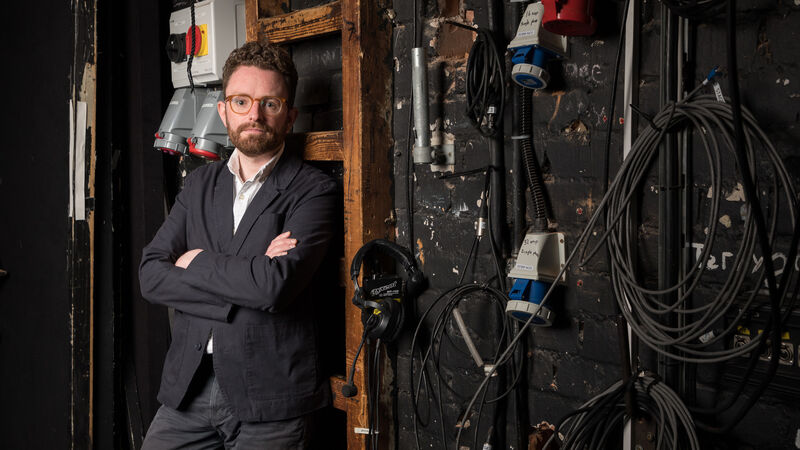
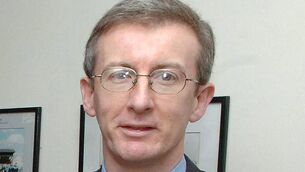
Everyman CEO Brian Fenton. Picture: David Creedon
These are exciting times for Cork's Everyman Theatre, and executive director Brian Fenton. Revenues for the first quarter of the year are up 80% on 2025. A spectacular programme will be unveiled at the end of the month. And a few short weeks ago, the venue enjoyed the busiest day in its 129-year history.
“On Saturday, March 14 we had 2,500 patrons in one day,” said Mr Fenton. Some going for a venue that seats 650.
“We had three shows of Julia Donaldson’s Zog and the Flying Doctors, followed by a show by the comedian Neil Delamere. The operations team here did an amazing job turning all that around.”
That Saturday line-up gives an indication of the eclectic variety of programming which has made the Everyman unique since 1897. Mr Fenton joined the Everyman in 2025 as executive director, linking up with co-chief executive with artistic director Des Kennedy. A native of Fermoy, Mr Fenton worked as an actor before getting involved in theatre production at The Old Vic in London and in more recent years at Druid in Galway.
Read More
Returning to a stage he knows well on the Everyman has been an honour and a challenge.
“We had more than 100,000 people through the doors last year, at over 300 events, which we're proud of. We've 40 staff here delivering that day in, day out. Our education had community programme had 2,000 people engaged with it last year.
“Almost 10% of our audiences last year had never been here before, which is lovely.”
The Everyman is an important and beloved part of Cork’s cultural life, but running a business with a €4m turnover does not run on goodwill alone. There’s room for sentiment but risks need rewards. It requires savvy programming and taking calculated risks on what will fill seats.
“The business challenges that sit on my desk arelike every other business: the rising costs, and trying to continue to make the everyman affordable, is a big challenge .“We can see the impact of times when in retrospect we see that a ticket price was too high and just didn't work, or it didn't translate.
“I'm very price sensitive about people, particularly when it comes to the Panto or family work. It can be a lot of money and that’s all indexed to the cost of making the panto, the cost of making the cast of keeping this building open. But I am sensitive to the additional spend around that then if you're buying a programme or buying a piece of ice cream or a pint, whatever. It's part of what we're asking audiences to commit to us.
“But we are a registered charity, not-for-profit, where any money we earn goes back into the business. So as much as we are trying to make ourselves accessible and try and make sure that people can afford to come to the Everyman across all types of work, you want full houses.”
The Everyman panto, an annual favourite, brings in almost €1m at the box office, with 57 shows bringing 30,000 visitors, contributing to the theatre’s turnover of around €4m in 2025. This €4m included funding of €500,000 from the Arts Council and €55,000 from Cork City Council, with the remaining 85% of income coming from the box office and the bar.
“That's how much we rely on and are grateful to our audience. We feel we punch above our weight,” said Mr Fenton.
"We have a very low base in terms of other diversified income, like fundraising and corporate partnerships. There's a capacity challenge here all the time in terms of making those big strategic partnerships. I'd like to build that out to make proper strategic partnerships, whether it's third level institutions in Cork or corporates to diversify our income base.
“You want the business to be thriving. That's where things like broader corporate partnerships or institutional partnerships can help us to take costs down.”
The Everyman has reshuffled its calendar and diversified its offering to make financial sense.
“This year, for example, we can see the bookings data for our K-Pop show which is coming later in the year shows that there's an awful lot of people that we certainly don't have on the system previously that are coming because of the work.
“We often talk about the new work, and how to bring new audiences. We're trying to build audiences all the time. And then the big challenge for all theatres is to retain audiences when they come.
“I suppose one of the things that the Everyman has never really done is look at a proper strategic approach to tourists, or those who come from out of town or on the Wild Atlantic Way and all those connections.
“So this summer now we're trying, as part of our season launch, we're going to be announcing an Irish dancing show, which is a prototype for us to see, can we challenge ourselves to get after a new market.”
Mr Fenton also noted the Garda presence on MacCurtain Street as part of the citywide visibility campaign. “It has had a huge impact on us. It sounds like a simple thing, but in terms of audiences feeling more comfortable and safe, tourists, that's been a really important piece of business.”
The relationship with the Cork Opera House, sitting across the river, is another important part of the business.
“We have a great relationship with the Opera House. I think you can only survive if you have a good relationship like that. We’re always talking and checking on schedules, opening nights, making sure we're not clashing with each other. The moment that becomes a competition or that there isn't a really good relationship there is the moment both places suffer.”
Other competition could come in the form of a long-planned events centre for Cork with a capacity of between 4,000 and 6,000 people which Fenton fears could end up as a "big empty room", too large to host major theatre shows.
He said that Cork should instead be planning for a theatre-style venue which can also accommodate large conferences – similar to how Dublin’s Bord Gais Energy Theatre operates.
“There's no question from my point of view that a 3,000, 4,000, 5,000 seat venue won't get the West End shows - it's too big,” said Mr Fenton, who himself previously worked in London theatre production.
“It’s too big for those big musicals – the stage is too big, the auditorium, even the level of risk. In the theatre business, it's all about the scale: if you get the scale right, you'll have year-round activity. But with the Events Centre in Cork, there is a lot of voices, and it has become this big, big, big arena.
“Commercial producers in the West End want to play theatres. West End venues are 1,800 seats, 2,000 seats. In Dublin, there's a reason those touring West End shows are not going into the 3Arena.”
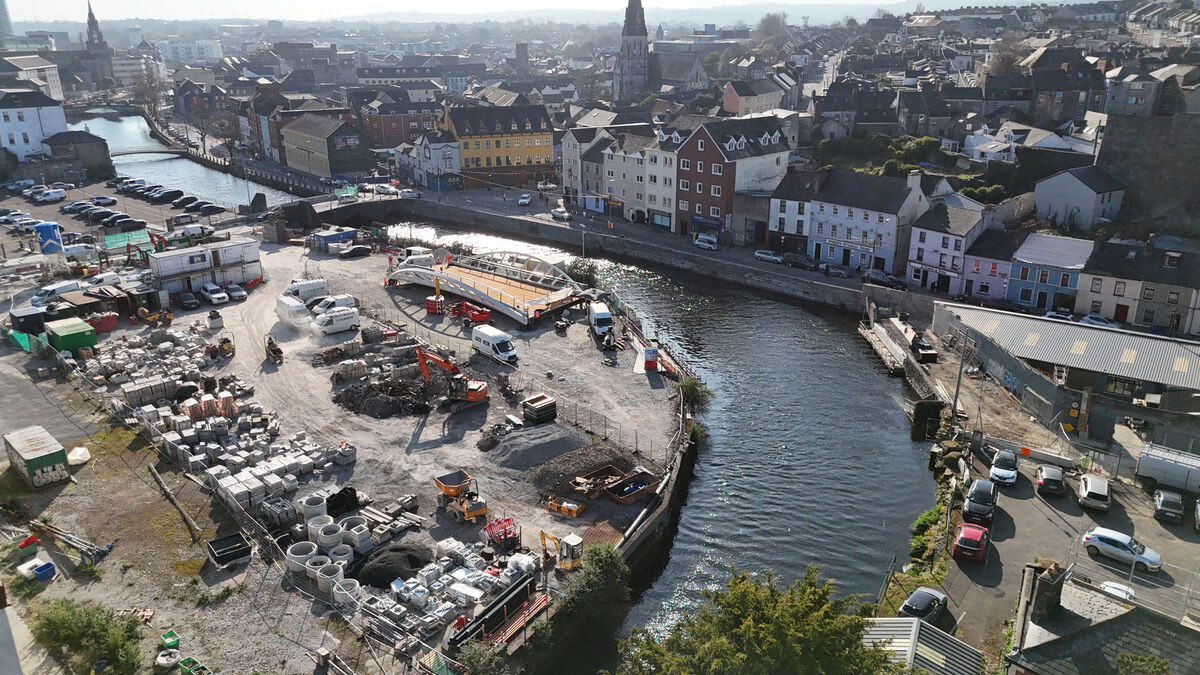
The Cork Events Centre plan has been in place for 18 years but a new tendering process in place with Cork City Council led by management firm Aecom has injected fresh momentum. Proposed sites include the original proposal by Bam to develop an arena on the former Beamish brewery site on South Main Street as well as a plan by Marina Market boss Tom Coughlan to develop it in Cork Docklands.
“In terms of year-round activity for audiences in Cork and for employment in Cork, I do believe there is space for a 2,000-seat Bord Gais-type venue with a commercial year-round musical and concert and music programme, which can hold large conferences, and then allow Live at the Marquee to continue in the way it has every summer,” said Mr Fenton.
“Logistics is the other big thing. If it is the wrong site, you will have producers who decide not to go there because the site is too complicated. Certain sites will work far better logistically than others.” Mr Fenton said the Everyman was invited into the formal consultancy on a new Events Centre by the project managers and “we gave our opinion on that”. “We have been told clearly that there isn't a site identified yet, and there is a whole process to go through.
“We support the idea of a bigger venue in Cork - our position is an events centre would be brilliant for audiences. Cork is the fastest growing city in Ireland, and the growth projections for Cork set by the Government are massive, so there's absolutely a business model there for a 2,000-seat venue. That would already be twice the size of the Opera House.
“My concern is that the conversations we have had both formally and informally are that the vision for it is for a much bigger venue. I worry that it’ll be a big empty room.”
The key business for the Everyman’s executive director is filling seats, and there’s a science behind the art of theatre programming. “Myself and (artistic director) Des are relatively new here but this year, we can see the programme is having an enormous impact on sales. Our pre-sales going into this year were very strong. You'll never get it always right, but we're trying to get that programme matrix right.
“Cork is a very sports-focused city in summer you do have to transition to a different type of programming maybe more focused on those who are coming from out of town, who want a night out, and families, with kids off school. Some of our own brand ‘Everyman Made’ productions are going to be sitting much later in the year in October, November, which is a sweet spot for drama.
“You want full houses. You want obviously the business to be thriving. But that's where things like broader corporate partnerships or institutional partnerships can help us to keep costs, take costs down.” Next month, the theatre will host 11 performances of Mick Flannery’s musical The House Must Win, directed by Julie Kelleher and co-starring Tommy Tiernan.
The Everyman has invested around €100,000 in bringing the show to Cork. But gambling on The House Must Win looks to have paid off. “We’re heavily invested in that financially but the more risk we can take ourselves, the more we can also make. We’re already past the break even point with that show, so that’s great. It helps subside our other work. And it’s a vote of confidence in the piece as well.
“The biggest cash risk and artistic risk for us is when we make our own work. In a way that this like thrill of show business as well, where you can take a commercial risk on something because you believe in it artistically, you believe there is an audience for it, and you can build a business case or investing in a production. And that's where then we do an awful lot of work here about data and stuff. You won't always get it right, but happily this year, touch wood, things are doing well. The things we're taking risk on are doing well.” The Everyman is currently interviewing for members for the next board, which will carry out the theatre’s strategic plan to 2029. “We are going through public board recruitment at the moment, and we have over 40 applicants from the business sector, people only working in Ireland but internationally, in theatre but also in tech, or in legal, or financial HR, all willing to give up their time voluntarily to be part of the board. Some of them grew up going to the Everman Panto or doing speech and drama in Cork and now want to give something back.” Next year, the Everyman will celebrate its 130th anniversary, a special milestone since Dan Lowrey opened the doors of the Cork Palace of Varieties on MacCurtain Street.
It may be showing its age in places – upkeep alone is €100,000 annually – but it remains a Leeside favourite. Later this month, the curtain goes up on the rest of the Everyman’s 2026 calendar of productions, promising a schedule which will include globally recognised talent coming to Leeside, all sitting alonside the best of local, including the 30th year of the Christmas panto production of Catherine Mahon-Buckley and Cada.
Mr Fenton hailed the work of co-CEO and creative director Des Kennedy. “Des's artistic tenure and his international experience is priceless. He’s the resident director on Harry Potter across the world, he's directed in London and Broadway. I think it's really interesting for Cork to have someone come in with the contact book he has, but also the kind of fresh take on what this city could be, because he's not tied to the past. He's not tied to the legacy of what the Everyman used to be.
"For the people of Cork, and as a Corkman myself, I want to cling on to him as long as we can, and actually try and deliver on the vision that he has for Cork and for the Everyman. We have an amazing staff, we have a huge cohort of volunteers front of house as well, and having a board with a real multidisciplinary experience will really get us there.
“The next few years he's going to be delivering for the Everyman something I think that the Everyman has never had before. The work we're making this year, which we'll be announcing at the end of April, includes site specific drama in Cork and also shows that we make under the Everyman Made brand which will be then taken out of Cork, with national and international transfers. And the quality of actors coming out of Cork is extraordinary.” Brian Fenton grew up in love with acting. He met his future wife Clare at a production of Les Mis in Mallow. The circle took them all the way to the West End and back. They are now living in Fermoy, and expecting their second child, which will put any thoughts of a return to front of stage for Mr Fenton firmly on the back burner.
But he sees a strong future for the art here. “Cork is such an amazing city. I think sometimes there's maybe a misunderstanding about arts venues. I've heard people say to us, ‘Jeez, you must be flying, it’s always busy there’, and people think that there's four staff here. But we are a business, with the same challenges.
"There's a lot of of brilliant people here who'd be working in other sectors earning a lot more money if they didn't love it so much. So what we want ultimately at the Everyman by the end of this decade to be unquestionably the leading regional venue in Ireland.”


A collection of the latest business articles and business analysis from Cork.
CONNECT WITH US TODAY



Be the first to know the latest news and updates