Alan Healy: Even if the fuel price protesters go home, the problem won't
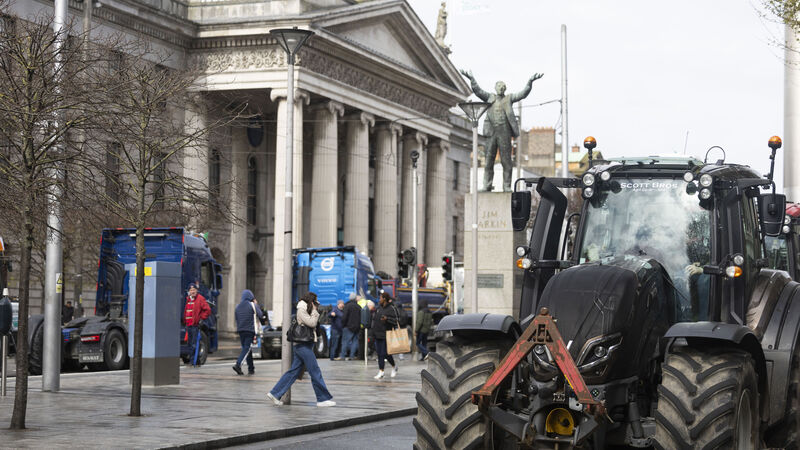
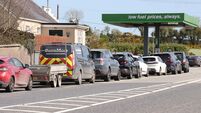
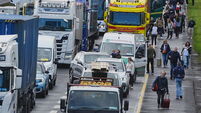
Fuel protests around Dublin close off routes into the city centre. Picture: Sam Boal/Collins
Whether it is by force through the Defence Forces or voluntarily after dialogue, the protests and blockades will come to an end at some stage and allow the resumption of travel and fuel deliveries.
And while the blockaders may move off O'Connell Street and allow fuel trucks to depart the Whitegate refinery, Ireland is still left in a perilous state when it comes to our dependence on energy and a Middle East ceasefire that hangs by a thread.
Ethical and legal arguments have dominated discourse in recent days, over the right to protest, the ethics of deploying the army, and the right to free travel. But ultimately, these protests are not about Ireland. Despite efforts to direct anger at the Government, soaring fuel prices are a symptom of a global energy shock whose full economic consequences we have barely started to feel.
Read More
Resolving what is happening on the Shannonpark roundabout will not resolve what is happening at the Strait of Hormuz. And right now, that pinch point remains the issue.
The war in Iran led to the closure of the strait, through which about 20% of the world's oil supply once passed, triggering the largest crude oil supply disruption in history. A two-week ceasefire was agreed this week, mediated by Pakistan, and global markets briefly cheered.
But Donald Trump did not build a coalition before the strikes began, and there is little evidence he has put in the effort required to generate a lasting peace. Oil prices plunged on the initial announcement, but within hours, the deal was faltering.
Iran suspended Hormuz traffic in response to continued Israeli strikes on Lebanon, and as of Thursday morning, the strait remained largely closed. Allowing traffic to pass freely was a key condition of the ceasefire that has not been met.
The idea a two-week truce will meaningfully stabilise global energy markets was always going to be a pipe dream. The global economy must still contend with follow-on inflation as elevated fuel prices work their way down the supply chain. For ordinary Irish households and businesses, that shock has not yet fully arrived.
The costs get passed on, through delivery surcharges, into the price of a pint of milk, a bag of cement, a school uniform. Companies do not write off elevated input costs; they pass them on. We saw this painfully in the years following the Russian invasion of Ukraine, and the same transmission mechanism is now in motion again.
Private motorists speak of feeling the pinch when 10 to 20 cents is added to a litre of diesel. But for farmers and hauliers, these rises are truly make-or-break — increases of €800 to €1,000 per week just to keep vehicles on the road and machinery turning.
What Ireland needs now is an honest discussion about energy independence. Iran has shown the world it has the ability to raise and lower the global cost of doing business at will, and long-term stability in oil prices over the short to medium term is, frankly, a fantasy.
The High Court this month upheld the granting of planning permission for an LNG facility on the Shannon Estuary. If developed, it should provide greater resilience and diversity of supply.
Meanwhile, nuclear energy is entering the national conversation in a way that would have been unthinkable a decade ago. Ireland already imports nuclear-generated electricity through our interconnectors with France and the UK. The logical contortion required to import nuclear power while refusing to discuss generating it domestically is becoming harder to maintain as the lights — metaphorically, and perhaps one day literally — begin to flicker.
The age of cheap, reliable, geopolitically uncomplicated energy is over. No amount of protests, however justified in their frustration, will change that fact.
The tractors will eventually go home. The question Ireland needs to answer urgently is what kind of energy future it is building for the people who were driving them.
CONNECT WITH US TODAY



Be the first to know the latest news and updates