Slowdown in Irish services sector as Iran fears weigh on businesses
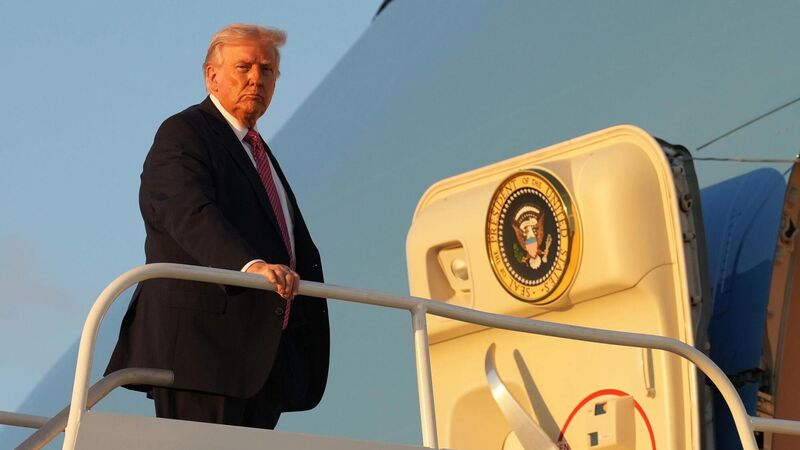
Fears over the continuing US and Israeli war on Iran contributed to a slowdown in the Irish services sector, with new business activity expanding at its slowest pace in six months, according to the latest Price Managers Index (PMI) released on Tuesday. Picture: AP Photo/Mark Schiefelbein
Fears over the continuing war on Iran contributed to a slowdown in the Irish services sector, with new business activity expanding at its slowest pace in six months, according to the latest Price Managers Index (PMI) released on Tuesday.
The AIB Services PMI showed the Irish service sector expanded only slightly in March and inflationary pressures escalated. Activity increased overall but at one of the weakest rates over the past five years, as new business growth moderated.
The PMI also found service providers overall shed staff in March. Employment fell for only the third time in the past five years, "albeit at a marginal rate".
The index is the sum of the percentage of ‘higher’ survey responses and half the percentage of ‘unchanged’ responses. The index therefore varies between 0 and 100, with a reading above 50 indicating an increase compared to the previous month, and below 50 an overall decrease.
"The AIB Irish Services PMI for March shows very modest growth in the sector, with the PMI easing to 50.7 from 51.8 in February. Activity levels waned amid a slowdown in new business growth, weaker hiring, and rising costs linked to the war in the Middle East,” said AIB chief econimist David McNamara. “The rate of growth in the Irish services sector was ahead of the flash Eurozone PMI at 50.1; but behind the UK and US PMIs at 51.2 and 51.1, respectively.
"The volume of outstanding work also eased to a modest pace of growth in March.”
Total business activity in the Irish service sector increased in March but the rate of expansion slowed notably, and was among the weakest since the current upturn began in March 2021.
Three of the four services subsectors measured - business services, financial services, and technology, media, and telecoms - registered higher business activity in March but the rate of growth was modest. Meanwhile the other services subsector - transport, tourism, and leisure - recorded a decline. Jobs fell slightly in three sectors, with financial services posting a slight increase.
The PMI found that technology, media, and telecoms sector performed strongest in March after a stagnation in February. New orders rose at the fastest rate in four months, and outstanding business stabilised. Employment was broadly unchanged since February. But input cost inflation accelerated to a 22-month high, prompting a steeper rise in charges.
Irish service providers expected activity to rise over the coming year, but the strength of sentiment is now at its weakest since October 2020 during the first year of the pandemic. Expectations moderated since February in all four sub-sectors.
The March index found input price inflation accelerated sharply to a 39-month high. "Anecdotal evidence from survey respondents linked higher costs to fuel, energy, wages, pension contributions, raw materials and professional services, with the war in the Middle East and related supply chain disruption mentioned as a contributing factor," the PMI reports.
Commenting on the overall outlook, Mr McNamara noted high costs, economic uncertainty, and the impact of the war in the Middle East weighing on future activity levels.
CONNECT WITH US TODAY



Be the first to know the latest news and updates