Manufacturers show resilience despite rising inflation and geopolitical uncertainty
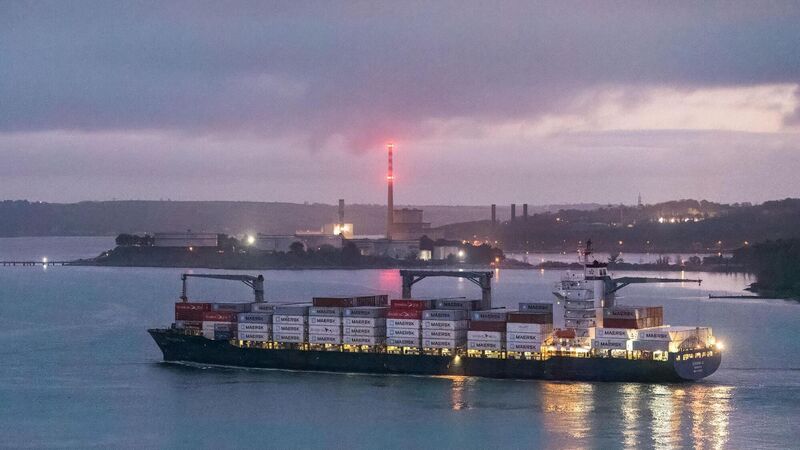
Supply chain challenges persisted in March, with delivery times lengthening for the eleventh successive month, AIB warned. Picture; David Creedon / Anzenberger
Resilient business conditions were signalled in the manufacturing sector during March, with output growth accelerating despite challenges from intensifying cost inflation and rising uncertainty, AIB has said.
Publishing its Manufacturing PMI for last month, the lender said output growth was supported by stronger order books amid the fastest rise in export sales for just over four years.
However, business activity expectations for the year ahead were the least upbeat for eight months, while many firms commented on margin pressures due to the steepest increase in purchasing costs since December 2022. The lender's manufacturing index rose to 53.7 in March, up from 53.1 in the previous month. Any figure greater than 50 indicates overall improvement of the sector.
"The expansion in March was due to sustained gains in output, new export orders and employment, despite signs of rising input prices from the Middle East conflict," said chief economist at AIB, David McNamara.
The Irish manufacturing index was also above flash estimates for the Eurozone, US and the UK, Mr McNamara added.
"Firms cited improving demand from UK clients, while others noted the war in the Middle East as having a negative influence on new business from abroad in some instances," the chief economist said.
Higher volumes of production have now been recorded for five consecutive months, and the latest increase was the fastest since July 2025. AIB said that this was mainly linked to improved demand conditions, as signalled by the strongest upturn in new orders for four months. That said, some goods producers commented on caution among clients and headwinds from rising cost-of-living pressures.
The lender also noted rising demand, which contributed to a renewed rise in unfinished work across the manufacturing sector. Although only modest, the rate of backlog accumulation was the steepest for 13 months.
Subsequent efforts to boost production capacity supported another solid increase in staffing numbers, AIB said, with the rate of job creation easing only slightly from February's 44-month high.
Supply chain challenges persisted in March, with delivery times lengthening for the eleventh successive month, AIB warned.
The lender said this was mainly linked to international shipping delays. In addition, concerns about transportation delays and future input price rises encouraged some advanced purchasing of raw materials, with input buying expanding to the greatest extent since June 2025.
Moreover, pre-production inventories were accumulated to the greatest extent for just over three years.
"While activity levels improved, the rate of input inflation accelerated sharply in February to the highest level since December 2022," Mr McNamara noted.
"Respondents noted some raw materials and energy costs as the main drivers. Nonetheless, with demand still strong, firms were able to increase output prices, albeit competition had limited the ability to pass on all of the cost increases.
"Looking ahead, Irish manufacturers maintained an upbeat assessment of the outlook for activity levels over the coming year."
"Manufacturers commented on positive projections for export orders and long-term business investment plans. This was offset by some concerns about the impact of the Middle East war on economic conditions," Mr McNamara concluded.
CONNECT WITH US TODAY



Be the first to know the latest news and updates