Gabriel Makhlouf calls for 'genuine single market' to better mobilise Europe's savings
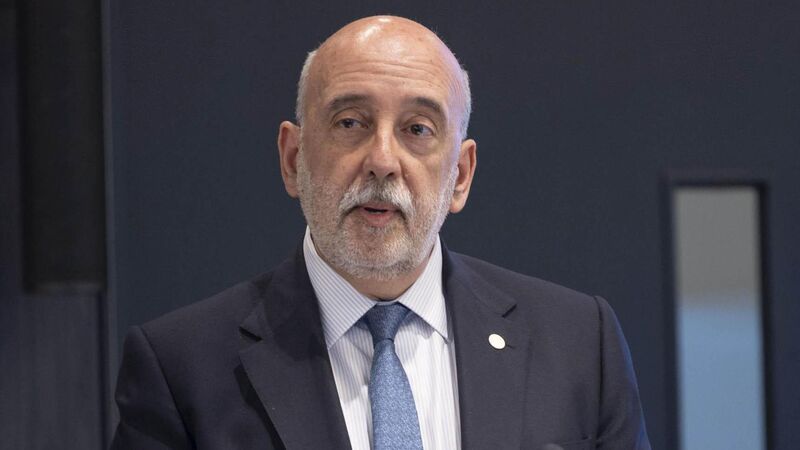
Gabriel Makhlouf said that while saving money may be 'prudent' for individuals on a macro level it can 'dampen demand and constrain growth if not channelled into investment'.
Governor of the Central Bank of Ireland, Gabriel Makhlouf, has called for improvements to the single market in order to better mobilise Europe’s built-up savings and allow for more investment.
This comes as finance minister Simon Harris has floated plans to introduce a new savings scheme that would encourage people to invest their built-up savings. Other European countries such as Sweden already have similar offerings for savings.
According to the latest data from the Central Bank of Ireland, household savings increased by €1.5bn in January, and stood at a combined €171.3bn at the end of the month. Overnight deposits stood as the main driver of the increase, up €1.4bn.
Speaking at Eurofi, a European think tank for financial services, Mr Makhlouf said Europe finds itself in a “curious position” whereby households and institutions collectively hold substantial savings.
“In the eurozone alone, savings rates spiked during the pandemic and remain materially high at around 15%, still in excess of pre-covid levels. This has meant that Europe’s total stock of household deposits is now nearing €10tn,” he said.
“Yet investment, particularly through European capital markets, has not kept pace with this increase. While only one-fifth of euro area household wealth is held in financial assets, we know that households in other countries allocate a significantly larger share of their wealth to market-based instruments.”
Mr Makhlouf said that while saving money may be “prudent” for individuals on a macro level it can “dampen demand and constrain growth if not channelled into investment”.
He said channelling some of those savings into investment could go some way to helping the EU meet its investment needs currently estimated at additional €750-€800bn annually by 2030.
The EU has been pursuing a Savings and Investment Union (SIU) for a number of years which seeks to create better financial opportunities for citizens, while enhancing the bloc’s financial system’s capability to connect savings with productive investments.
It aims to allow easier access to capital across the EU, particularly for small- and medium-sized businesses.
However, EU members have so far failed to agree on how the SIU will be implemented due to national interests, delaying its deployment.
Earlier this month, Mr Harris said he was confident that the long-awaited SIU is close to getting over the line after years of sparring between member states over how it would work, adding that he hopes it can get done this year..
Ireland will use its rotating EU presidency later this year to “get the result over the line”, he said.
Mr Makhlouf said the single European market “remains our most powerful and underutilised asset” but significant “barriers remain, particularly in services”.
“Removing those barriers would not only boost productivity directly; it would also enable a step change in the development of Europe’s capital markets.”
“By harnessing our single market alongside our international openness and leadership, we can ensure that Europe’s economic future is not only secure but strong.”
Mr Makhlouf said mobilising Europe’s savings “requires us to ensure that our economy is productive and innovative and operates as a genuine single market”.
“To put it another way, don’t ask only what the Savings and Investments Union can do for you; ask what a genuinely barrier-free single market can do for Europe’s savings and investments.”
Mr Makhlouf said it is also important to drive productivity and growth in the economy in order to incentivise people to invest more of their money in Europe rather than outside of the bloc.
CONNECT WITH US TODAY



Be the first to know the latest news and updates