Central Bank: Build resilience to protect against energy shocks
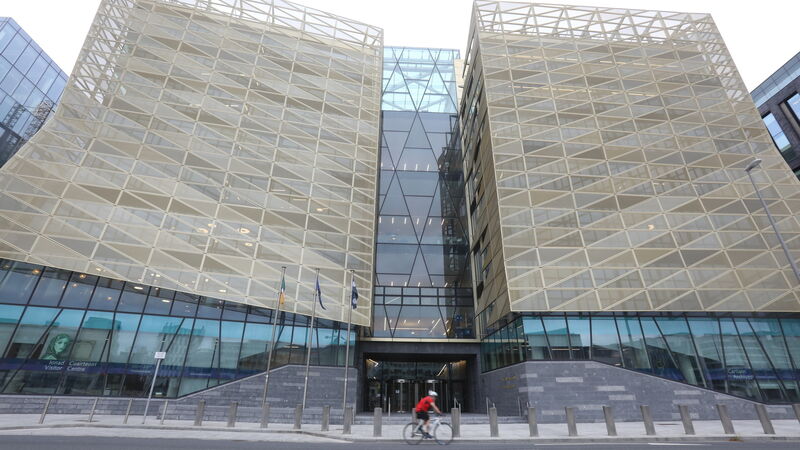
In its latest quarterly economic bulletin, the Central Bank said the ongoing war in the Middle East, and the subsequent higher oil and gas prices, are expected to lead to lower growth and higher inflation than previously anticipated
The Government should focus on building resilience in the economy and moving closer to energy independence to protect against future energy shocks that have the potential to drive up inflation and drag down growth, the Central Bank of Ireland has said.
In its latest quarterly economic bulletin, the Central Bank said the ongoing war in the Middle East, and the subsequent higher oil and gas prices, are expected to lead to lower growth and higher inflation than previously anticipated. The extent of the impact will depend on the length of the conflict as well as the damage caused to critical oil and gas infrastructure.
In its forecast for the Irish economy over the coming years, it makes the baseline assumption that domestic economic growth is marginally weaker than our previous forecasts for 2026 and 2027, with inflation remaining between 2.5% and 3% in those years.
Modified domestic demand (MDD) — a measure of the Irish economy that strips out the impact of multinational corporations — is expected to grow by 2.9% this year and 2.5% next year.
The unemployment rate is expected to hover between 4.9% and 5.1% in the coming years.
However, the ongoing crisis in the Middle East could get worse and last longer, which could have a significant impact on the economy.
In the most severe scenario, the Central Bank forecasts global oil and gas prices potentially rising by 47% and 86% respectively above the baseline, but beginning to decline in 2027.
However, they are expected to remain persistently elevated out to 2028 with oil and gas prices still almost 50% and 80% above baseline.
Applying these estimated impacts from the severe scenario to the central forecasts, the harmonised index of consumer prices, an EU metric for inflation, would stand at 4.2% and 3.8% in 2026 and 2027 respectively.
MDD growth would be reduced to 2.6% in 2026 and 1.9% in 2027.
Director of economics and statistics at the Central Bank Robert Kelly said their message was about “building resilience”, both in fiscal terms and across the wider economy, that will help protect against shocks such as the one the country is currently experiencing.
"There's a medium-term piece, which is about building resilience in the medium term that's very much around accelerating infrastructure delivery, trying to unlock supply side constraints in the system,” he said.
“Also, when we think about what would ultimately build resilience to, the likes of the shocks we're seeing here, it would be energy independence.
Mr Kelly said recent events highlighted the fact that building resilience “has become a foremost priority given the reality of a less favourable geoeconomic situation than what has been the norm in recent decades, impacting trade, supply chain security, and investment”.
In the short-term, Mr Kelly said Government supports to deal with the fallout from these shocks should be “targeted, temporary, and tailored”.
He pointed to new research from the Central Bank, which focused on the fallout from inflation crisis following Russia’s invasion of Ukraine, that showed energy shocks had much greater impacts on low-income households, and targeted income supports, rather than price supports, were 12.5 times more effective at getting to the vulnerable group rather than the higher-income population.
CONNECT WITH US TODAY



Be the first to know the latest news and updates