Europe and Australia agree to trade deal to boost ties
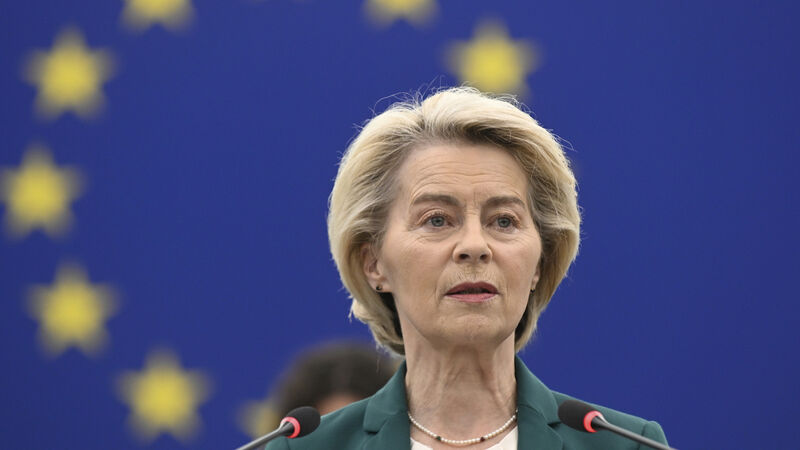
European Commission president Ursula von der Leyen.
The EU and Australia agreed to a free-trade deal, wrapping up almost a decade of talks as the two sides push to tighten ties and reinvigorate a rules-based order that’s under assault from the Trump administration in the US.
The conclusion of negotiations for the agreement was announced Tuesday in Canberra by Prime Minister Anthony Albanese and Ursula von der Leyen, the EU’s top executive.
Once the text is adopted by the European Council it will need to be signed by both sides and then ratified by their respective parliaments to enter into force, according to a statement from the European Commission.
The two sides also signed a Security and Defence Partnership to facilitate better cooperation on crisis management and security challenges.
“This is a comprehensive, balanced and commercially meaningful agreement which will reduce costs for Australian consumers and open new markets for Australian producers,” Mr Albanese told reporters.
“It is win-win. It eliminates tariffs on key Australian exports including wine, seafood and horticulture.”
Both sides talked up the agreements as not only economically meaningful but also a clear sign that the rules-based international trading system is not dead.
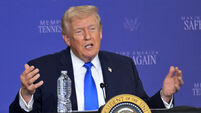
Australia and the EU are working to shield their economies from president Donald Trump’s tariff program and China’s restrictions on critical minerals, with Ms von der Leyen taking a thinly-veiled swipe at both tendencies in her remarks.
She contrasted “a world where great powers are using tariffs as leverage and supply chains as vulnerabilities to be exploited” with the EU’s efforts to reduce trade barriers and build trust.
“In our story, open, rules-based trade delivers positive sum outcomes. Trust matters more than transactions.” She highlighted that in less than two months, the EU had “added nearly 2 billion people to our free-trade network, with agreements spanning three continents — Latin America, India and now Australia.”
EU trade chief Maros Sefcovic said this week that he expects the bloc’s annual goods and service exports to Australia to jump by one-third over the next decade, up from €65 billion currently.
The agreement eliminates Australian tariffs on imports including cheese, meat preparations, chocolate, wine and sparkling wine, sets quotas for 30,600 tons of Australian beef - 55% of which will be able to be imported into the EU tariff free 10 years after the pact comes into force - and sets quotas for 25,000 tons of sheep and goat meat to be imported tariff free, with that being phased in over seven years.
It also allows 35,000 tons of Australian raw sugar cane to get tariff-free entry into the EU, as well as smaller quotas for Australian dairy products.
Australian agricultural producers will have to stop using most geographical-based names for branded food products, although Australian firms will still be able to use feta, gruyere and a few other names for their products Negotiators had been on the cusp of sealing the trade pact for weeks, but talks kept hitting snags over issues like meat.
Australia was pushing the EU to raise the amount of beef that can enter the bloc under preferential terms. But agricultural imports are a sensitive issue for the EU, which doesn’t want to undermine its own sector.
Another hard-fought issue during negotiations was protections for specific European goods like Prosecco. The agreement will shield several hundred EU-specific products, including 231 types of spirits and wine.
The announcement of the details of the agreement sparked a furious response from Australia’s agricultural sector, with National Farmers Federation President Hamish McIntyre describing the deal as “extremely disappointing” and failing to provide any commercially meaningful improvement in access to the EU.
Farmers “will now pay the price for this subpar EU deal for decades to come,” he said.
Meat and Livestock Australia called it the “worst ever free trade agreement for the Australian red meat industry,” while the dairy industry association said “this is neither a free nor fair deal for Australian dairy.” On cars, Australia currently applies a luxury car tax, by which vehicles above a certain price threshold need to pay when imported. As part of the FTA negotiations, Australia agreed to increase the threshold for electric vehicles to A$120,000.
Notably, officials also reached a framework to cooperate more on critical raw materials, a top priority for countries after China restricted its exports of rare earth materials last year.
“Australia is blessed with huge natural wealth and they have possession of almost all critical minerals we need,” Sefcovic said. “But they need the good investors, they need the offtakers, they need the partners to develop this natural wealth.”
In remarks later Tuesday during an address to Australia’s parliament, von der Leyen linked the agreements on minerals, trade and security, emphasizing that they would make both Europe and Australia more secure.
The minerals deal would also reduce dependency on China, which she framed as both an economic and security concern, criticizing its recent “weaponization” of supply chains.


CONNECT WITH US TODAY



Be the first to know the latest news and updates