Further Stryker-like cyberattacks a 'real risk' for Ireland's public finances, warns Ifac chair
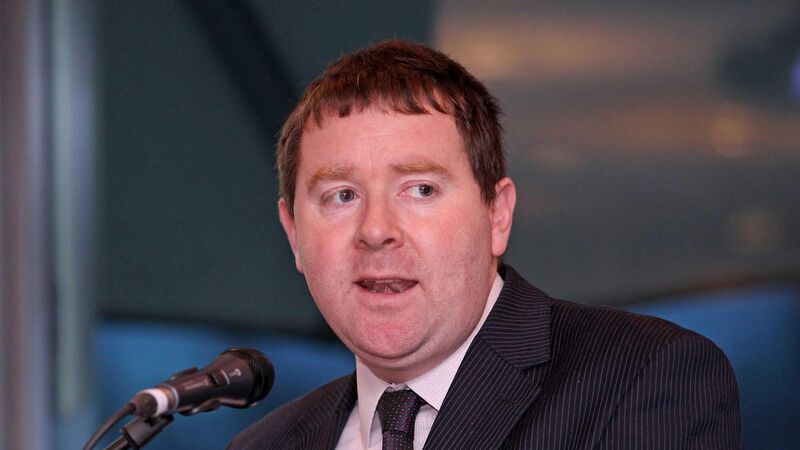
Ifac chair, Seamus Coffey. pic: Jim Coughlan
The chair of Ireland's fiscal watchdog has expressed concern that damaging cyberattacks like the one on medical technology company Stryker could be replicated on other large multinationals that contribute significantly to Ireland's corporate tax receipts.
Speaking to the at University College Cork's (UCC) Economics Society's annual conference on Thursday, Seamus Coffey, chair of the Irish Fiscal Advisory Council (Ifac), said the prospect of further cyberattacks remained a worry due to Ireland's overreliance on a small number of multinational firms.
"If you look at the type of companies we have in Ireland, they are in volatile sectors. Other countries have seen this type of dependence and how it has changed over time.
"Take Nokia. They dominated the mobile market until 2005. When the iPhone came out in 2006, Nokia's contribution to the Finnish economy fell significantly.
"The current example we see today is Novo Nordisk and its contribution to the Danish economy," the Ifac chair and UCC lecturer noted.
Last week saw Stryker, a global medical device company with over 4,000 employees in Cork and another 1,400 across the island of Ireland, crippled by a cyberattack claimed by an Iranian-backed group.
This type of attack is known as a 'wiper attack' where the goal is to destroy IT systems and erase data on them.
The attack saw Stryker devices defaced with the logo of Handala Hack, described as a pro-Palestinian hacker group.
The group is linked to the Iranian regime, which is currently engaged in military and economic warfare in retaliation for US and Israeli bombardment of the country.
"Around 80-85% of Ireland's corporate tax receipts come from US companies," Mr Coffey noted in a panel discussion.
"Our source of revenue is significantly concentrated."
Almost half (46%) of the corporation tax collected in 2024 came from just three companies, equivalent to around €13bn, research from Ifac shows.
While the companies are not named in the Ifac research, it is understood that the three highest corporation tax payers are Apple, Microsoft and Eli Lilly.
Mr Coffey said the risk of another IT attack on other companies "was real," adding that he hoped the companies were in a position to defend themselves if it came to it.
"This is definitely something that should be on the radar," the Ifac chair concluded.
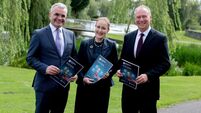
Mr Coffey was one of many speakers at Thursday's conference, sharing the stage with the chief executive of the Irish League of Credit Unions (ILCU), David Malone, and the CEO of the Banking & Payments Federation Ireland (BPFI), Brian Hayes, in a discussion about Irish banking and fiscal policy in a time of economic uncertainty.
The conference also heard from senior lecturer in economics at UCC, Robert Butler and the director of the Adam Smith Institute, Eamonn Butler, in a discussion reflecting on the 250 years since the publication of the Wealth of Nations.
Former Labour TD and director general of the Institute of International and European Affairs (IIEA) Alex White also spoke at the event about Ireland's position in Europe and the wider world, along with the founder of advisory firm Venga people Christine Kearney, head of the economic department at the Embassy of France in Ireland, Maxime Augé, and Ireland correspondent for the Financial Times, Jude Webber.


CONNECT WITH US TODAY



Be the first to know the latest news and updates