Exports down 35% from pre-tariff 'record level'
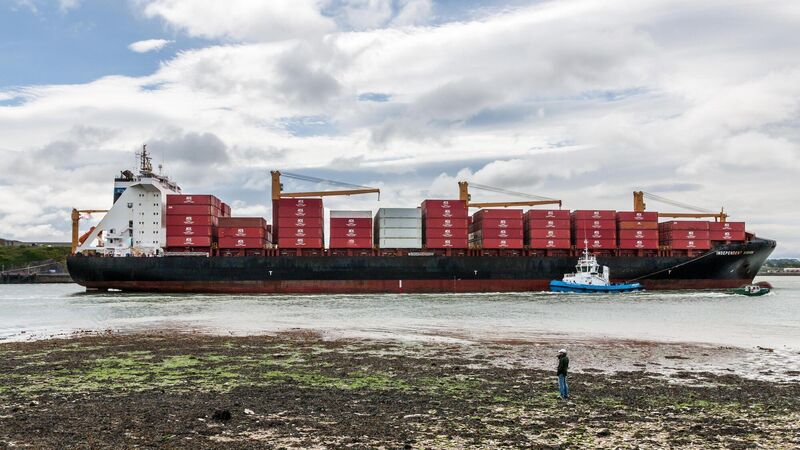
Trade with other EU countries also decreased during the month with exports falling 15% to €6.6bn year-on-year. File picture
The value of Irish goods exports fell by 35% in January compared to the same period last year when numerous companies frontloaded their exports to the US in advance of US president Donald Trump implementing tariffs.
The Central Statistics Office (CSO) said the first quarter of 2025 saw a “record level of goods” exported with declines recorded each quarter since.
The CSO’s data shows that the total value of goods exports during January stood at €16.2bn — a decrease of €8.7bn compared to January 2025.
The decline was largely driven by an €8.9bn decline in the value of chemicals and related products, which include pharmaceutical products, exported to the US. The export value of those products during the month stood at €2bn.
Overall, exports globally of medical and pharmaceutical products fell by 61% to €5.9bn in January compared with January last year. Nonetheless, pharmaceuticals remain Ireland’s largest export product accounting for 36.8% of all goods exported in January.
Read More
Trade with other EU countries also decreased during the month with exports falling 15% to €6.6bn year-on-year. While exports to the US and EU were down during the month, exports to Britain increased by 47.3% to €1.8bn while exports to the rest of the world increased by 25% to €789m.
However, trade with Northern Ireland declined by 2% to €407m.
The products which accounted for the largest share of exports to Britain were machinery and transport equipment, valued at €744.3m, followed by chemicals and related products valued at €398.5m.
Ireland’s top exporting partners were the US, the Netherlands and Britain.
The value of Irish imports during the month increased by €341.5m to €11.4bn. Imports from Britain and Northern Ireland accounted for €1.7bn — down from €1.764bn — while imports from the US declined by €817.7m to €1.6bn.
Ireland imported just under €3.7bn from the rest of the EU — up from €3.2bn year-on-year — with Germany being the largest market within that bloc, accounting for just over €1bn. The country recorded a seasonally adjusted trade surplus to €4.2bn in January.
Alex Deaton of global financial services firm Ebury said Irish trade got off to a “weak start” in January.
“This downbeat update for the first month of the year suggests the impact of a more hostile trading environment is now beginning to feed through,” he said.
“The Iran war is also creating fresh uncertainty for Irish exporters, as rising energy costs and inflationary risks could put upward pressure on input costs, squeezing margins.
“Given Ireland’s exporting sector is such a key driver of growth, any sustained slowdown in external demand or competitiveness could quickly impact the broader economic outlook."


CONNECT WITH US TODAY



Be the first to know the latest news and updates