Working in not-for-profit, a career with real purpose and passion

Longford Women’s Link’s initiatives include the Community Employment (CE) Programme to support unemployed people into employment and further training. It is also a key resource to the community and voluntary sector.
Careers in community and voluntary work are very much about variety – a fact Tara Farrell has a lifetime’s experience of.
“There is always something different happening in the sector, which can be a positive for those considering a career in it,” says Tara.
As the chief executive officer of Longford Women’s Link, Tara has over 25 years’ experience in the Community, Voluntary and Education sectors, working in a variety of areas including Project Management, Adult Education, Women’s Human Rights, Governance and Media.
“Certainly there are the day-to- day tasks that must be done, just as there are in any business – the governance, funding, reporting. It is essentially a business, even though a not for profit business – but still a business. There are different events happening on different weeks, ranging from strategic planning, International Women’s Day, and discussions looking at the future of having a refuge in Longford. There is always something different going on, and for many people that keeps the interest and passion for what they do.”
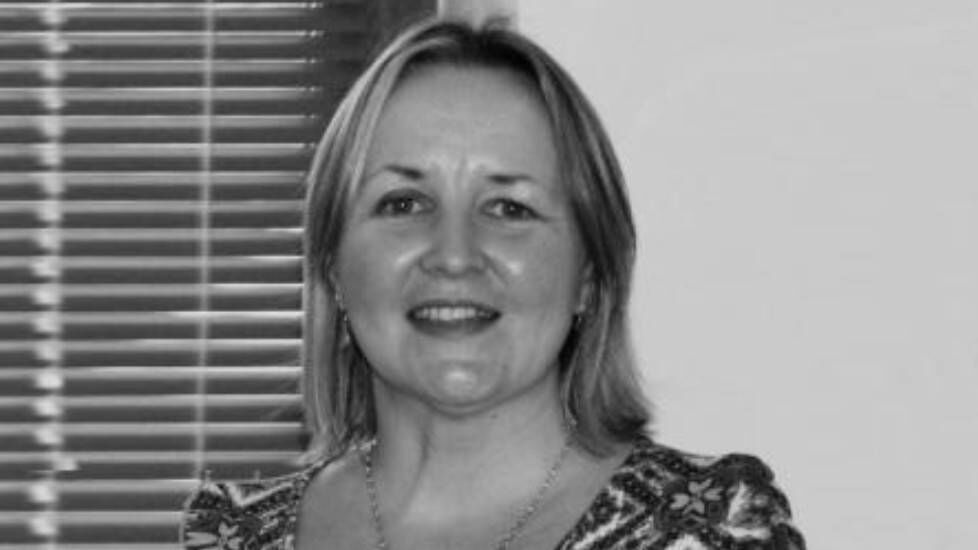
Tara is also the chairperson of Irish Rural Link and former Chair of AONTAS, the National Adult Learning Organisation. Tara lectures in Human Rights and Equality at ATU in Sligo. She holds an LLM in International Human Rights Law and recently completed an MBA at the University of Galway.
“I always had an interest in politics, justice and political life, having studied it in college. I was fortunate enough to travel after finishing college, and came back to start working with a great organisation in Tallaght called Partas, supporting enterprise development. It was there that I really saw the difference that organisations can make in communities.”
Being from a rural community herself in Roscommon, a passion for rural development and community was always there, signposting a career direction above all others.
“Throughout the years I moved into different areas, but the achievement and purpose you can get from a career in this particular sector was always a consideration. I think there is sometimes a myth that charities are less professional than corporate organisations, whereas in fact we have to navigate really complex governance frameworks and compliance.”
Many charities, particularly smaller ones like Longford Women’s Link, may not have an HR department or any of other departments common to larger organisations, so an ability to navigate all of those different channels is a necessity.
“For me, it was always something I was interested in because the difference is very visible, and you do need to be very passionate about what you do in order to work in this sector. It is a challenging, yet rewarding career for someone who doesn’t want to be doing the same thing every day, and who wants that element of variety.
“In rural communities, organisations like ourselves are often those anchor institutions which are not only about the service provision but also the advocacy, the connection, the voice for rural communities.” There is something for everybody in the sector, she says, whether the interest runs to the frontline service delivery, the governance side of things or the funding management.
“The younger generation now are looking for careers where the values that they hold and the skills that they have are in alignment. And that alignment is one thing that the charity sector can offer. You do have to have very high standards of accountability and governance as well as dedication – but if you are willing to embrace the complex nature of the sector it can be incredibly rewarding.”
In 1995, a Women’s Studies course for rural outreach, organised by Longford ICA members and Longford Women’s Link founders Tess Murphy, Elsie Moxham, and the late Mary O’Hara in collaboration with University College Dublin, marked the beginning of something transformative. Guided by a fundamental purpose of providing a space for Longford women to ‘develop their voice’ in order to address the complex issues that they and their families were dealing with.
More than 100 women participated in this course, many of whom had previously faced barriers to accessing education. This experience became the spark that ignited the idea that women needed a place in their own community – a place where they could access further education, childcare, and vital support services.
From this grassroots need, Longford Women’s Link was born - a space that could empower women, support their personal development, and provide them with the tools they needed to thrive.
With the support of New Opportunities for Women (NOW) funding, the first steps toward creating that space were taken. In 1999, a small centre was established on New Street, Longford Town, offering Women’s Education and Training, Counselling, and Domestic Violence support.
“We were established by three brilliant women back in 1995 – and Tess Murphy and Elsie Moxham are still on our board today. Sadly Mary O’Hara passed away a few years ago, but we recently launched the Mary O’Hara Centre for Leadership and so her legacy lives on. Thirty years ago these remarkable women wanted to make a change. They saw the lack of childcare, the lack of education opportunities and the issue of domestic violence and wanted to do something about it.”
Over the past 30 years Longford Women’s Link has diversified and grown in response to the needs of women in its community, advocating effectively both locally and nationally on the issues that impact women and their families. It provides crisis and practical supports, including a domestic violence service, early years care, training & education along with affordable counselling, employment and self-employment opportunities to women and their families.
“They recognised what was needed for women in 1995, and we’ve built on that to ensure women and girls in Longford are safe, equal and included. Often women only find us when they need us, but we want every woman to know that we’re here, and that our doors are open.”
Amongst the initiatives conceived and supported by Longford Women’s Link, the ‘See Her Elected’ (SHE) programme founded in 2020 is one for which Tara and her colleagues are particularly proud.
Built on the ethos of women learning and supporting each other, it provides them with the skills, knowledge and confidence to participate in local politics. Due to the popularity of the programme and a larger catchment audience through online delivery, SHE has now expanded its reach to all of rural Ireland, collaborating with local authorities across the country.
“It is indeed a programme that has had a huge impact,” she explains. “Back in 2009, Longford Women’s Link established what was then called Women’s Manifesto Group – which was basically about taking the mystery and myth out of local politics and this expanded in conjunction with 5050 North West.”
But it was during Covid that it really began to take off, as the restrictions of the pandemic forced it online, and the founding of the SHE School, now the SHE Academy.
“Within weeks we had hundreds of women signing up to do all of these programmes, demonstrating there is a huge appetite oui there for political knowledge, for understanding how the system works. While the programme is open for women who want to run for local elections, it is also there for women who want on work on campaign teams.”
Although the next local elections will not take place until 2029, See Her Elected recently launched a guidebook for women considering getting involved. The guide provides a step-by-step roadmap for women running for election in 2029, offering practical advice, campaign planning tools, and insights drawn from the lived experiences of women candidates across rural Ireland.
“It is designed to demystify the process of running for election and to make political participation accessible to women in every corner of rural Ireland.”


CONNECT WITH US TODAY



Be the first to know the latest news and updates