EU and India agree trade pact after decades of talks 
EU and India agree trade pact after decades of talks 

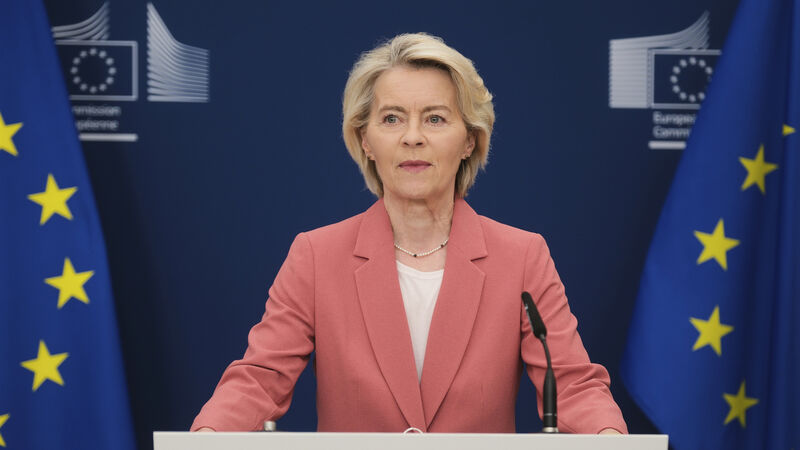
European Commission President Ursula von der Leyen. 

India and the European Union have agreed on a free trade agreement, prime minister Narendra Modi said on Tuesday, capping nearly two decades of negotiations at a time of strained ties with Washington.

“This free trade agreement will strengthen confidence of investors, business in India,” Mr Modi said in remarks at an energy event. He added that the pact will strengthen trade and global supply chains while boosting India’s manufacturing and services sectors.


The conclusion of negotiations after years of halting talks reflects the rapidly shifting global alignment under US President Donald Trump. European Commission President Ursula von der Leyen and European Council President Antonio Costa are in New Delhi to formally announce the deal later today.

The EU, despite long clashing with Indian officials over trade matters, is now focused on shedding its economic reliance on the US and China. India is similarly trying to shake its protectionist reputation and offset a 50% Trump tariff, while at the same time balance its ties with Russia.

The agreement would lower tariffs on most consumer and industrial goods traded between India and EU members, although it’s expected to exclude some agricultural products. The EU would also get enhanced market access for its car exports subject to a cap.

The pact is expected to be formally signed after legal vetting, which will likely take around six months. The European Parliament will also have to ratify it.

Mr Modi’s announcement comes weeks after India signed trade deals with New Zealand and Oman. Just days earlier, the EU finally polished off a separate, long-gestating trade deal with the Mercosur bloc of South American countries — another pact meant to help the EU pivot away from the US and China. EU lawmakers have yet to ratify that deal, however.

Mr Modi is similarly trying to find new markets for a country Trump once dubbed the “tariff king.” This agreement marked his fourth trade deal since last May, following pacts with the UK, Oman and New Zealand.

Next up, Mr Modi is seeking partnerships with the Mercosur bloc, Chile, Peru and the Gulf Cooperation Council, hoping to secure strategic resources and increase India’s global footprint.

The EU-India deal could give India, Asia’s third-largest economy, a competitive edge in the export of labor-intensive goods hit hard by Trump’s sky-high tariffs, including apparel and footwear.

More broadly, it could boost the country’s exports to the EU by roughly $50bn (€42.2bn) by 2031, according to a report by Madhavi Arora, lead economist at Emkay Global Financial Services Ltd. Arora singled out pharmaceutical, textiles and chemicals as sectors likely to benefit.

For the EU, the agreement would mean access to one of the world’s fastest growing economies, with a market of over 1.4bn people. But the deal will not offer as much market access for European goods as the one the EU recently reached with the Mercosur countries — Argentina, Brazil, Uruguay and Paraguay.

Bilateral trade between the EU and India stood at $136.5bn in India’s fiscal year through March 2025, with the EU making up more than 17% of India’s total exports, official data showed. Conversely, India is the EU’s ninth largest trading partner.

The EU and India are also growing closer on the defense front, recently unveiling a new security partnership.

The agreement mostly offers a political signal — part of an EU effort to expand its alliances as Trump rattles the transatlantic bond. The EU has struck similar deals recently with countries like the UK and Canada.

The EU-India security partnership shows just how difficult these pacts can be. Negotiators ran into disagreements in the final moments over language about Russia’s invasion of Ukraine. Ultimately, they dropped any mention from the final text.

But while the partnership remains broad-brush, it offers promise on a few fronts.

The two sides vowed to tighten defense industry cooperation, which could give the EU better access to a market that currently buys lots of arms from Russia. Officials also opened the door to more maritime security cooperation and possible joint naval exercises.

Bloomberg

More in this section

The Business Hub

Newsletter

News and analysis on business, money and jobs from Munster and beyond by our expert team of business writers.

Cookie Policy Privacy Policy Brand Safety FAQ Help Contact Us Terms and Conditions

© Examiner Echo Group Limited