State pledges to limit spending increases to 6% per year
Moving the State beyond the temptation for short-termism
State pledges to limit spending increases to 6% per year


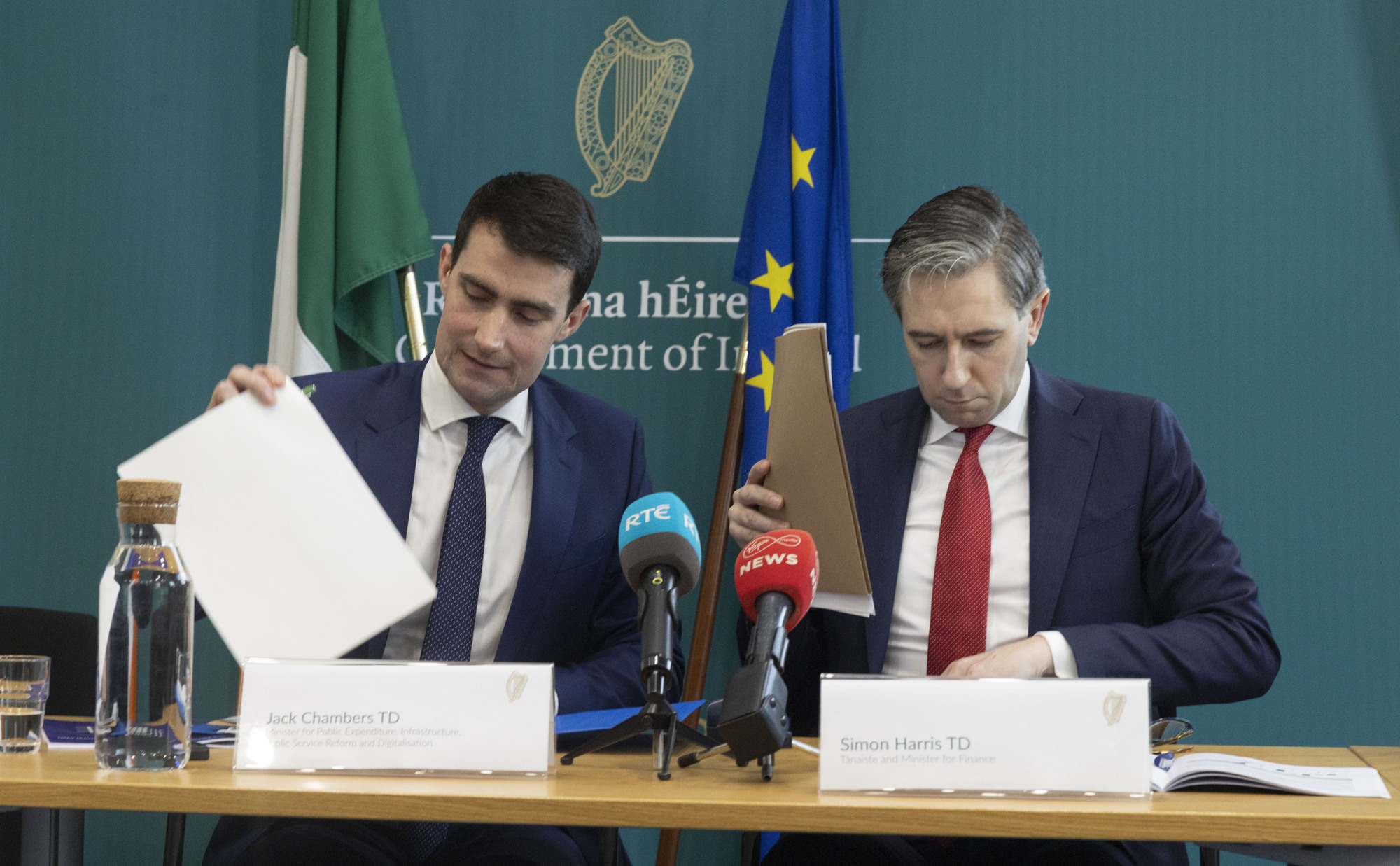
Minister for Public Expenditure, Infrastructure, Public Service Reform and Digitalisation, Jack Chambers TD and Tánaiste, Minister for Finance and leader of Fine Gael Simon Harris TD. Photo: Sam Boal/Collins Photos

The government has outlined plans to limit increases in current spending to 6% each year until 2030 as part of its Medium-Term Fiscal and Structural Plan.

It follows repeated criticisms of the Government for repeatedly breaking its own spending rules, using volatile corporation tax receipts.
In 2021, the State committed to limiting spending increases to 5% but has breached that limit every year. Recently, the Irish Fiscal Advisory Council said Government spending is projected to increase by over 11% this year.

The EU requires member states to set out their economic and fiscal policies in ‘medium-term fiscal-structural plans’. According to the Irish document, spending increases will be weighted towards capital expenditure, with investment under the National Development Plan (NDP) set to average 5% of national income over the rest of the decade.

They said the government's fiscal strategy rests on three core pillars; ensuring the public finances remain on a sustainable path; enabling the economy to absorb fast-moving shocks and preparing the public finances for known future costs.

"The credible fiscal strategy set out in this plan will create the circumstances for delivery and investment in the medium term – at a time of massive global shifts, the public finances are in safe hands," the document states.

Last month IFAC warned that there was a lack of long-term planning and the Government was not saving enough corporation tax windfalls to prepare for future budgetary pressures.

It said that when “excess” corporation tax was excluded, there is a deficit of almost €14bn expected next year and that supporting an ageing population and addressing climate change would cost 6% of national income by 2050, worth around €20bn today.

In response, the Tánaiste and Minister for Finance Simon Harris said the medium-term economic plan would move the State beyond the temptation for short-termism and to anchor both spending and taxation plans for the years ahead in this medium-term framework.

Publishing the plan on Friday, Mr Harris said the strategy shows they are committed to using the resources of the State to improve people’s lives in a sustainable way. "It will act as the framework within which Government decisions will be taken during its term in office," he said.

“The focus is now firmly on delivery. This Plan allows for significant public resources to be directed at improving public services over a five-year period. Taxpayers will rightly demand that this money is spent wisely with fast, efficient delivery and value for money at its core”

The Minister for Public Expenditure, Infrastructure, Public Service Reform Jack Chambers said public expenditure will reach over €147bn by 2030 with average annual growth of 6% over the next few years – reflecting prioritisation of capital investment in critical infrastructure and a substantial, but moderating level of growth of current expenditure from 2027 onwards.

More in this section

The Business Hub

Newsletter

News and analysis on business, money and jobs from Munster and beyond by our expert team of business writers.

Cookie Policy Privacy Policy Brand Safety FAQ Help Contact Us Terms and Conditions

© Examiner Echo Group Limited