Can the EU stay competitive while slowing its EV rollout?

The EU hits the brakes on its 2035 combustion engine ban
Can the EU stay competitive while slowing its EV rollout?

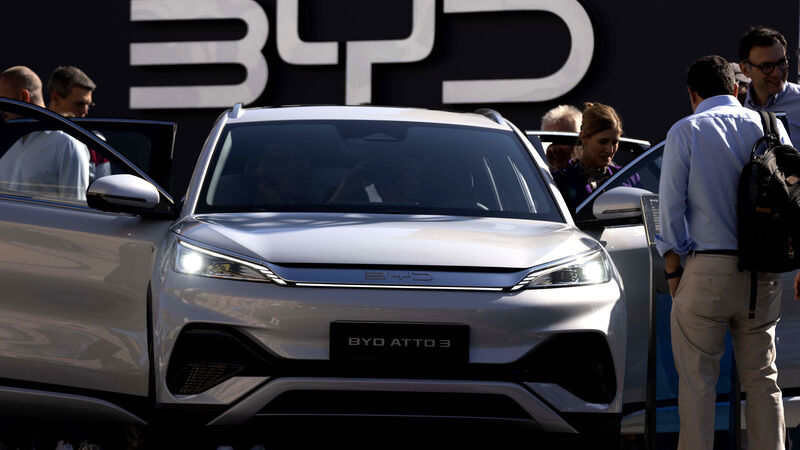
China is continuing its rapid electrification of transport, and foreign brands are being muscled aside in the world’s biggest car market. Stock picture

In the wake of increased trade tension with the US and a post-Draghi report hangover that has reset the continent’s priorities, the EU has done what policymakers could not have imagined just five years ago and pulled back from an effective ban on combustion engines following strong lobbying from Europe’s most powerful car makers.


Earlier this week, the European Commission made public proposals that reverse an effective ban on the sale of new internal combustion engine cars from 2035, bowing to concentrated pressure from Germany, the EU’s biggest market, Italy, and major automakers across the 27-member bloc.

The newly revised proposals change the EU’s 2035 goal to a 90% drop in CO2 emissions, instead of the previous goal of a 100% cut.

Welcomed by many of Europe’s leading car makers, including Germany’s Volkswagen and France’s Renault, the move suggests a slower rollout of electric vehicles (EVs) in Europe and aligns the region more closely with the US, where president Donald Trump is already working to undo efficiency standards for cars put in place by the Biden administration.

The revision will also allow automakers to continue selling several new cars with internal combustion engines, as well as plug-in hybrids and range extenders, reflecting the latest step in a global pullback from climate policies as the economic realities of the transition to net-zero are realised.

Mounting trade tensions with the US and China are also pushing Europe to further prioritise shoring up its domestic industries, in part by mitigating the cost of the transition.

While the bloc is legally bound to reach climate neutrality by 2050, governments and companies are intensifying calls for more flexibility, warning that rigid targets could jeopardise economic stability. In the wake of a rapid overhaul of the EU’s regulatory process, the commission is listening.

The eye-opening Draghi report, published late last year by the former European Central Bank president, warned Europe that it was asleep at the wheel and, thus, missing out on the digital revolution and its productive gains.

Since its publication, the EU has found itself in an identity crisis, with the report sending shockwaves through the union and prompting a complete overhaul of its regulatory, innovation, and competitiveness strategies in fear that the bloc will fall irrevocably behind its fellow superpowers.

The revision will also allow automakers to continue selling several new cars with internal combustion engines, as well as plug-in hybrids and range extenders. Picture: iStock Image.

Since, the watershed analysis has become a cornerstone of the EU’s policy agenda, with promises of cutting red tape, endorsing AI, and simplifying laws all part of the bloc’s wider strategy to boost competitiveness and close the innovation gap.

Pushback from climate activists 

However, the EU’s approach has been met with significant pushback from climate activists, who argue that much of the bloc’s new agenda comes at the expense of the environment.

Earlier this year, a group of more than 30 legal scholars in the EU and the UK issued a letter urging lawmakers to rethink their planned revision of environmental, social, and governance due diligence requirements.

The initial requirements were supposed to include companies’ transition plans, outlining how they would cut emissions in line with the EU’s 2050 net-zero goal, which the bloc has enshrined in law.

However, the wording of the omnibus proposal following the Draghi report dropped the requirement obliging companies to put transition plans into effect.

EU seeks to ease green rules 

The EU is increasingly looking to ease green rules in a bid to match the productivity gains of its major rivals, undermining the bloc’s own 2050 net-zero targets.

Its reversal of the ban on new internal combustion engine cars is just the next piece of the puzzle, but whether the stark shift in priorities even comes to bear fruit remains to be seen.

Leading European eco-think tank Transport & Environment (T&E) does not believe that it will. The group says that playing for time will not make European car makers great again.

As it views it, the pullback will divert investment away from electrification at a time when European manufacturers urgently need to catch up with Chinese EV makers, adding that up to 25% fewer battery EVs would be sold in 2035 than under the current target.

“The EU has chosen complexity over clarity,” said T&E executive director William Todts.

“Breeding faster horses could never have halted the ascent of the automobile. 

Every euro diverted into plug-in hybrids is a euro not spent on EVs while China races further ahead. 

"Clinging to combustion engines won’t make European automakers great again.”

While leading car brands have welcomed the move for which they largely lobbied, not all of them are behind the shift.

Diverging from its competitors, Swedish car maker Volvo called out the move.

“Weakening long-term commitments for short-term gain risks undermining Europe’s competitiveness for years to come,” it said.

“A consistent and ambitious policy framework, as well as investments in public infrastructure, is what will deliver real benefits for customers, for the climate, and for Europe’s industrial strength.

'Volvo ready to go full electric'

“Volvo Cars has built a complete EV portfolio in less than 10 years and is ready to go full electric with a bridge of long-range hybrids. If we can do it, others can as well.”

While Europe hits the brakes, China accelerates ahead. The country is continuing its rapid electrification of transport, and foreign brands are being muscled aside in the world’s biggest car market.

Even in their home countries, European car makers are facing a growing competitive threat from Chinese imports, with new tariffs thrown up by the EU offering only limited protection.

As Michael Lochscheller, chief executive of Swedish EV manufacturer Polestar, notes: “Moving from a clear 100% zero-emissions target to 90% may seem small, but if we backtrack now, we won’t just hurt the climate. We’ll hurt Europe’s ability to compete.”

While European automakers, the key beneficiaries of the reversal, remain divided on the issue, the EU has made its decision for them, signalling its priorities and once again leaving climate ambitions to the wayside.

What the EU is yet to realise, however, is that it has pitted not-so-opposing forces against each other and has failed to consider how competitiveness and sustainability can work in tandem.

More in this section

The Business Hub

Newsletter

News and analysis on business, money and jobs from Munster and beyond by our expert team of business writers.

Cookie Policy Privacy Policy Brand Safety FAQ Help Contact Us Terms and Conditions

© Examiner Echo Group Limited