Martin Shanahan: Ireland’s economy is strong, but we need to focus on next level of ambition
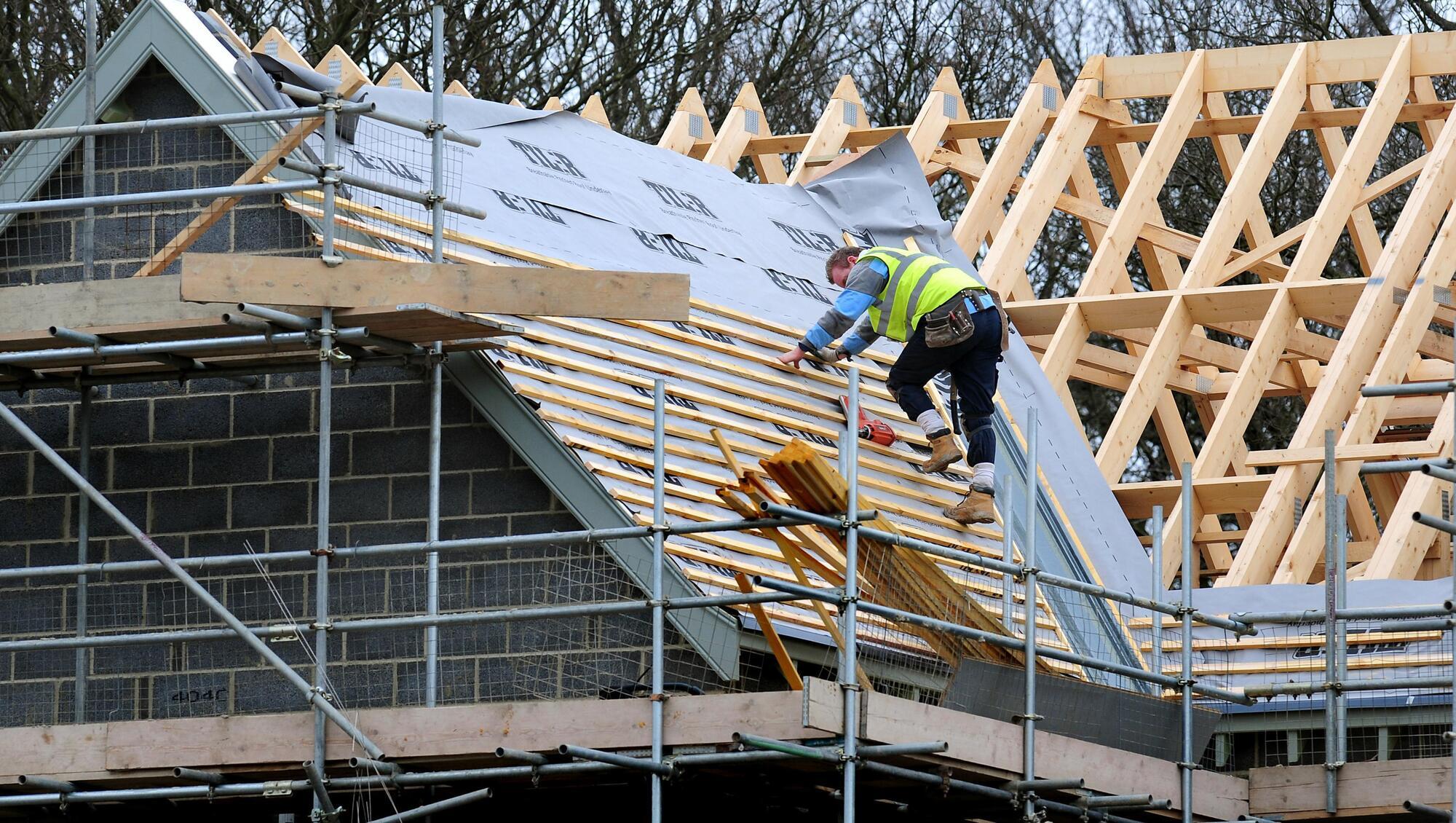
Too many essential projects in housing, energy and infrastructure have become symbols of delay rather than progress. File picture
During the maelstrom of Donald Trump’s return to the White House, as official Ireland tuned into daily press conferences and shifting signals from Washington amid a broader landscape of geopolitical disruption, many would have taken 2025’s economic results without hesitation.
Growth, exports and employment all outperformed the mood music of those early weeks. The worst outcomes many feared in the early days of 2025 have not materialised.
Remarkably, foreign direct investment continued to perform in 2025 against a very challenging international outlook. IDA Ireland’s end-of-year numbers show a record number of investments in 2025.
The fact employment in FDI has remained stable and grown slightly during the year will be welcomed by the agency, as will the significant growth in R&D.
Taken together, a strong performance, but one that exposes weaknesses we can no longer park.
For Ireland’s FDI model, the competitive environment has shifted. Recent US tax and industrial incentives have given the United States renewed pull for manufacturing, particularly where it is serving a US market. That change affects companies that have powered Irish exports and tax receipts for decades. Globally, the majority of FDI experts have expressed caution for 2026.
But it isn’t just about more competition. Inward investment and domestic growth both depend on people being able to live, travel, and work without friction, and on basic systems — energy, water, and transport — functioning as they should. When those pressures build, competitiveness erodes quickly.
After a decade of navigating one disruption after another, sentiment is now realigning with this more complex reality. Grant Thornton’s International Business Report shows optimism among mid-sized Irish firms falling from 81% to 60% in six months, placing Ireland well below the rising global average.
The way forward is to stop externalising risk and start executing on what we control. That is where the cracks begin to show.
Recent criticisms from business leaders about Ireland “going backwards” on delivery struck a chord for a reason. Too many essential projects in housing, energy and infrastructure have become symbols of delay rather than progress.
The publication of the Accelerating Infrastructure Action Plan is welcome. But publication alone will not accelerate a single project. Several measures remain high-level, and some deadlines stretch to 2027. That may be defensible, but Ireland does not have the luxury of slow delivery.
Infrastructure is only part of the picture. The labour market is showing its own early warnings. The skills paradox is one of them. Youth unemployment is rising even as firms struggle to fill critical roles. This is more than a misalignment. It points to weaknesses forming inside a labour market that looks strong in aggregate.
The next wave of investment will flow into sectors that depend on deep technical capability and reliable infrastructure: semiconductors, advanced communications and AI-driven industries. Countries preparing for that shift are planning further ahead and acting with more urgency.
Ireland cannot rely on hosting digital infrastructure alone. Data centres matter, but they are the plumbing of the digital economy. The value lies in designing the systems and tools that advanced industries depend on.
This brings us to ambition.
If Ireland wants to shape the next decade of economic growth, it must decide at what level it intends to compete. After the financial crisis, uncertainty slowed investment and delayed essential infrastructure. The result was a decade of catch-up. The risk now is falling into the same pattern: clearing backlogs while neglecting what the next decade demands.
Ireland ends the year with strong fundamentals and a fiscal position that gives the State room to act. How it uses that room will be telling. Do we keep playing catch-up, or do we start aiming higher? Competitiveness now requires competence and delivery, but a little vision would go a long way.
Expectations will not be confined to domestic audiences. Ireland’s upcoming EU presidency places the country under a sharper light at a time when Europe is debating security, resilience and industrial capacity. Ireland’s own vulnerabilities, from defence capability to critical infrastructure, will be noted by other countries and investors.
The moment is about demonstrating credibility: that we can plan, build and deliver at pace. The spotlight will be on whether Ireland is ready to compete.
Ireland can use this moment of strength to reset its foundations or allow structural weaknesses to set the limits of what the country can achieve. What happens next will depend on political will, a clear vision of what kind of country we want to be, ambition and consistent follow-through to shape the decade ahead.
- Martin Shanahan is a partner and head of industry at Grant Thornton and a former chief executive of IDA Ireland
CONNECT WITH US TODAY



Be the first to know the latest news and updates