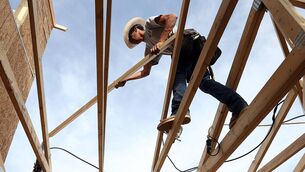
Drop in skilled trades stalling Ireland's housing goals, report says
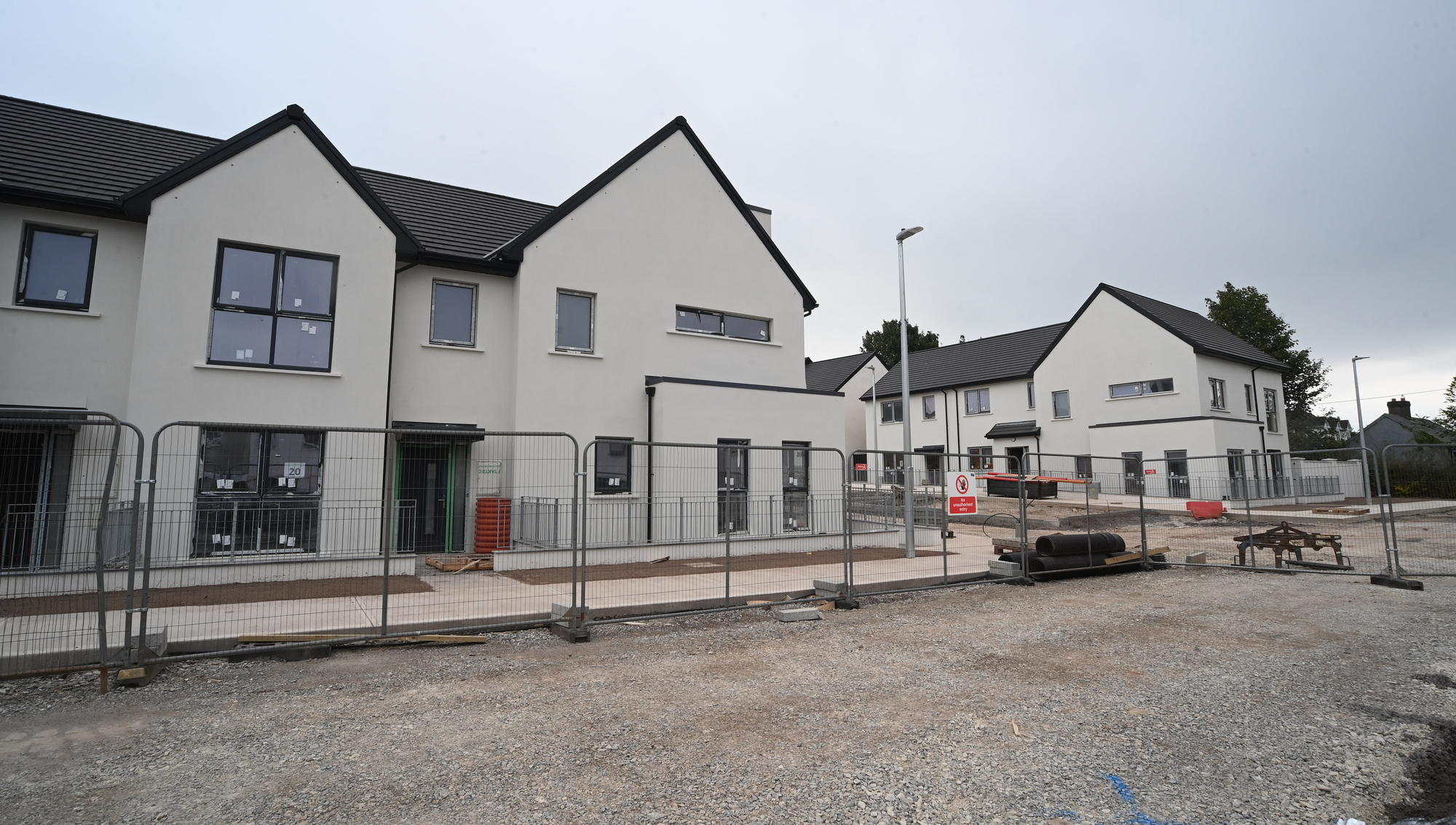
The Banking & Payments Federation Ireland report shows the total number of homes completed this year is expected to reach around 35,000 units, with almost 33,000 new dwellings completed in the 12 months ending September 2025, up from about 31,700 during the same period in 2024. File picture: Larry Cummins
There has been a modest rise in new home completions over the past year, but the number of construction starts has remained subdued, and homes are taking longer to build.
The latest Housing Monitor report from Banking & Payments Federation Ireland (BPFI) shows that commencement activity is at only slightly higher levels than in 2016. However, the number of people employed in the construction industry in skilled trades has fallen by around 35% since 2007, with significant gaps in key trades such as plastering, tiling, painting and plumbing.
The BPFI said this slowdown in housing starts and potential labour constraints could impact future output.
The report shows the total number of homes completed this year is expected to reach around 35,000 units, with almost 33,000 new dwellings completed in the 12 months ending September 2025, up from about 31,700 during the same period in 2024.
In the third quarter of the year, completions were 4% higher than in the same period in 2024.
In the 12 months to October 2025, 23,599 housing units began construction. This 12-month period includes units started in December 2024 when the numbers were heavily affected by the significant activity due to the expiry of waivers on development levy and water connection charges.
"If we assume that around half of the total units commenced in December 2024 were due to expiry of waivers, annualised commencement numbers would have been around 18,000 units, which is lower than the commencement activity in the same period in 2020 during the pandemic," BPFI Chief Executive Brian Hayes said.
Just over 11,600 units were commenced in the first 10 months of the year, which is only slightly higher than the levels observed back in 2016.
By local authority, the most units commenced during 2025 so far have been in Dublin City (2,053) followed by Cork County (1,089) and Fingal (911), while only 20 units have started building in Galway City during that time.
“At the same time, a recent report by the Department of Finance found that there has been a considerable slowdown in the time from commencement to completion for new homes following a spike in commencements associated with the levy waivers in 2024," Mr Hayes said.
"For example, 40% of commencements in 2018 had at least achieved partial completion within 12 months. This rate remained within the 20%-30% range in the following years.
"But the analysis shows that for units commenced in 2024, the equivalent figure was only 10%, which suggests that projects commenced in 2024 are progressing more slowly to completion compared with previous years."
Compounding issues in home construction are labour constraints. The report notes that employment in the sector has increased in recent years, but remains around 50,000 lower than its peak in 2007.
"Looking at the current commencement activity in the residential construction sector, it looks challenging for the sector to increase output significantly after 2026 unless we see a significant increase in the commencement activity in the first half of next year.
"In addition, there still seems to be skills gaps for certain occupations in the wider sector, and especially in the occupation groups where the residential construction sector heavily relies on in order to increase output significantly," Mr Hayes said.
CONNECT WITH US TODAY



Be the first to know the latest news and updates