Focus on gender balance is paying off for Irish companies, says B4BB
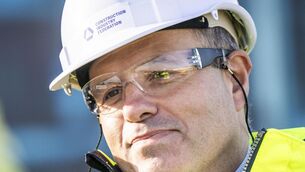
Bernard Byrne and Carol Andrews, co-chairs of Balance for Better Business (B4BB).
Irish businesses have made significant progress towards gender balance, particularly on the targets set for male and female membership on the boards of publicly listed firms.
The recently published eighth annual report of the Balance for Better Business (B4BB) Review Group has tracked that progress, notably with firms achieving and sustaining the 40%+ target set by B4BB for female membership on Irish company boards.
Ireland now ranks fifth in the EU for women on boards of the largest listed companies — a major leap from 16th place when Balance for Better Business was first established.Â
Female board representation in privately held companies, which employ the majority of Ireland’s workforce, reached 26%, up 5% on 2024, the B4BB report found. And the findings show a 31% female representation on the leadership teams of privately held companies, up 3% year on year.
Multinational companies, defined as foreign owned organisations with 250 employees or more, have also made positive progress. Results reveal a 2% increase in representation on senior leadership teams to reach 32%.
Meanwhile, ISEQ20 companies have reached a new high of 42% female representation on boards. This continued positive momentum means firms are on track to exceed the 40% threshold set out by the EU’s Gender Balance on Corporate Boards Directive.
There has now been a 24% increase in female representation at board level among publicly listed companies since the B4BB initiative was founded in 2018.Â
In this Q&A interview, Balance for Better Business co-chairs Carol Andrews and Bernard Byrne, explain what the progress of recent years has meant for the businesses concerned.Â
Balanced leadership should be a strategic imperative for every business. Companies that commit to gender balance gain a competitive edge: they attract top talent, spark innovation and boost performance.
Since Balance for Better Business was established in 2018 we have seen Irish businesses make real strides on gender balance, with publicly listed firms not only achieving —but sustaining —the 40%+ target on boards. This continued positive momentum means firms are on track to exceed the 40% threshold set out by the EU’s Gender Balance on Corporate Boards Directive. There has now been a landmark 24 percentage point increase in female representation at board level among publicly listed companies over the past seven years.
There’s also been steady progress among our privately held companies — one of our key focus areas — on senior management teams. Our research show a 3% increase in female representation on the leadership teams of privately held companies to reach 31%.Â
However, the pace of change across the business landscape remains uneven. We’re urging all companies, no matter where they are on the journey, to make gender balance a strategic priority. By embedding it into growth plans, holding leaders accountable, and taking real action, we can accelerate change and build a more balanced future for Irish business.
There’s no better time than today to advance your gender balance journey. Establishing a plan should be the first step for any organisation seeking to accelerate change. This plan should be guided by clear and measurable targets, with regular reporting to ensure that your organisation remains on track to achieve its goals.
At Balance for Better Business, we’re calling for all organisations to aim for 40%+ female representation on boards and leadership teams. This is a crucial threshold aligned with international norms and the EU Corporate Boards Directive, which can enable businesses to realise the benefits of balanced leadership.
The B4BB roadmap is an essential tool to transform intention into impact and accelerate progress for every organisation. No matter where firms are on their gender balance journey, the roadmap offers practical, actionable guidance. From succession planning to leadership development, it lays out structured steps to help leaders embed gender balance at both board and senior leadership levels and increase the pace of change.
Owners, investors and leaders hold a pivotal role in driving change. When gender balance becomes a business priority, it cascades success throughout the entire organisation. Leaders must sponsor and champion the agenda, embedding gender equity into the core culture, values, and decision-making processes. They also have the authority to implement systemic fixes in core HR processes — hiring, promotion, and pay — to close the gaps and build an equitable talent pipeline.
Setting clear public targets that are communicated to employees can ensure leaders remain accountable for change and keeping gender balance as a strategic priority. One of the most powerful catalysts for change is transparency. Publishing data on gender equality and reporting regularly on progress toward gender representation targets is crucial to building trust and keeping on track towards targets.Â
Balanced leadership isn’t just the right thing to do – it’s a smart business move. From better meeting talent needs to stronger performance, more balanced organisations are better equipped with the capabilities and perspectives to drive future growth and competitiveness. Forging a stronger future for Irish business means realising these benefits across every sector of the economy.
Our research shows that sector-specific strategies are needed to address unique industry challenges. Findings from our latest report show that performance varies significantly by sector emphasising the need for a sector-driven approach, based on successful strategies in top-performing sectors. Businesses in the information and communication services and construction sectors posted the highest sectoral increases in female board leadership over the past 12 months and provide examples of how to successfully achieve change.
Our 8th annual report features case studies that spotlight success across a wide range of industries and specific steps in each sector that can help accelerate change. We’d encourage all decision makers to explore the report to see how they can advance their journey today.