Food tourism gets fresh push as new National Tourism Policy targets €9bn revenue
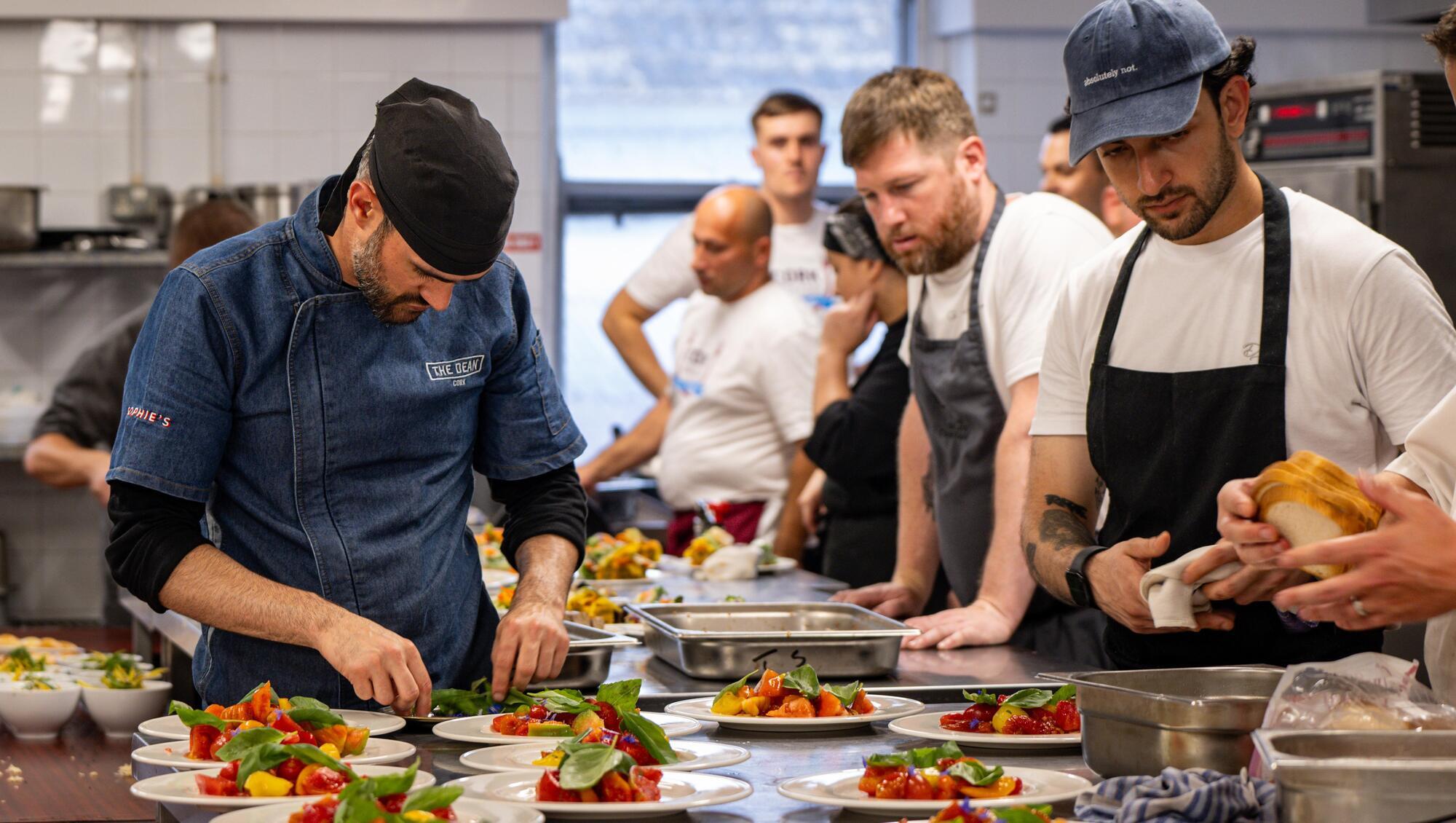
A collaboration of 20 chefs led by Alex Petit put the finishing touches on salad course during the VQ Shared Table at the flagship “Long Table” event of the Cork on a Fork Festival. A new culinary tourism strategy is part of the National Tourism Policy unveiled on Monday which aims to increase overseas visitor revenue by 50% to €9bn over the next five years. Picture: Chani Anderson
A new culinary tourism strategy is part of the National Tourism Policy unveiled on Monday which aims to increase overseas visitor revenue by 50% to €9bn over the next five years.
Enterprise, tourism, and employment minister Peter Burke launched the new policy document, titled 'A New Era for Irish Tourism', at Belvedere House, Mullingar, on Monday, which includes 71 policy proposals. The new tourism strategy includes a commitment to develop food-related tourism, placing a focus on the culinary offering provided by the sector.
Ireland's south-west is now renowned as the country's food capital and the new Strategy will develop dedicated destination marketing campaigns showcasing the range and quality of food experiences and will identify culinary related opportunities to boost year round tourism and ensure a greater regional spread of tourists.
"Scenery remains the top attraction, but food and drink now account for 34% of total visitor spend, highlighting their importance in the overall tourism experience and to the income generated by visitors," the policy document states.
A new Culinary Tourism Strategy will be prepared to elevate the quality of the culinary offering and improve domestic and international expectations of Irish food. The strategy will develop dedicated destination marketing campaigns showcasing the range and quality of food experiences and will also identify culinary related opportunities to boost year round tourism and ensure a greater regional spread of tourists.
Mr Burke said the overall policy statement has set ambitious targets. "In total, we’re targeting growth in international tourism revenue by 6% per annum and domestic revenue by 7% per annum," said Mr Burke. "We want to see 90% of tourism SMEs supported to adopt advanced digital tools, and to grow employment in the sector to 250,000. That’s a clear signal of our confidence in Irish tourism and its potential."
The policy is targeting a total increase of 15% in overseas visitor numbers of up to 1m per annum over the lifetime of the plan to 2031.
It also aims to encourage more Irish people to holiday at home, with a target to achieve an average annual increase of 7% in domestic tourism revenue to 2031. "This would result in the total value of domestic overnight trips by residents in Ireland rising to €5.8bn. Combining overseas and domestic tourism, this would give a total value of €14.8bn by 2031 compared to €9.6bn in 2024," said the policy document.
Currently, 50% of Ireland’s tourism revenue is concentrated in the four peak months from June to September, and the new policy will designate October to May as the off-peak season and prioritise growth during this period. "This strategic focus will guide industry stakeholders and tourism agencies in leveraging available capacity, enhancing resilience, and supporting year-round employment," the plan states.
Regarding Ireland’s climate and biodiversity targets, the plan aims for a 45% reduction in tourism-related emissions (based on 2018 levels). "A 2024 baseline for tourism emissions will be established and efforts will be focused on where the sector has the most direct control such as energy usage in commercial buildings and operations. To track progress, Fáilte Ireland’s annual Business Plans will also contain specific targets for the number of tourism businesses which have undertaken environmental audits and emission reduction measures," the policy document said.
The plan also envisages that at least 90% of tourism SMEs adopt advanced digital tools by 2031 - from booking platforms to customer management.

CONNECT WITH US TODAY



Be the first to know the latest news and updates