US tax code changes may reduce foreign direct investment appeal
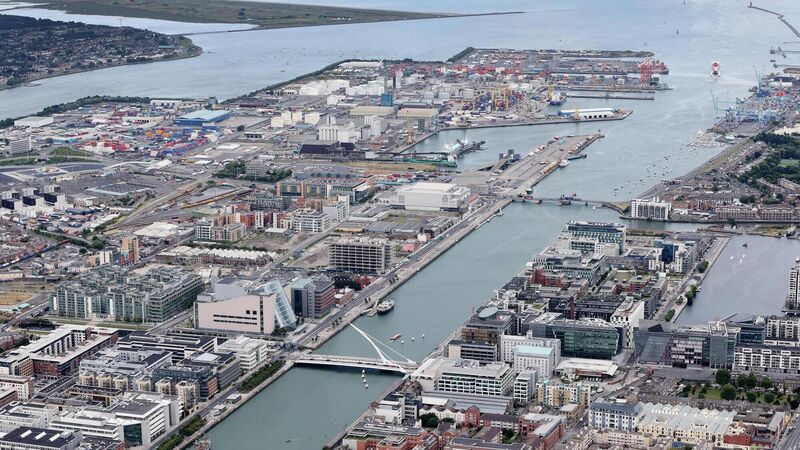
AIB said the labour market will continue to grow, but at a more modest pace. Following a 2.7% rise in 2024, they see employment growth slowing to 2% this year and to 1.5% in 2026.
AIB has revised down growth forecasts for the Irish economy, citing the considerable shift in the global backdrop since making its previous forecast before the US election.
The bank warned that an escalation in trade tariffs could lead to a slowdown in global and Irish growth in 2025 and 2026, but it forecasts Irish modified domestic demand (MDD) to grow by 2.3% this year and 2% in 2026. AIB's previous economic outlook report, published in October, forecast modified domestic demand to grow by 2.8% in 2025 and 2.7% in 2026.
"The global macro backdrop has shifted considerably since our last economic outlook report in Autumn 2024," AIB chief economist David McNamara.
AIB said Ireland’s multinational-dominated sectors account for 12% of total employment and 50% of GDP.
It said any negative spillovers from the multinational sector could hit domestic sector output and employment.
However, the key medium-term risk to the Irish economy is the concentration of our taxation base in corporation and income taxes sourced from the multinational sector.
AIB said the labour market will continue to grow, but at a more modest pace. Following a 2.7% rise in 2024, it sees employment growth slowing to 2% this year and to 1.5% in 2026.
The bank said the Irish economy has built up resilience to withstand potential trade and foreign direct investment (FDI) shocks in the short run.
However, permanent tariffs or changes to the US tax code which would reduce Ireland’s FDI attractiveness would pose a greater longer-term challenge.
The latter scenario would require diversifying Ireland’s FDI and export base to non-US markets, a review of our industrial model, further fostering of indigenous enterprises, and a focus on boosting competitiveness.
"For the domestic economy, we expect a cooling in growth this year as ongoing uncertainty dampens both consumer spending and business investment growth," Mr McNamara said.
"Nonetheless, Ireland enters this period of uncertainty from a position of strength, with the economy growing at a robust pace in recent months, while both the public and private sectors have built up material financial buffers in recent years.”